
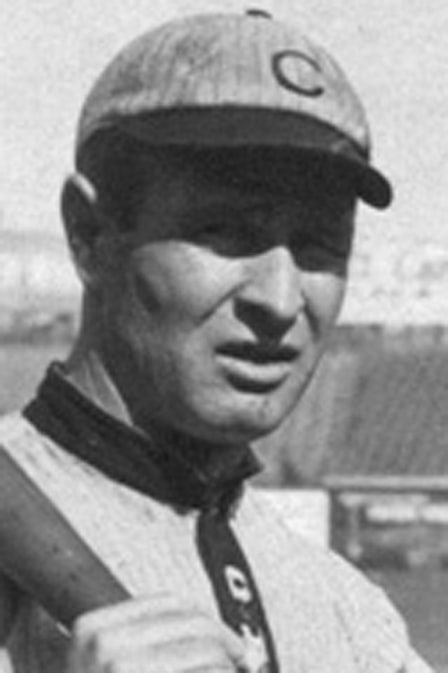
Career Stats
Regular Season
| Year | G | AB | R | H | 2B | 3B | HR | RBI | BB | SO | SB | AVG | OBP | SLG | OPS |
|---|---|---|---|---|---|---|---|---|---|---|---|---|---|---|---|
| 1913 | 12 | 24 | 3 | 5 | 0 | 0 | 0 | 3 | 8 | 1 | 1 | .208 | .394 | .208 | .602 |
| 1914 | 1 | 0 | 0 | 0 | 0 | 0 | 0 | 0 | 0 | 0 | 0 | -- | -- | -- | -- |
| Career | 13 | 24 | 3 | 5 | 0 | 0 | 0 | 3 | 8 | 1 | 1 | .208 | .406 | .208 | .615 |
Career-best seasons highlighted in gold. Stats via Retrosheet.
Frank Chance managed the New York Yankees from 1913 to 1914. Hall of Famer. Played during The Dead Ball Yankees (1913–1919).
January 8, 1913. Frank Chance signs a three-year, $120,000 contract to run a New York ballclub that has never finished higher than second place and has just changed its name from the Highlanders to the Yankees. He is thirty-six years old, four pennants and two championships into a Hall of Fame career, and still recovering from brain surgery the Cubs performed on him in a hospital bed before firing him anyway. New York doesn't care about the surgery. New York wants the "Peerless Leader" and the double-play combination that made him famous.
They get neither. Frank Chance's two years in pinstripes rank among the worst of his life -- and he'd spent a career getting hit in the head by professional pitchers.
The Kid From Fresno Who Couldn't Sit Still
Frank Leroy Chance was born September 9, 1876, in Fresno, California, and grew up trying every position that didn't require staying in one place. He pitched for local amateur teams, caught for others, and finally signed with the Chicago Orphans in 1898 at age 21 as a catcher, scouted off the California sandlots by former big-league outfielder Bill Lange. The Orphans became the Cubs in 1903. Chance became something else entirely two years earlier than that.
In 1902, manager Frank Selee moved Chance from behind the plate to first base -- a decision that put him in the same infield as a rookie shortstop named Joe Tinker and a rookie second baseman named Johnny Evers. Nobody knew it yet, but baseball had just built its most famous double play.
The Best First Baseman Alive
Chance broke out in 1903 -- .327, 67 stolen bases (the National League lead, from a first baseman, which tells you everything about the athlete underneath the mitt), 81 RBI, the first time he'd played 100 games or hit .300 in a season. It stayed his career-high average for good. He led the Cubs in batting again in 1904, 1905, and 1907, and by the middle of the decade he was, by consensus, the best first baseman in the National League. He'd finish his playing career with a .296 average, 1,274 hits, 798 runs, and the Cubs' all-time franchise stolen base record -- a number contemporaries put at 402, though old box scores disagree on the last digit by a couple. Either way: nobody's touched it since.
Then Frank Selee got sick. Tuberculosis forced him out partway through 1905, and the Cubs handed the job to their 28-year-old first baseman. The Peerless Leader era had started.
Four Pennants, Two Rings, One Historic Collapse
What Chance built in Chicago is still one of the great runs in baseball history. The 1906 Cubs went 116-36 -- a .763 winning percentage that stands as the MLB record to this day, in a 154-game season, against a league that had no idea what hit it. They lost the World Series anyway, to the crosstown White Sox, the so-called "Hitless Wonders" who'd finished the regular season with the worst team batting average in the American League and beat Chance's juggernaut in six games regardless. It remains one of the biggest upsets in Series history, and Chance had to live with it.
He got his revenge the next two years. The Cubs won it all in 1907 and 1908, both times over Detroit, giving Chicago back-to-back titles -- the franchise's only championships until it finally broke a 108-year drought in 2016. A fourth pennant followed in 1910 -- 104-50, Chance's best regular-season club after 1906 -- before Connie Mack's Philadelphia Athletics took the World Series in five. Four pennants in five years. Two rings. A .296 hitter who ran like a burglar. This was the manager New York thought it was buying.
These are the saddest of possible words: / "Tinker to Evers to Chance." / Trio of bear cubs, and fleeter than birds, / Tinker and Evers and Chance.
Adams wrote those eight lines about a single Cubs double play he watched from the press box, and they turned three very good infielders into legends. It also papered over something real -- Tinker and Evers famously didn't get along off the field, and Chance's own style behind the wheel could run hot and combative when things weren't going his way. The poem made the trio immortal. It didn't make them friends.
Brain Clots and a Hospital-Bed Firing
Chance's undoing wasn't age. It was pitchers throwing at his head. He crowded the plate his entire career, and pitchers made him pay for it -- by his own era's rough count, something like 137 hit-by-pitches over his career, with at least ten shots to the skull, one bad enough in a May 1904 doubleheader against Cincinnati to knock him briefly unconscious. Years of that build up. By late 1912, doctors found blood clots on his brain and operated more than once to relieve them, leaving him deaf in his left ear.
Cubs owner Charles Murphy chose that moment to visit him in his hospital room -- not to check on his health, but to argue about trading away good players to cut payroll. Chance, recovering from brain surgery, pushed back. Murphy released him as both player and manager while he was still in the bed. That's how a four-pennant Hall of Fame skipper became available. New York didn't ask too many questions about the timing.
An Onion, a Bunion, and a Manager Who'd Had Enough
Chance's first Yankees season delivered almost nothing he'd promised. He piloted the team's first-ever spring training outside the United States, an experiment in Bermuda that looked promising right up until the return voyage left several players seasick (nobody thought to check the Atlantic's opinion on the plan) and the club opened the year 2-15. The Yankees finished 57-94, seventh place, 46.5 games out. Along the way, Chance did something managers weren't supposed to do in 1913: he went to the newspapers and accused his own star first baseman, Hal Chase, of "throwing down me and the team." He traded Chase to the White Sox that June for two players so forgettable that sportswriter Mark Roth called the return "an onion and a bunion." Both were gone before the season ended. History eventually sided with Chance -- Chase got banned from baseball six years later over gambling ties -- but in the moment, it looked like a Hall of Fame manager who'd lost his grip on the clubhouse.
1914 was worse. Chance spent more energy fighting scout Arthur Irwin over the roster's thin talent than he did managing games, and his old headaches from the beanings never really left him. The Yankees cycled through 34 players that year, a number that tells you the front office had no idea what it was doing either. Chance's own club went 60-74 before he'd seen enough. In late September, with three weeks left, he resigned -- on the condition the Yankees still pay his 1915 salary. They agreed. Roger Peckinpaugh, his 23-year-old shortstop, took over and went 10-10 in the final stretch, becoming the youngest manager in major league history. Chance packed for his California orange ranch and never managed a full big-league season again.
Add it up and Frank Chance's Yankees managerial record reads 117-168. Compare that to 768-389 in Chicago, and you're not looking at the same manager -- you're looking at the same man with nothing left to work with.
The Last Uniforms
Chance stayed away from the majors for eight years before Boston brought him back for one final try in 1923. The Red Sox went 61-91, dead last in the American League, 37 games behind the pennant-winning, World Series-champion Yankees -- the same franchise he'd once run into the ground himself. It was his last season in a major league dugout.
Chicago's White Sox owner Charles Comiskey hired him to manage the 1924 club, and for a moment it looked like Chance might get one more shot. He never took the job. A severe respiratory illness -- contemporary reports call it pneumonia, others cite bronchial asthma complications, and the record isn't fully settled on which -- put him in surgery that April. His old double-play partner Johnny Evers ran the White Sox in his place while everyone waited for Chance to recover. Comiskey refused to even accept his resignation, holding the job open for a man who was never coming back to fill it. Frank Chance died September 15, 1924, in Los Angeles. He was 47 years old.
| MLB Playing Career | 1898-1914 (Cubs, Yankees) |
| Career Batting Line | .296 AVG, 1,274 H, 20 HR, 596 RBI, 798 R |
| Career High Season | 1903: .327 AVG, 67 SB (NL leader) |
| Cubs Managerial Record | 768-389, 4 NL pennants (1906-08, 1910) |
| World Series Titles | 1907, 1908 (both over Detroit) |
| Yankees Playing Stats (1913-14) | 13 G, 24 AB, 5 H, .208/.394/.208 |
| Yankees Managerial Record | 117-168 (1913-14) |
| Hall of Fame | Elected 1946, with Joe Tinker and Johnny Evers |
| Died | September 15, 1924, age 47 -- Los Angeles |
Born in Fresno, California
Frank Leroy Chance is born on the West Coast, decades before "Peerless Leader" becomes a nickname anyone in Chicago or New York recognizes.
Moves to First Base
Manager Frank Selee shifts Chance from catcher to first base, completing the infield that will soon include Joe Tinker and Johnny Evers.
Cubs Dynasty Peak
Chance's Cubs go 116-36 in 1906 (still the MLB record winning percentage) but lose the World Series to the crosstown White Sox. He answers by winning back-to-back titles over Detroit in 1907 and 1908.
Brain Surgery, Then a Firing
Doctors operate on blood clots caused by years of beanings. Cubs owner Charles Murphy releases Chance as player and manager while he's still recovering in the hospital.
Hired by the Yankees
Chance signs a three-year, $120,000 deal to player-manage the newly renamed Yankees, bringing championship credibility to a franchise that's never won anything.
Resigns From the Yankees
After a public feud with scout Arthur Irwin and a 60-74 record, Chance resigns with three weeks left in the season. Roger Peckinpaugh finishes the year as the youngest manager in MLB history.
Elected to the Hall of Fame
Chance, Joe Tinker, and Johnny Evers are inducted together by the Veterans Committee, cementing the double-play trio's place in Cooperstown.
Frequently Asked Questions
Who was Frank Chance and why is he in the Hall of Fame?
Frank Chance was a Hall of Fame first baseman and player-manager, best known as the "Chance" in the Tinker-to-Evers-to-Chance double play that Franklin Pierce Adams immortalized in his 1910 poem "Baseball's Sad Lexicon." As Chicago's player-manager from 1905 to 1912, he won four National League pennants and two World Series titles (1907 and 1908). He was elected to the Hall of Fame in 1946 alongside teammates Joe Tinker and Johnny Evers.
What happened to Frank Chance as manager of the New York Yankees?
Chance signed with the Yankees in January 1913 on a three-year, $120,000 contract, hoping to replicate his Cubs success. Instead, his two Yankees teams went a combined 117-168. His first season included a disastrous Bermuda spring training trip and a public feud with star first baseman Hal Chase, whom he traded away in June 1913. He resigned in September 1914 after clashing with team scout Arthur Irwin, and he never managed a full major league season again.
Why did Frank Chance leave the Chicago Cubs?
Chance suffered years of beanings that left blood clots on his brain, requiring surgery in late 1912. While he was still hospitalized recovering, Cubs owner Charles Murphy released him as both player and manager after an argument over Murphy trading away veteran talent to cut costs -- an extraordinary way for a four-pennant, two-championship manager to be let go.
How did Frank Chance die?
Chance died on September 15, 1924, in Los Angeles, at age 47. He'd just been hired to manage the Chicago White Sox but fell seriously ill with a severe respiratory illness before he could take over -- accounts from the time describe it as pneumonia and as complications from bronchial asthma, and the exact cause was never fully settled in the record. His old double-play partner Johnny Evers ran the White Sox in his place while Chance tried to recover.
What was Frank Chance's career batting average and stats?
Chance hit .296 for his career with 1,274 hits, 798 runs, and the Cubs' all-time franchise stolen base record (right around 400, depending on which old box scores you trust). His best season came in 1903, when he hit .327 and led the National League with 67 stolen bases -- remarkable for a first baseman in any era.
Chance's old double-play partner ran the White Sox for him that spring, waiting for a recovery that never came. Comiskey never did accept the resignation. He didn't need to.