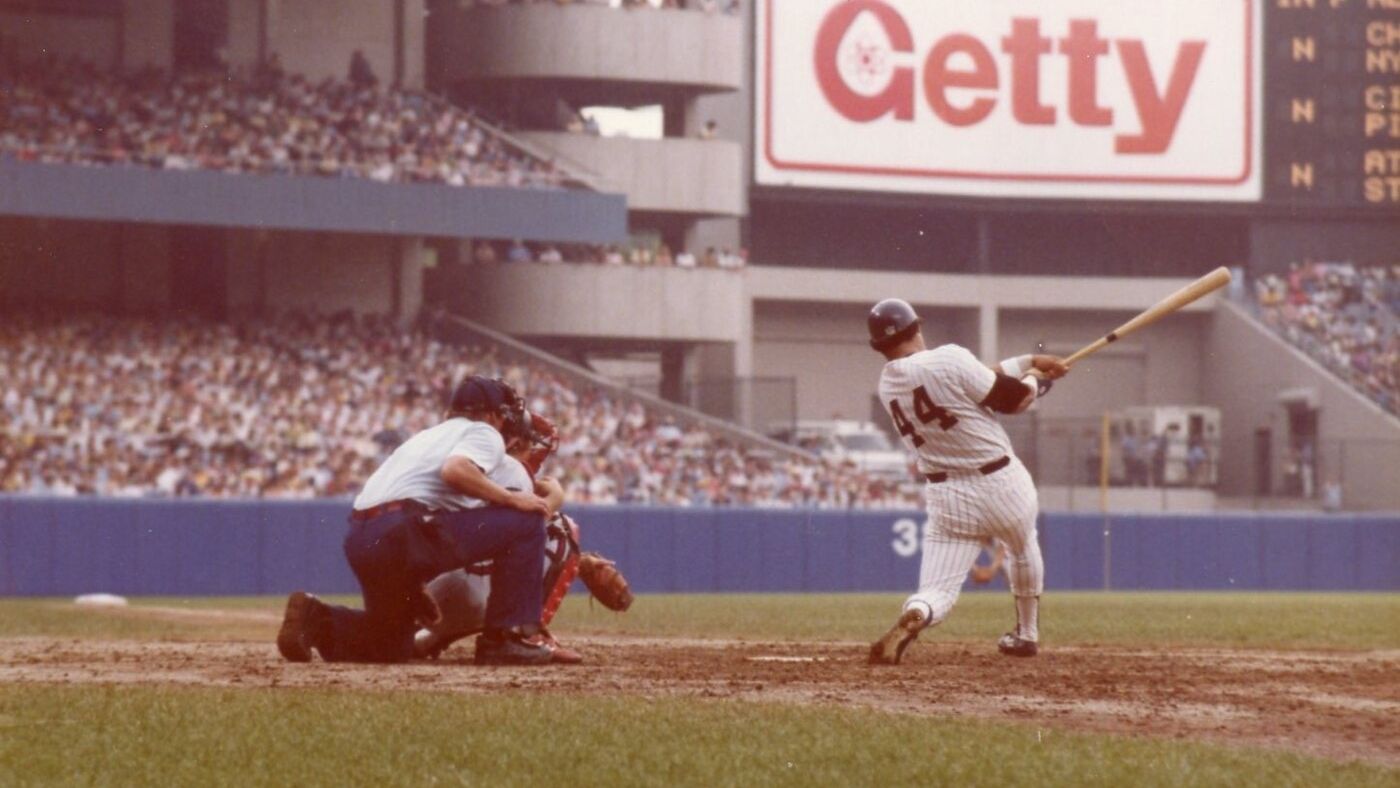
October 18, 1977. A Tuesday night at Yankee Stadium. 56,407 people packed into the building, the New York Yankees leading the Dodgers three games to two, and Reggie Jackson had already homered in his last at-bat of Game 5 off Don Sutton. He walked to the plate in Game 6 carrying a streak that nobody knew was just getting started.
The 1977 season had been a full-blown circus -- Steinbrenner, Billy, Reggie, the Sport magazine disaster, the Fenway dugout confrontation on national TV -- and all of it was about to get resolved by the one thing everybody forgot this team could do. Play baseball.
The Season of Chaos (The Short Version)
You know the story. Jackson signs for five years in November '76. Nobody consults Billy Martin. The "straw that stirs the drink" quote lands in Sport magazine and Munson goes cold. June 18 at Fenway, Martin pulls Jackson mid-inning on NBC's Game of the Week and they nearly come to blows in the dugout while coaches hold them apart. It was a season that should've torn the club apart. Instead they won a hundred games. (Spite is a hell of a motivator.)
But none of that matters right now. Right now it's the eighth inning, Charlie Hough is walking to the mound, and the Stadium is already vibrating from what happened in the fourth and fifth.
Three Swings
Mike Torrez started Game 6 for the Yankees -- a detail that gets lost in the Reggie mythology, which is a shame because Torrez threw a complete game that night. (He'd leave as a free agent after the season and throw the Bucky Dent pitch the following October, because baseball has a sick sense of humor.) Jackson's first plate appearance was a walk on four pitches in the second inning. Nothing dramatic. Just four balls, take your base.
Then the fourth inning. Burt Hooton on the mound for LA, throwing curveballs. Munson on base, two outs, Yankees trailing 3-2. Jackson got a first-pitch fastball he could handle and drove it into the right-field seats. Two-run homer. Yankees led 4-3. A Chambliss double and a Piniella sac fly tacked on another run before the inning ended -- 5-3. The crowd came alive, but it was still just a big hit in a big spot. That's what Reggie did.
Fifth inning. Hooton was gone, replaced by Elias Sosa. Mickey Rivers singled, moved to second on a bunt, and Jackson came up with a runner in scoring position. Sosa threw one fastball. One. Jackson hit it into the right-field seats. Two-run homer, 7-3. (Sosa's entire contribution to baseball history is one pitch and a slow walk back to the dugout.) The Stadium was buzzing with something beyond the normal October electricity. Two home runs on two swings. People started doing math -- counting backwards to the Sutton homer in Game 5. Three consecutive at-bats, three home runs.
Eighth inning. Charlie Hough came in throwing his knuckleball -- the one pitch that's supposed to be unhittable when it's working. Hough threw one. It didn't knuckle. Jackson didn't just hit it. He destroyed it. Dead center field, deep into the black batter's eye seats, an estimated 450 feet of pure violence against a pitch that exists to make hitters look foolish. You could feel the Stadium shaking through your television set. Three home runs. Three different pitchers. Three swings that turned a chaotic, exhausting season into a coronation.
Oh, what a blow! What a way to top it off!
Mr. October
Yankees 8, Dodgers 4. First championship since 1962 -- fifteen years of wandering, done. Jackson finished the World Series batting .450 with 5 home runs and 8 RBI. He won the MVP, obviously.
The nickname came from Munson, of all people. "Mr. October." He'd said it during the regular season with a healthy dose of sarcasm -- Thurman's specialty. After Game 6, nobody was laughing. The name stuck, and it stopped being a joke the second that third ball cleared the center-field fence.
Here's the thing that gets screwed up in the retelling: Jackson wasn't the first to hit three home runs in a World Series game. Babe Ruth did it twice -- 1926 and 1928, both Game 4s in St. Louis. Jackson was the second player to do it. Nobody's done it since. (But Jackson's version had the benefit of color television, Howard Cosell's voice cracking, and a season's worth of drama demanding a final act exactly this absurd.)
The Reggie! Bar debuted at the '78 home opener -- Standard Brands handed them out at the gates, so what happened next was practically preordained. Jackson homered. Fans threw the candy bars onto the field. The whole thing had become a feedback loop of spectacle -- Reggie did something incredible, New York went crazy, and Reggie fed off the chaos to do something even more incredible. Three swings in October started that loop, and it never really stopped.
| Date | October 18, 1977 -- Game 6, World Series |
| Final Score | Yankees 8, Dodgers 4 (Yankees win Series 4-2) |
| Jackson's Game 6 Line | 3-for-3, 3 HR, 5 RBI, 1 walk |
| HR #1 | 4th inning, off Burt Hooton (2-run) |
| HR #2 | 5th inning, off Elias Sosa (2-run, 1st pitch) |
| HR #3 | 8th inning, off Charlie Hough (solo, ~450 ft, dead center) |
| World Series Batting Average | .450 |
| World Series Home Runs | 5 |
| World Series RBI | 8 |
| Series MVP | Reggie Jackson |
Jackson Signs With the Yankees
Reggie Jackson signs a five-year deal with New York. Billy Martin isn't consulted. The "straw that stirs the drink" quote lands in Sport magazine by spring, and Munson goes cold.
The Fenway Confrontation
Martin pulls Jackson mid-inning on NBC's Game of the Week for not hustling. They nearly come to blows in the dugout while coaches hold them apart. Seventy million people watch.
Game 5 -- Homer Off Sutton
Jackson ends Game 5 with a home run off Don Sutton. His last four consecutive plate appearances across two games have all ended the same way.
Three Home Runs, Three Pitchers
Jackson homers off Hooton (4th), Sosa (5th), and Hough (8th) to seal the World Series. Mike Torrez throws a complete game that everyone forgets. The Yankees win their first championship since 1962. "Mr. October" stops being a joke.
Frequently Asked Questions
Were all three of Reggie Jackson's home runs on the first pitch?
Two of the three were on the first pitch. The homer off Elias Sosa in the fifth inning and the homer off Charlie Hough in the eighth were both first-pitch swings -- Sosa threw one pitch and sat back down. The first homer off Burt Hooton in the fourth inning is disputed; some accounts say first pitch, others say Jackson took a ball before connecting.
Was Reggie Jackson the first player to hit three home runs in a World Series game?
No. Babe Ruth hit three home runs in a World Series game twice -- Game 4 of the 1926 World Series and Game 4 of the 1928 World Series, both at Sportsman's Park in St. Louis. Jackson was the second player to do it. No one's done it since.
How many home runs did Reggie Jackson hit in the 1977 World Series?
Five. Jackson homered in Games 4, 5, and 6, including the three-homer performance in the clincher. His last at-bat of Game 5 (a solo shot off Don Sutton) combined with his three in Game 6 gave him four consecutive home runs across two games. He finished the Series batting .450 with 8 RBI and won the World Series MVP.