
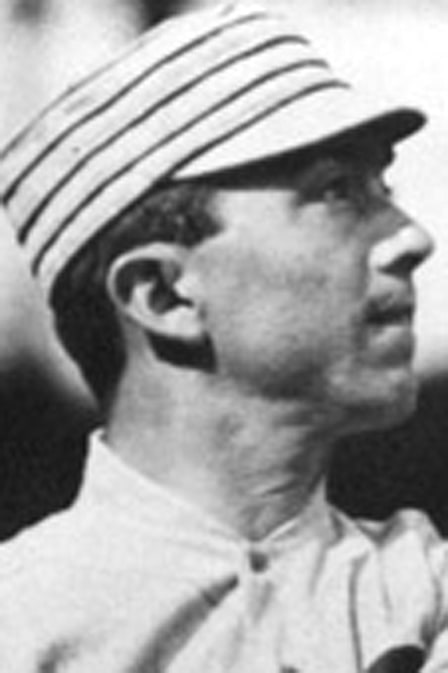
Home Run Baker was a third baseman who played for the New York Yankees in 1916-1919, 1921-1922. Hall of Famer. Played during The Dead Ball Yankees (1913–1919).
October 17, 1911. The Polo Grounds, New York. Christy Mathewson -- the greatest pitcher of the era, a man who hadn't lost a World Series game in three tries -- stood on the mound in the ninth inning with the Giants leading 1-0. One more out and the Giants would lead the series two games to one. Then John Franklin Baker of Trappe, Maryland stepped in and hit a ball over the right-field wall.
Tie game. The Athletics would win it in the eleventh.
One day earlier, Baker had done it to Rube Marquard in Game 2 at Shibe Park -- a sixth-inning two-run shot that broke a 1-1 tie and gave the A's a 3-1 victory. Two consecutive World Series games. Two home runs. Two different Hall of Famers on the mound. A rain delay stretched between the games, the Philadelphia press had nothing to write about but Baker, and by the time the Series resumed they'd settled on a name.
Home Run Baker.
He'd carry it for the rest of his life.
From Trappe to Philadelphia
Baker grew up on Maryland's Eastern Shore, a region that produced baseball players the way it produced chicken farmers -- quietly and without fanfare. He came up with the Philadelphia Athletics under Connie Mack in 1908 and quickly established himself as the best third baseman in the American League. He wasn't a slugger in the modern sense. He hit left-handed and swung a 46-ounce bat that most players couldn't handle cleanly -- but he made contact with a consistency that managers in the dead-ball era dreamed about.
What he did at the hot corner was just as valuable. Baker was a gifted defender with quick hands and the instincts to play deep on the left side, cutting off shots down the line that most third basemen would've conceded. The Athletics' "$100,000 Infield" -- Baker, Jack Barry, Eddie Collins, and Stuffy McInnis -- was the finest defensive unit of the era, and Baker was its anchor.
From 1910 through 1913, the Athletics won three World Series. Baker hit a combined .363 in those Fall Classics and led the AL in home runs four straight years -- 11 in 1911, 10 in 1912, 12 in 1913, and 9 in 1914. Those numbers look modest now. In the dead-ball era, they made him the most feared power hitter in the game.
The Holdout and the Move to New York
After the Athletics lost the 1914 World Series in a shock sweep, Mack began dismantling his dynasty -- selling off stars to keep the franchise solvent. Baker saw the direction things were heading and held out for a better deal. He sat out the entire 1915 season playing for semi-pro town teams back home in Maryland while Mack and American League president Ban Johnson pressured both sides to resolve the standoff.
They couldn't. On February 15, 1916, Mack sold Baker's contract to the New York Yankees for $35,000. Baker was 29 years old, a three-time world champion, and still in his prime.
His first season in pinstripes wasn't spectacular -- a .269 average in 100 games as he found his footing in a new city. But he came back strong: .282 in 146 games in 1917, durable and dependable in the middle of a lineup that didn't have a lot else going for it. The 1918 season brought a .306 mark across a war-shortened schedule. By 1919, Baker was hitting .293 with 10 home runs and 83 RBI -- one of the better run-production seasons on the club -- and the Yankees were beginning to believe they had a legitimate contender taking shape.
The Year He Stayed Home
Then 1920 happened, and none of the baseball mattered.
Baker's wife Ottilie died of scarlet fever early that year. He had two small children. He told the Yankees he wouldn't be playing, went back to Trappe, buried his wife, and raised his kids. He told a reporter through the cracked door of his still-quarantined home that Ottilie's death had "killed all chances of my playing baseball again." He meant it at the time.
He came back in 1921. He was 35 years old and had missed a full year, but he looked like himself in the field and hit .294 in 94 games. The Yankees, riding a lineup that now included Babe Ruth, reached the World Series for the first time in franchise history. Baker was part of that. He was also part of the 1922 pennant winner before retiring after that season.
The Yankees lost both World Series to the Giants. Baker knew what it felt like to win one -- three times, with Mack's Athletics -- and he left New York having done everything asked of him without getting the ring that would've capped it all off perfectly.
Yankees Career
| Yankees Years | 1916-1919, 1921-1922 |
| Position | Third Baseman |
| Yankees BA | .288 (6 seasons, 676 games) |
| Career Batting Average | .307 |
| Career Home Runs | 96 |
| Career RBI | 991 |
| Career Hits | 1,838 |
| World Series Titles | 3 (1910, 1911, 1913 w/ Philadelphia) |
| Hall of Fame | Inducted 1955 (Veterans Committee) |
First World Series Title
Baker helps the Philadelphia Athletics defeat the Cubs in five games to claim the first of three championships in four years.
Home Run Baker Is Born
Baker ties Game 3 of the World Series with a ninth-inning shot off Christy Mathewson -- one day after going deep off Rube Marquard in Game 2. The press gives him a nickname he'll carry for the rest of his life.
Sold to the Yankees
After a year-long holdout from the Athletics, Baker's contract is purchased by the Yankees for $35,000. He's 29 years old and still in his prime.
A Season Away
Baker's wife Ottilie dies of scarlet fever. He sits out the entire 1920 season to care for his two children, returning to the family farm in Trappe, Maryland.
Yankees Reach the World Series
Baker returns from his year away and contributes to the Yankees' first American League pennant. They face the Giants in the last all-Polo Grounds World Series -- and lose.
Final Season
Baker plays his last big league games at 36, hitting .278 in 69 appearances as the Yankees win another pennant. He retires after the series.
Hall of Fame
The Veterans Committee elects Baker to Cooperstown 33 years after his final game, recognizing a career that produced a .307 average and four consecutive AL home run titles during the dead-ball era.
The Original Home Run King
Baker's 96 career home runs don't look like much against the backdrop of what Ruth would do just a few years later. That's the historical trap -- measuring a dead-ball hitter against a standard that didn't exist yet. In the era Baker played, nobody put the ball over the fence more consistently. He led the American League four consecutive years, hit .307 over 13 seasons, and drove in 991 runs from a position that didn't demand much offense in most lineups.
He wasn't flashy. He didn't generate Ruth-level mythology or DiMaggio-level mystique. He was a Maryland farmer who could hit a baseball to all fields and throw out runners at first with a quick arm from the hot corner, and he did it better than anyone else in the game for the better part of a decade.
Connie Mack -- who managed in the major leagues until 1950 and saw everything -- called Baker one of the best players he'd ever managed. That wasn't nostalgia. That was a man who'd watched Baker play every day for six seasons and knew exactly what he'd had.
The nickname outlasted everything -- the championships, the career, the era itself. Long after Ruth made 96 home runs look pedestrian, people still called John Franklin Baker by the name two October nights had given him. That's the thing about hitting a home run off Christy Mathewson in the ninth inning of a World Series game. You earn that kind of name once.
You carry it forever.
Frequently Asked Questions
How did Frank Baker get the nickname 'Home Run Baker'?
Baker earned the nickname during the 1911 World Series. In Game 2 at Shibe Park on October 16, he hit a sixth-inning two-run home run off Rube Marquard that broke a 1-1 tie and gave the Athletics a 3-1 win. The next day in Game 3 at the Polo Grounds, he hit a ninth-inning shot off Christy Mathewson to tie the game -- the A's won in eleven innings. Back-to-back home runs off two Hall of Famers in consecutive World Series games. A rain delay followed, the Philadelphia press spent the break writing almost exclusively about Baker, and the nickname stuck.
Was Home Run Baker in the Hall of Fame?
Yes. The Veterans Committee elected Baker to the Baseball Hall of Fame in 1955, more than three decades after his final game. He was alive for the honor.
Why did Home Run Baker miss the 1920 season?
Baker's wife Ottilie died of scarlet fever early in 1920. He sat out the season entirely, returning to his family farm in Trappe, Maryland to care for his two young daughters. The Yankees didn't contest the decision. He told a reporter the loss had ended any desire to play baseball -- and then came back the following year anyway.
How many home runs did Home Run Baker hit?
Baker hit 96 home runs over 13 big league seasons -- modest by modern standards, but enough to lead the American League four consecutive years (1911-1914) during the dead-ball era. He hit 11, 10, 12, and 9 in those seasons. In context, those totals made him the most consistent power hitter in the game during his peak years, at a time when hitting the ball over a fence was genuinely uncommon.
What teams did Home Run Baker play for?
Baker played for two teams: the Philadelphia Athletics (1908-1914) and the Yankees (1916-1919, 1921-1922). He sat out the 1915 season entirely in a holdout, then his contract was sold to New York before the 1916 season. He won three World Series with the Athletics (1910, 1911, 1913) and played in two World Series with the Yankees (1921, 1922), both losses to the Giants.