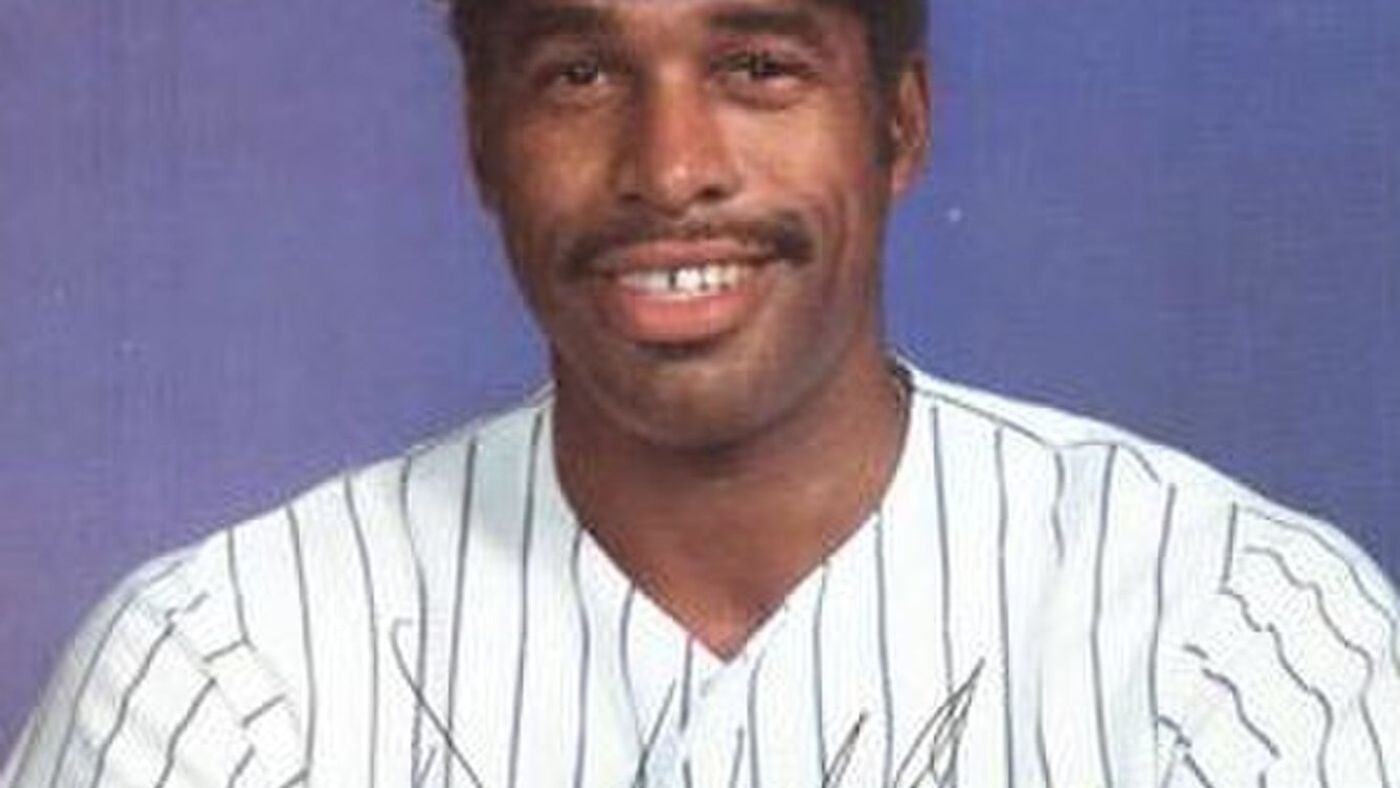
December 15, 1980. A Monday in Manhattan. George Steinbrenner stood in front of a bank of microphones, beaming like a man who'd just bought the biggest toy in the store -- which, in a sense, he had. Standing next to him was David Mark Winfield, six-foot-six of athletic perfection, dressed for the cameras and holding the pen that had just signed the largest contract in professional sports history. Ten years. Approximately $23 million. The New York Yankees had their new superstar.
What nobody in that room could've predicted -- not Steinbrenner, not Winfield, not the army of reporters scribbling in their notebooks -- was that this contract would fuel the most poisonous owner-player relationship baseball has ever seen. A decade of lawsuits, public insults, a paid informant, and a commissioner's ban. All of it traced back to that pen.
The Buildup
Steinbrenner had a plan heading into the winter of 1980. Reggie Jackson's contract was entering its final year -- the 1981 season -- and the Boss wasn't inclined to pay Mr. October what he'd want next. Rather than wait to see how things played out, Steinbrenner went and got his next marquee bat a year early. He didn't just want a good player. He wanted THE player. (Jackson and Winfield would end up as teammates in 1981, an awkward arrangement that suited nobody.)
Winfield fit the profile perfectly. He'd spent eight seasons with the San Diego Padres, making five straight All-Star teams, posting a .308 average with 34 homers in 1979, and establishing himself as one of the most complete players in either league. He could hit for power and average, throw from right field like he was trying to put the ball through someone, and run the bases with surprising speed for a man his size.
And about that size -- Winfield was a physical freak in the truest sense. When he came out of the University of Minnesota in 1973, four professional sports leagues drafted him in the same year. The Padres took him fourth overall. The Atlanta Hawks grabbed him in the NBA draft. The Utah Stars selected him in the ABA. And the Minnesota Vikings -- this is the part that still makes you shake your head -- picked him in the NFL draft as a tight end. He'd never played a down of college football. They just saw him moving around campus and figured, yeah, that'll work.
Multiple teams came hard after Winfield in free agency. The Mets made a serious offer. Ted Turner's Braves pushed in. But Steinbrenner did what Steinbrenner always did -- he made it personal. Meetings. Phone calls. The full courtship. And Winfield wanted New York. He wanted the franchise of Ruth, DiMaggio, and Mantle. (He also wanted the money, and nobody was writing checks like George.)
The Moment
The press conference played out the way these things always did in the Steinbrenner era -- big, loud, and dripping with confidence. Steinbrenner talked about Winfield being one of the finest players in baseball, about championships, about the next great era of Yankees dominance. Winfield stood there looking like the kind of athlete Hollywood would cast if they needed someone to play a ballplayer. Everything about the optics screamed "this is going to work."
The deal itself was structured around a base salary of roughly $1.3 to $1.5 million per year -- staggering for 1980 -- plus deferred compensation, a no-trade clause, and mandatory annual payments to the David M. Winfield Foundation, Winfield's charitable nonprofit. That foundation provision was unusual. It embedded a philanthropic commitment directly into the contract. Steinbrenner signed off on all of it.
But the clause that would blow everything up was almost an afterthought at the press conference. A cost-of-living adjustment -- a COLA clause -- tied to the Consumer Price Index. With inflation running at 13.5% in 1980, Winfield's agents (smartly) insisted on protection against the dollar losing value. It was standard labor-contract practice across American industry at the time. Nothing exotic. Nothing hidden.
Steinbrenner would later claim his people never properly explained what the COLA clause would cost him.
Nobody bought it.
The Yankees are the best organization in baseball. This is where I want to play, and I believe we're going to win championships together.
The Aftermath
The honeymoon lasted exactly one October. Winfield's first season in pinstripes ended with the 1981 World Series against the Dodgers, and it went about as badly as a debut could go. The Yankees took a 2-0 series lead, then dropped four straight. Winfield's line across six games: 1-for-22. A .045 batting average. One hit in twenty-two at-bats.
Steinbrenner -- who allegedly punched two Dodgers fans in an elevator during the series (the details of that story shift depending on who's telling it) -- was apoplectic. And he'd eventually find the cruelest possible way to express his fury. In September 1985, he branded Winfield "Mr. May." The message was clear and vicious: Reggie Jackson delivered in October, and this guy you're paying $23 million can only hit when it doesn't matter.
The insult didn't fade. It became Steinbrenner's favorite weapon. And it opened the floodgates for a decade-long war that made the Billy Martin drama look like a minor domestic squabble.
The COLA clause turned into a perpetual grievance. Steinbrenner's front office fought the annual payment calculations year after year. The Foundation payments became another battleground -- Steinbrenner disputed the amounts, delayed checks, and attacked the Foundation's operations. Winfield took the Foundation fights personally because the charity work was core to his identity beyond baseball.
Through all of it, Winfield kept producing. He hit .340 in 1984, losing the batting title to Don Mattingly on the last day of the season in one of the best teammate-versus-teammate races the game has seen. He drove in 100-plus runs in six different seasons. He made All-Star team after All-Star team. (The man Steinbrenner called "Mr. May" was putting up numbers that most franchises would've killed for.)
Then came the Spira affair -- the part where the story goes from ugly to genuinely shameful. In 1990, Steinbrenner paid a small-time gambler named Howard Spira $40,000 to dig up dirt on Winfield and the Foundation. He wanted ammunition. He wanted power. What he got was a full investigation by Commissioner Fay Vincent and a ban from day-to-day operations of the Yankees, effective July 30, 1990. The owner who'd signed the biggest contract in sports history got himself thrown out of baseball because he couldn't stop fighting the player he'd signed it for.
Winfield, by then, was already gone. The Yankees traded him to the California Angels that May for pitcher Mike Witt. He'd missed almost all of 1989 with back surgery, and both sides were ready for it to be over. Ten years of war, finished with a whimper.
But Winfield got the last word. In 1992, at age 41, playing for the Toronto Blue Jays, he doubled off Charlie Leibrandt in the 11th inning of Game 6 of the World Series to drive in the go-ahead runs. Toronto won the championship. The man Steinbrenner said couldn't perform in October delivered the biggest hit of the Fall Classic -- just not in pinstripes.
When Winfield entered the Hall of Fame in 2001 on his first ballot, he chose to wear a San Diego Padres cap. He'd spent ten years in New York and eight in San Diego. The hat choice said everything that needed saying.
David Mark Winfield born
Born in St. Paul, Minnesota. Would become one of the most gifted multi-sport athletes in American history.
Drafted by four pro sports leagues
Selected by the Padres (4th overall, MLB), Hawks (NBA), Stars (ABA), and Vikings (NFL) in the same year. Chose baseball.
Signs record contract with the Yankees
Agreed to a 10-year deal worth approximately $23 million -- the largest contract in professional sports history at the time.
1981 World Series ends
Winfield went 1-for-22 as the Yankees lost to the Dodgers in six games. Steinbrenner's grudge -- and, in 1985, his cruel "Mr. May" nickname -- followed.
Loses batting title to Mattingly on final day
Finished at .340 to Mattingly's .343 in one of baseball's best teammate batting races.
Traded to the California Angels
The Yankees sent Winfield to the Angels for pitcher Mike Witt, ending a decade of on-field excellence and off-field warfare.
Steinbrenner banned from baseball
Commissioner Fay Vincent removed Steinbrenner from day-to-day operations after the Howard Spira scandal -- a direct consequence of the Winfield feud.
Winfield wins the World Series -- with Toronto
At age 41, doubled off Charlie Leibrandt in the 11th inning of Game 6 to clinch the championship for the Blue Jays. The ring Steinbrenner's Yankees never gave him.
Inducted into the Baseball Hall of Fame
Entered Cooperstown on his first ballot -- wearing a San Diego Padres cap.
| Signing Date | December 15, 1980 |
| Contract | 10 years, ~$23 million (with COLA adjustments) |
| COLA Clause | Tied to Consumer Price Index -- Steinbrenner assumed ~$16M, ended up far higher |
| Foundation Payments | $300,000/year mandatory contribution to the David M. Winfield Foundation |
| Teams That Also Pursued | Mets, Braves, Cleveland (10 of 26 clubs selected him in re-entry draft) |
| Yankees Career (1981-1990) | .290 AVG, 205 HR, 818 RBI |
| All-Star Selections as Yankee | 8 (every season from 1981 through 1988) |
Frequently Asked Questions
How much was Dave Winfield's record contract with the Yankees worth?
Winfield signed a 10-year deal on December 15, 1980, with a base salary of approximately $13 million. A cost-of-living adjustment (COLA) clause tied to the Consumer Price Index pushed the total value to an estimated $21-23 million, making it the largest contract in professional sports history at the time. Steinbrenner later claimed the COLA clause inflated the payout far beyond what he'd anticipated, though most observers were skeptical of that claim.
What did 'Mr. May' mean, and why did Steinbrenner call Winfield that?
Steinbrenner's resentment started when Winfield went 1-for-22 (.045) in the 1981 World Series against the Dodgers, and in September 1985 he publicly called him "Mr. May" -- a deliberate contrast to Reggie Jackson's "Mr. October" nickname. The insult meant Winfield could hit during the regular season but disappeared when it counted. Steinbrenner used the taunt publicly and repeatedly throughout the 1980s, and it became the defining symbol of their toxic relationship.
Did Dave Winfield ever win a World Series?
Not with the Yankees. Winfield played in New York from 1981 through May 1990 and the club didn't win a championship during that stretch. He finally won a ring with the Toronto Blue Jays in 1992, hitting the go-ahead double in the 11th inning of Game 6 at age 41. It was the kind of October moment Steinbrenner always said Winfield couldn't deliver.