
Career Stats
Regular Season
| Year | G | AB | R | H | 2B | 3B | HR | RBI | BB | SO | SB | AVG | OBP | SLG | OPS |
|---|---|---|---|---|---|---|---|---|---|---|---|---|---|---|---|
| 1985 | 155 | 633 | 105 | 174 | 34 | 6 | 26 | 114 | 52 | 96 | 19 | .275 | .328 | .471 | .799 |
| 1986 | 154 | 565 | 90 | 148 | 31 | 5 | 24 | 104 | 77 | 106 | 6 | .262 | .349 | .462 | .811 |
| 1987 | 156 | 575 | 83 | 158 | 22 | 1 | 27 | 97 | 76 | 96 | 5 | .275 | .358 | .457 | .815 |
| 1988 | 149 | 559 | 96 | 180 | 37 | 2 | 25 | 107 | 69 | 88 | 9 | .322 | .398 | .530 | .928 |
| 1990 | 20 | 61 | 7 | 13 | 3 | 0 | 2 | 6 | 4 | 13 | 0 | .213 | .269 | .361 | .630 |
| Career | 1172 | 4485 | 722 | 1300 | 236 | 35 | 205 | 818 | 477 | 652 | 76 | .290 | .358 | .495 | .853 |
Career-best seasons highlighted in gold. Stats via Retrosheet.
Postseason
| Year | G | AB | R | H | 2B | 3B | HR | RBI | BB | SO | SB | AVG | OBP | SLG | OPS |
|---|---|---|---|---|---|---|---|---|---|---|---|---|---|---|---|
| 1981 | 14 | 55 | -- | 10 | -- | -- | 0 | 3 | -- | -- | -- | .182 | -- | -- | -- |
| Career | 14 | 55 | 0 | 10 | 0 | 0 | 0 | 3 | 0 | 0 | 0 | .182 | .182 | .182 | .364 |
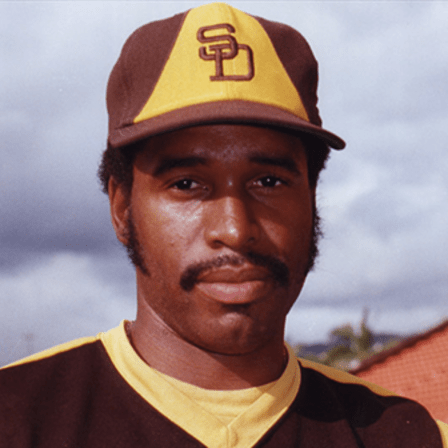
Dave Winfield was an outfielder who played for the New York Yankees in 1981-1988, 1990. Career stats: .290 batting average, 205 home runs, 818 RBI.
The draft pick who chose baseball over football, basketball, and hockey walked into Yankee Stadium in 1981 and immediately became the most physically imposing player the New York Yankees had ever employed. Dave Winfield stood 6-foot-6, threw from right field with a cannon that scared runners back to third, and hit with a combination of power and athleticism that belonged to a different era -- one that hadn't arrived yet. George Steinbrenner signed him to a ten-year, $23 million contract, the richest deal in baseball history at the time, and then spent the better part of a decade trying to tear the man down. Winfield wouldn't break.
Path to the Bronx
Winfield's route to New York was unlike anyone else's in baseball history. The University of Minnesota product was drafted by four professional sports leagues -- the San Diego Padres (MLB), the Atlanta Hawks (NBA), the Utah Stars (ABA), and the Minnesota Vikings (NFL), even though he didn't play college football. He chose baseball, debuted with San Diego in 1973 without spending a single day in the minor leagues, and spent eight seasons becoming one of the National League's best all-around players.
By 1980, Winfield was a four-time All-Star hitting .276 with power, playing Gold Glove defense in right field, and ready for free agency. Steinbrenner, fresh off back-to-back championships and hungry for more, offered the biggest contract the sport had ever seen. Winfield signed in December 1980, and the expectations that came with the deal were enormous. So was the man.
Yankees Career
Winfield delivered from the start. In 1982, he hit .280 with 37 home runs and 106 RBI, earning another All-Star selection. In 1984, he battled Don Mattingly for the batting title down to the final day of the season -- Mattingly won at .343 to Winfield's .340, and the race produced one of the most thrilling September stretches the Bronx had seen in years.
What made Winfield special wasn't just the numbers -- it was the way he played the game. His arm from right field was a weapon. He ran the bases with intelligence and speed unusual for a man his size. He hit in the clutch when the moment called for it. And he did all of this while Steinbrenner waged a public campaign to undermine him, stewing over a poor 1981 World Series against the Dodgers, branding him "Mr. May" during the 1985 stretch run, and eventually paying a gambler named Howie Spira to dig up dirt on his own player.
| NYY Batting Average | .290 |
| NYY Home Runs | 205 |
| NYY RBI | 818 |
| NYY All-Star Selections | 8 |
| Gold Gloves (NYY) | 5 |
| Hall of Fame | Inducted 2001 |
The Steinbrenner-Winfield feud became one of the ugliest owner-player conflicts in sports history. The Boss couldn't stand that Winfield's contract included a cost-of-living escalator he hadn't fully understood when he signed it. The payments kept climbing, and so did Steinbrenner's resentment. The Spira scandal eventually got Steinbrenner banned from baseball for two years, but by then the damage was done. Winfield was traded to the California Angels in May 1990 after missing all of 1989 with a back injury. His nine seasons in pinstripes produced elite numbers and zero October glory -- the Yankees didn't reach the postseason a single time during Winfield's tenure after 1981.
Key Moments
The Richest Contract in Baseball
Winfield signs a ten-year, $23 million deal with the Yankees, making him the highest-paid player in the sport's history.
The Batting Race
Winfield and Don Mattingly wage a season-long battle for the AL batting title. Mattingly finishes at .343, Winfield at .340 -- both put on a show that electrified the Bronx.
The Seagull Incident
During a game in Toronto, Winfield throws a warm-up ball between innings that strikes and kills a seagull on the turf. He is briefly detained by Toronto police after the game. The incident becomes one of baseball's strangest footnotes.
Eight Straight All-Star Games
Winfield earns his eighth consecutive All-Star selection as a Yankee -- and twelfth in a row overall dating back to his Padres days -- cementing his status as one of the game's elite players despite the team's struggles.
Hall of Fame Induction
Winfield enters Cooperstown wearing a Padres cap, finishing a career that spanned 22 seasons with a .283 average, 465 home runs, and 3,110 hits.
Larger Than the Conflict
The Steinbrenner saga shouldn't define Winfield's time in New York, but it often does -- and that's a shame. Strip away the owner's pettiness and what you're left with is a Hall of Fame player who put up nine seasons of elite production in the most demanding market in sports. He drove in 100 runs five times as a Yankee. He won five Gold Gloves in right field. He was the best all-around athlete on the roster every single day he suited up.
Winfield also built something off the field that outlasted any box score. His David M. Winfield Foundation, established during his playing days, focused on health and education for underprivileged kids. He wasn't just playing the game -- he was using the platform it gave him.
Frequently Asked Questions
Why did George Steinbrenner call Dave Winfield Mr. May?
Steinbrenner coined the nickname in September 1985, telling the New York Times, "Where is Reggie Jackson? We need a Mr. October or a Mr. September. Winfield is Mr. May." The resentment dated back to Winfield's 1-for-22 in the 1981 World Series against the Dodgers. It was a deliberate contrast to Reggie Jackson's famous "Mr. October" moniker, and it became a public insult that poisoned the relationship between owner and player for years.
What was Dave Winfield's best season with the Yankees?
Winfield's best all-around season was 1984, when he hit .340 with 19 home runs, 100 RBI, and Gold Glove defense while pushing Don Mattingly to the wire in the batting race. His most powerful season was 1982, when he slugged 37 home runs with 106 RBI.
Why was Dave Winfield traded from the Yankees?
Winfield was traded to the California Angels in May 1990 after missing the entire 1989 season with a herniated disk in his back. The trade also reflected the toxic relationship between Winfield and Steinbrenner, who had been trying to move him for years.
Did Dave Winfield go into the Hall of Fame as a Yankee?
No. Winfield entered the Hall of Fame in 2001 wearing a San Diego Padres cap, honoring the franchise where he began his career and played eight seasons before coming to New York.
Dave Winfield deserved better from the Yankees, and the Yankees deserved better from themselves during his years in the Bronx. He was a generational talent stuck on teams that couldn't get out of their own way, managed by an owner who treated his best player like an adversary. Through it all, Winfield played the game at an elite level, carried himself with dignity, and never let the noise change who he was. The numbers are in Cooperstown. The respect took longer, but it got there too.