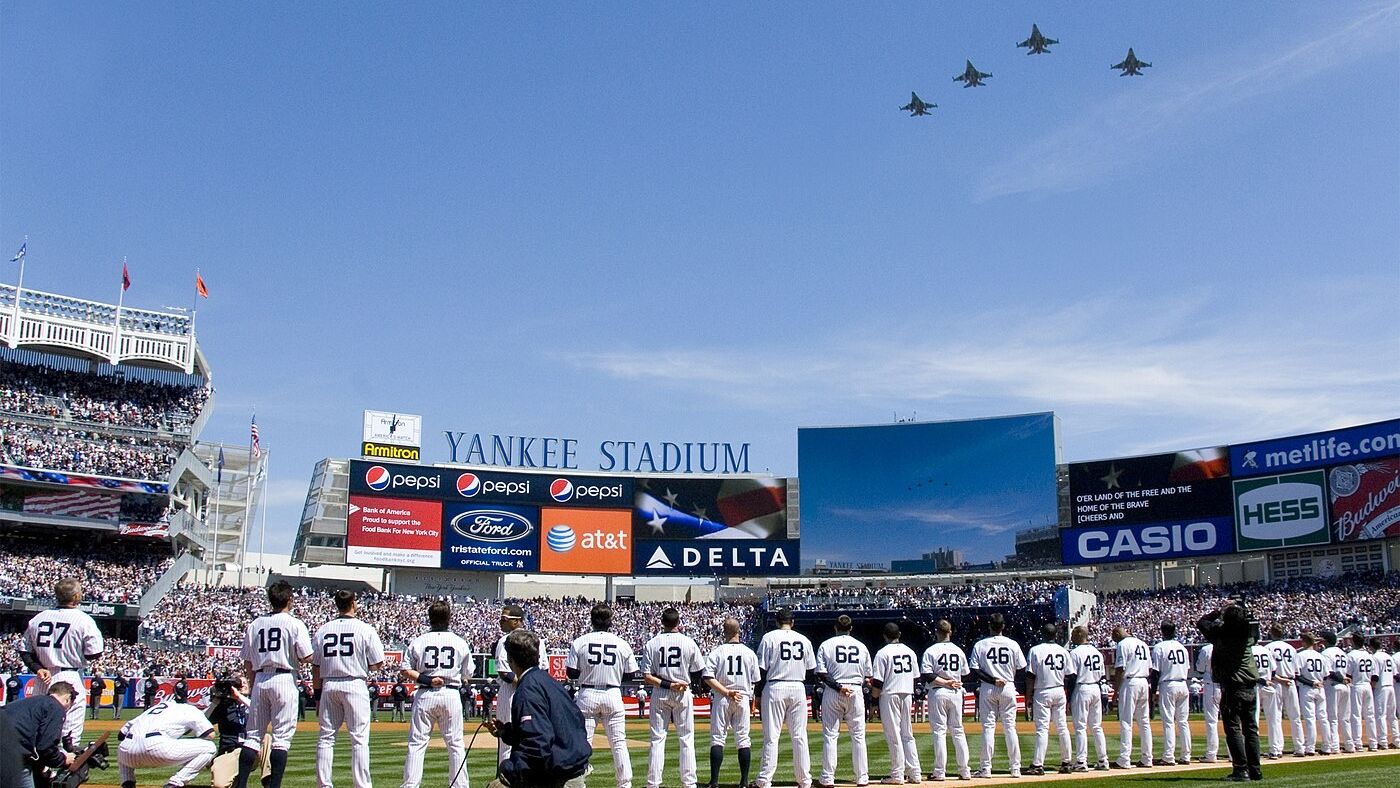
April 16, 2009. The New York Yankees play their first real game in a $1.5 billion building across the street from where the old one still stood -- half-demolished, gutted, looking like a ghost of itself. CC Sabathia takes the ball. 48,271 fans pack in. Cleveland beat the Yanks 10-2 -- a nine-run seventh inning turned it into a blowout -- and I'm not going to pretend the whole thing didn't feel like a gut punch for grown adults who care too much about baseball.
The new Yankee Stadium wasn't just a building. It was an argument -- that you could honor 85 years of history while charging $2,500 for a leather chair behind home plate. Whether the Yankees won that argument depends on who you ask. But they won the freakin' World Series in the building's first year, and that tends to settle most debates.
Saying Goodbye to the Cathedral
You can't talk about the new place without talking about what they tore down. The original Yankee Stadium opened on April 18, 1923 -- the House That Ruth Built, the most famous address in American sports. It hosted 26 championships, Ruth's called shot (maybe), Gehrig's speech (definitely), Mantle's tape-measure blasts, and Reggie's three-homer night. And on September 21, 2008, the Yankees played their last game there -- a 7-3 win over Baltimore -- and Derek Jeter grabbed a microphone on the infield and told the crowd to take their memories across the street.
The 2008 team finished 89-73 and missed the playoffs for the first time since 1993. That stung. Thirteen straight postseason trips, and they couldn't send the old girl off with October baseball. (The stadium deserved better. So did the fans who'd sat through that pitching staff.)
The wrecking ball came in early 2009. By 2010, the original was gone -- leveled into Heritage Field, a public park where kids play on the same ground that DiMaggio patrolled. The actual Monument Park monuments -- the Ruth, Gehrig, and Huggins stones, the real ones, not replicas -- got loaded onto trucks and moved across 161st Street to the new building. Most fans don't know that. Those are the same physical objects that sat in center field for decades.
A Billion-Dollar Bet
Here's what $1.5 billion buys you: limestone and granite cladding that mirrors the 1923 original. A copper frieze running along the exterior -- the same decorative feature they'd ripped off during the awful 1974-76 renovation and that fans had missed ever since. The Great Hall, a massive interior concourse with high ceilings and Yankees history displays that makes walking to your seat feel like entering a museum. (A museum where a hot dog costs $9, but still.) Populous -- the architecture firm behind Camden Yards and half the retro ballparks in America -- designed the whole thing with one directive: make it look like the stadium the renovation destroyed.
The field dimensions matched the old park almost exactly. Left field at 318 feet. Center at 408. Right at 314. They moved Monument Park to left-center and gave fans actual access to it before games -- an upgrade over the old setup, where you sometimes couldn't get in on game days at all.
And then there were the Legend Seats.
Look -- I get it. The Yankees needed revenue to keep spending on free agents, and luxury seating was the play. But those leather club chairs directly behind the plate, priced at $500 to $2,625 per game and sold almost entirely to corporations? They sat EMPTY during nationally televised April games. Rows and rows of pristine leather with nobody in them, visible in every single camera shot, while regular fans crammed into the upper deck. Commissioner Selig reportedly called the Yankees about the optics. (When Bud Selig is telling you your stadium looks bad on TV, you've got a problem.) The Yankees dropped prices and filled seats as the season went on, but the early images stuck. The new Yankee Stadium, critics said, was built for the rich -- not for the fans who'd been filling the old place since their grandparents brought them.
The public financing didn't help the narrative. The Yankees used roughly $362 million in tax-exempt bonds from the city and state. They bulldozed Macombs Dam Park and Mullaly Park -- two neighborhood parks in the South Bronx -- to build on the site. A City Council analysis pegged the total public subsidy at over $850 million when you factored in the bonds, lost tax revenue, park replacement, and infrastructure work. The IRS even opened an investigation into whether the tax-exempt bonds were properly used. (A baseball stadium for a private team as a "governmental purpose" is a tough sell, even by New York creative-accounting standards.)
None of that controversy survived October. Winning cures everything.
Opening Day
Yogi Berra threw out the ceremonial first pitch. Because of course Yogi threw out the first pitch -- the man had been a Yankee since 1946 and connected every era of the franchise's history like a living bridge. The pregame ceremony had all the military honors, the flag, the legends on the field. And then Sabathia took the mound.
Giving CC the first start wasn't just good pitching management. It was a statement. The Yankees had signed him that December for $161 million -- the richest pitching contract in history at that point -- and handing him the ball for game one in the new building said everything about who they'd built the 2009 team around. Sabathia battled but couldn't keep it close -- the Indians broke it open with a nine-run seventh that turned the day into a rout. Cleveland's Grady Sizemore hit the first home run in the stadium's regular season history (because the baseball gods love irony), and Jorge Posada hit the first one for the Yanks.
The exhibition game two weeks earlier -- April 2 against the Cubs -- had given everyone a preview. Alex Rodriguez reportedly hit the first homer in the building's history that day. (A-Rod hitting the first home run in a stadium that cost $1.5 billion is almost too on-brand.)
I was honored they gave me the ball for that game. You don't forget something like that.
The Championship Settles It
The 2009 Yankees went 103-59. They led the AL East by eight games over Boston. They hit 244 home runs -- most in the majors -- partly because the new stadium's wind patterns turned routine flies into souvenirs, and partly because the lineup was stacked from top to bottom.
Jeter hit .334. Mariano Rivera saved 44 games with a 1.76 ERA at age 39. A-Rod came back from hip surgery and a PED admission to slug 30 homers. Teixeira mashed 39 with 122 RBI. Robinson Cano hit .320 and looked like he was just getting started. And Sabathia -- the guy who'd thrown the first pitch in the building -- went 19-8 with a 3.37 ERA before turning into a monster in October.
They swept Minnesota in the ALDS. They beat the Angels in six in the ALCS. And then came the World Series against Philadelphia -- a Phillies team that had won it all the year before and wasn't going away quietly.
Game 6. November 4, 2009. Yankee Stadium. Hideki Matsui put on a performance that still doesn't seem real -- 3-for-4 with a two-run homer, a two-run double, and a two-run single for six RBI. He went .615 for the entire Series with 3 homers and 8 RBI and won MVP honors in what turned out to be his last game in pinstripes. Andy Pettitte started. Mo closed it. Rivera fell to his knees on the mound when the final out landed in Robinson Cano's glove, and the 27th championship belonged to the Bombers.
First year in the new building. World Series title. No other team in the modern retro-stadium era had pulled that off.
(The empty Legend Seats didn't seem like such a big deal in November.)
To be able to win a championship in our first year here means everything.
The Boss's Last Monument
George Steinbrenner drove the entire stadium project. It was his vision, his demand, his final act as the man who'd owned the Yankees since 1973 and turned them back into baseball's dominant franchise. By 2009, his health was failing -- he attended games but wasn't the force he'd been for three decades. He died on July 13, 2010, seven months after watching his team christen the new building with a championship.
The stadium was his last monument. Not bad for a final act.
For the Core Four -- Jeter, Rivera, Pettitte, Jorge Posada -- the 2009 title was their fifth ring together and their last. They'd won the first four at the old stadium. They won the last one across the street. The dynasty's final championship and the new building's first chapter were the same story.
| Construction Cost | ~$1.5 billion |
| Architect | Populous (formerly HOK Sport) |
| Seating Capacity | ~50,291 (52,325 with standing room) |
| First Regular Season Game | April 16, 2009 -- Cleveland 10, Yankees 2 |
| First Exhibition Game | April 2, 2009 vs. Chicago Cubs |
| Opening Day Starter | CC Sabathia |
| Ceremonial First Pitch | Yogi Berra |
| First HR (Regular Season) | Grady Sizemore (CLE) |
| First Yankees HR | Jorge Posada |
| 2009 Record | 103-59 (.636) |
| 2009 World Series | Yankees 4, Phillies 2 (27th title) |
Groundbreaking
Construction begins on the new stadium site across 161st Street from the original Yankee Stadium, on the footprint of Macombs Dam Park.
Final Game at the Original
The Yankees beat Baltimore 7-3 in the last game at the old Yankee Stadium. Jeter delivers a farewell speech from the mound, asking fans to carry their memories across the street.
Exhibition Opener vs. Cubs
The new stadium hosts a charity exhibition against Chicago. Alex Rodriguez reportedly hits the first home run in the building's history.
First Regular Season Game
Cleveland routs the Yankees 10-2 behind a nine-run seventh inning. Sabathia starts. Yogi Berra throws the ceremonial first pitch. Grady Sizemore hits the first regular season homer; Jorge Posada hits the first for the Yanks.
World Series Championship
The Yankees beat Philadelphia in Game 6 behind Matsui's historic performance. Rivera closes it out. Championship number 27 -- won in the stadium's inaugural season.
Frequently Asked Questions
When did the new Yankee Stadium open?
The new Yankee Stadium hosted a charity exhibition game on April 2, 2009, against the Chicago Cubs. The first regular season game was April 16, 2009 -- a 10-2 Cleveland win over the Yankees. CC Sabathia started, Yogi Berra threw the ceremonial first pitch, and approximately 48,271 fans packed the sellout crowd.
How much did the new Yankee Stadium cost to build?
The stadium itself cost approximately $1.5 billion, making it the most expensive baseball stadium ever built at the time. The Yankees financed construction privately but used roughly $362 million in tax-exempt bonds from New York City and New York State. When infrastructure improvements are included, total investment in the project topped $2 billion.
Who hit the first home run at the new Yankee Stadium?
In the first regular season game on April 16, 2009, Cleveland's Grady Sizemore hit the first home run. Jorge Posada hit the first home run for the Yankees. Alex Rodriguez reportedly hit the first homer in any game at the new stadium during the April 2 exhibition against the Cubs.
Did the Yankees win the World Series when the new stadium opened?
Yes. The 2009 Yankees went 103-59 and beat the Philadelphia Phillies four games to two in the World Series -- their 27th title and first since 2000. Hideki Matsui won Series MVP after going .615 with 3 homers and 8 RBI. No other team in the modern era has won a World Series in a new stadium's inaugural season.
What happened to the original Yankee Stadium?
Demolition began in early 2009 and finished in 2010. The site became Heritage Field -- a public park and youth athletic facility managed by New York City. The actual Monument Park monuments (Ruth, Gehrig, Huggins, and others) were physically relocated to the new stadium. They aren't replicas. Some seats and structural materials were salvaged and sold to collectors.