
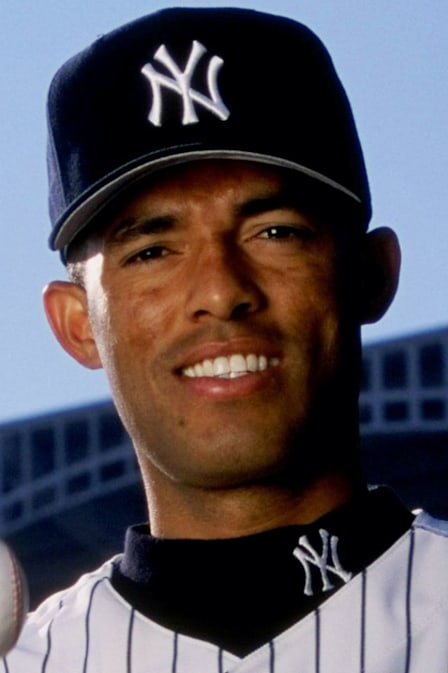
Career Stats
Regular Season
| Year | G | GS | W | L | SV | IP | H | ER | K | BB | ERA | WHIP |
|---|---|---|---|---|---|---|---|---|---|---|---|---|
| 2009 | 66 | 0 | 3 | 3 | 44 | 66.1 | 48 | 13 | 72 | 12 | 1.76 | 0.90 |
| 2010 | 61 | 0 | 3 | 3 | 33 | 60.0 | 39 | 12 | 45 | 11 | 1.80 | 0.83 |
| 2011 | 64 | 0 | 1 | 2 | 44 | 61.1 | 47 | 13 | 60 | 8 | 1.91 | 0.90 |
| 2012 | 9 | 0 | 1 | 1 | 5 | 8.1 | 6 | 2 | 8 | 2 | 2.16 | 0.96 |
| 2013 | 64 | 0 | 6 | 2 | 44 | 64.0 | 58 | 15 | 54 | 9 | 2.11 | 1.05 |
| Career | 1115 | 10 | 82 | 60 | 652 | 1283.2 | 998 | 315 | 1173 | 286 | 2.21 | 1.00 |
Career-best seasons highlighted in gold. Stats via Retrosheet.
Postseason
| Year | G | GS | W | L | SV | IP | H | ER | K | BB | ERA | WHIP |
|---|---|---|---|---|---|---|---|---|---|---|---|---|
| 1995 | 3 | -- | 1 | 0 | 0 | 5.1 | -- | -- | -- | -- | 0.00 | -- |
| 1996 | 8 | -- | 1 | 0 | 0 | 14.1 | -- | -- | -- | -- | 0.63 | -- |
| 1997 | 2 | -- | 0 | 0 | 1 | 2.0 | -- | -- | -- | -- | 4.50 | -- |
| 1998 | 10 | -- | 0 | 0 | 6 | 13.1 | -- | -- | -- | -- | 0.00 | -- |
| 1999 | 8 | -- | 2 | 0 | 6 | 12.1 | -- | -- | -- | -- | 0.00 | -- |
| 2000 | 10 | -- | 0 | 0 | 6 | 15.2 | -- | -- | -- | -- | 1.72 | -- |
| 2001 | 11 | -- | 2 | 1 | 5 | 16.0 | -- | -- | -- | -- | 1.13 | -- |
| 2002 | 1 | -- | 0 | 0 | 1 | 1.0 | -- | -- | -- | -- | 0.00 | -- |
| 2003 | 8 | -- | 1 | 0 | 5 | 16.0 | -- | -- | -- | -- | 0.56 | -- |
| 2004 | 9 | -- | 1 | 0 | 2 | 12.2 | -- | -- | -- | -- | 0.71 | -- |
| 2005 | 2 | -- | 0 | 0 | 2 | 3.0 | -- | -- | -- | -- | 3.00 | -- |
| 2006 | 1 | -- | 0 | 0 | 0 | 1.0 | -- | -- | -- | -- | 0.00 | -- |
| 2007 | 3 | -- | 0 | 0 | 0 | 4.2 | -- | -- | -- | -- | 0.00 | -- |
| 2009 | 12 | -- | 0 | 0 | 5 | 16.0 | -- | -- | -- | -- | 0.56 | -- |
| 2010 | 6 | -- | 0 | 0 | 3 | 6.1 | -- | -- | -- | -- | 0.00 | -- |
| 2011 | 2 | -- | 0 | 0 | 0 | 1.1 | -- | -- | -- | -- | 0.00 | -- |
| Career | 96 | 0 | 8 | 1 | 42 | 141.0 | 0 | 0 | 0 | 0 | 0.00 | 0.00 |
Mariano Rivera was a pitcher who played for the New York Yankees from 1995 to 2013. Career stats: 82-60 record, 2.21 ERA, 1173 strikeouts.
A $3,000 signing bonus out of Panama City, a cut fastball that appeared one afternoon in 1997 and never left, 652 saves, and a unanimous Hall of Fame ballot in 2019 -- every single one of 425 votes. Mariano Rivera had one pitch. Every hitter in baseball knew it was coming. It didn't matter. Not for 19 seasons. Not once.
From Panama to the Bronx
Born in Panama City, Panama, Rivera grew up in the small fishing village of Puerto Caimito, where he played baseball with makeshift gloves fashioned from cardboard. He signed with the Yankees as an amateur free agent in 1990 for a modest bonus -- reported as anywhere from $2,000 to $3,000 depending on the source -- what would become the greatest bargain in franchise history.
Rivera began his career as a starting pitcher in the minor leagues and briefly started games for the Yankees in 1995 before transitioning to the bullpen. The move changed baseball forever -- and based on what came next, it might be the best roster decision in franchise history (the one that brought Ruth over included).
The Cutter: How One Pitch Rewrote the Game
The story of Rivera's cutter is one of baseball's best origin tales. During a warm-up session in 1997, Rivera noticed his fastball had started moving -- cutting hard and late to the left. He hadn't changed his grip or his mechanics. The pitch just showed up one day, like a gift he didn't ask for.
Pitching coach Mel Stottlemyre told him not to fight it. Rivera didn't. He threw that pitch for the next 16 years, and nobody ever figured it out.
The cutter moved about two inches laterally, which doesn't sound like much until you consider that it broke at the last possible moment -- after the hitter had already committed to his swing. Left-handed hitters saw it tail inside, jamming them and snapping their bats. Right-handers watched it dart away from the barrel. Rivera shattered an estimated 1,000 bats during his career. Opposing teams would stash extra lumber in the dugout when they knew he was coming in. They still couldn't hit him.
Everybody knows what's coming. Nobody can hit it. That's what makes Rivera the most remarkable pitcher I've ever seen.
Yankees Career
Rivera's dominance as a closer is unmatched in baseball history. Armed with that cutter, he posted a career ERA of 2.21 and a postseason ERA of 0.70 -- numbers so dominant they border on fictional.
| Games | 1,115 |
| Saves | 652 |
| ERA | 2.21 |
| WHIP | 1.000 |
| Strikeouts | 1,173 |
| WAR | 56.3 |
| Postseason Saves | 42 |
| Postseason ERA | 0.70 |
| All-Star Selections | 13 |
| World Series Titles | 5 |
What made Rivera truly unique was his postseason dominance. His 0.70 ERA across 141 postseason innings is a number so absurd it defies comprehension. In 96 postseason appearances, he allowed just 11 earned runs -- across his entire career. He earned World Series MVP honors in 1999 and ALCS MVP in 2003.
He needs to pitch in a higher league, if there is one. Ban him from baseball. He should be illegal.
The Dynasty's Insurance Policy
From 1998 through 2000, the Yankees won three consecutive World Series titles, and Rivera was the reason every lead felt safe after the seventh inning. During those three postseasons combined, he pitched roughly 41 innings and allowed just three earned runs -- an ERA around 0.65 across three October runs. Somewhere in that stretch he strung together 33.1 consecutive scoreless innings, a postseason record that finally ended when he gave up a run in the clinching Game 6 of the 2000 ALCS against Seattle.
He was part of the Core Four alongside Derek Jeter, Andy Pettitte, and Jorge Posada -- four homegrown players who came up through the farm system and won five championships together. Rivera was the last piece of the puzzle each night: when he jogged in from the bullpen, the game was over. Opposing hitters knew it. Their managers knew it. The only question was how quickly he'd finish them off.
During the dynasty years, Rivera and Posada formed a battery that opponents dreaded. Posada knew where to set up, Rivera knew where the ball was going, and the hitter was along for the ride. It was the most efficient three-pitch inning in baseball (some nights it was two pitches -- then a slow walk back to the dugout).
Key Moments
MLB Debut
Rivera makes his major league debut as a starting pitcher against the Angels, allowing 5 runs in 3.1 innings. Nobody yet knows what he will become.
First World Series Title
Rivera pitches two scoreless innings (7th and 8th) in Game 6 before John Wetteland closes out the Braves. It's his first championship -- the cutter is still developing.
The Cutter Appears
During a warm-up session, Rivera's fastball begins cutting hard and late without any change to his grip or mechanics. Pitching coach Mel Stottlemyre tells him to keep it. Rivera throws that pitch for the next 16 years.
World Series MVP
Rivera saves two games in the Yankees' four-game sweep of the Braves, allowing no runs in 4.2 innings. He's named World Series MVP.
Subway Series Closer
Rivera records the final out of the World Series against the crosstown Mets, completing the Yankees' third straight championship. He saves two games and allows one run across 4.1 innings in the series.
ALCS MVP
Rivera earns ALCS MVP honors after a dominant performance against the Red Sox, holding a crucial lead in the series. The Yankees advance to the World Series for the sixth time in eight years.
All-Time Saves Record
Rivera records his 602nd career save, passing Trevor Hoffman to become baseball's all-time saves leader. He'll finish with 652.
Final Game at Yankee Stadium
In one of the most emotional moments in Yankees history, Jeter and Pettitte walk to the mound to pull Rivera from his final game. The Sandman exits in tears as the crowd roars.
The Sandman Exits
Rivera threw one pitch. Everyone knew it was coming. Nobody could hit it. That summary doesn't get easier to process with time -- it just gets stranger. In an era of advanced scouting and video analysis, with hitters who spent entire off-seasons dissecting his mechanics, Rivera still posted a sub-2.00 ERA in the postseason for nearly two decades. The gap between what opponents knew and what they could actually do about it was the most honest measure of how good he was.
His #42 was already retired across baseball in honor of Jackie Robinson, but the Yankees gave Rivera special permission to be the last player to wear it. When he retired in 2013, the number was retired by the Yankees specifically in his honor -- a fitting send-off for the only player ever to earn that distinction twice.
In 2019, Rivera became the first player in baseball history elected to the Hall of Fame unanimously -- all 425 ballots. Jeter came closest the following year, falling one vote short. Bernie Williams, who played alongside Rivera for 16 seasons, put it simply: "There was nobody like him. There never will be."
Frequently Asked Questions
How many saves did Mariano Rivera have?
Mariano Rivera recorded 652 career saves, the most in Major League Baseball history. He also holds the record for postseason saves with 42. His career spans 19 seasons, all with the New York Yankees (1995--2013).
Was Mariano Rivera a unanimous Hall of Famer?
Yes, Mariano Rivera was the first player in baseball history to be unanimously elected to the National Baseball Hall of Fame. He received all 425 votes (100%) in the 2019 Hall of Fame balloting.
What pitch did Mariano Rivera throw?
Mariano Rivera was famous for throwing almost exclusively a cut fastball, or "cutter." The pitch moved laterally and broke bats with its late, sharp break. Despite hitters knowing it was coming, the pitch was virtually unhittable for nearly two decades.
What was Mariano Rivera's postseason ERA?
Mariano Rivera's career postseason ERA was 0.70 across 141 innings pitched in 96 appearances. He allowed just 11 earned runs in his entire postseason career, making him the most dominant postseason pitcher in baseball history.
How did Mariano Rivera discover his cutter?
Rivera's cutter developed naturally during a warm-up session in 1997. His fastball began cutting sharply to the left without any deliberate change to his grip or mechanics. Pitching coach Mel Stottlemyre told him to embrace the movement rather than fight it. Rivera threw that same pitch for the rest of his career, and it became the most dominant single pitch in baseball history.