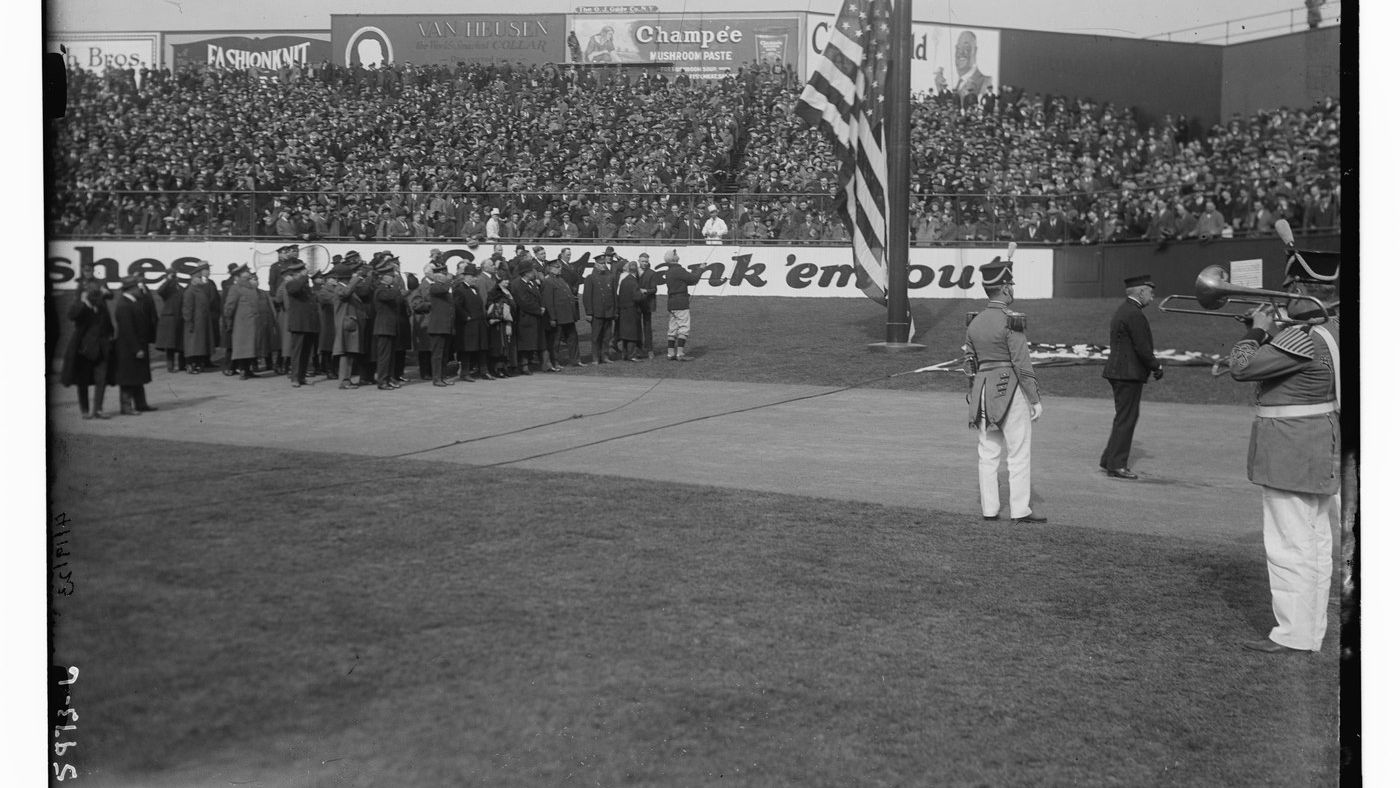
April 18, 1923. A Wednesday afternoon in the Bronx. Temperature in the mid-forties, a raw wind cutting off the Harlem River, overcast skies that made the new triple-decked grandstand look like a fortress rising out of the neighborhood. The gates opened early. By noon -- three and a half hours before the scheduled first pitch -- the lines stretched blocks into the surrounding streets. Police turned away an estimated 25,000 fans who couldn't get in. The 74,217 who did get in made it the largest crowd ever to attend a baseball game in America. They came to see a building. They stayed to see Babe Ruth christen it.
The New York Yankees beat the Boston Red Sox 4-1 that afternoon. Ruth hit the first home run in the stadium's history -- a three-run shot off Howard Ehmke in the third inning, against the very team that had sold him three years earlier. The next morning, sportswriter Fred Lieb coined a phrase in print that stuck for the next 85 years: "The House That Ruth Built."
The Buildup
The Yankees didn't build Yankee Stadium because they wanted a bigger ballpark. They built it because they got kicked out of their old one.
Since 1913, the Yankees had played as tenants at the Polo Grounds -- renting from the New York Giants, who owned the building and treated their American League boarders the way a landlord treats a tenant who's three months late on rent. The arrangement worked fine as long as the Yankees drew modest crowds and stayed in the Giants' shadow. Then Jacob Ruppert bought Ruth from Boston in January 1920, and the balance of power in New York baseball flipped overnight.
Ruth hit 54 home runs that first season. Yankees attendance at the Polo Grounds exploded to roughly 1.29 million -- a major league record and more fans than the Giants themselves drew. Giants manager John McGraw, a proud man who considered the Yankees' success a personal insult, pushed to evict them. The message was simple: find your own ballpark.
Ruppert found one. He bought a tract of land in the South Bronx from the William Waldorf Astor estate for approximately $600,000 -- and chose the location with surgical precision. The site at 161st Street and River Avenue sat directly across the Harlem River from the Polo Grounds, less than half a mile away. On a clear day, McGraw could look out from his ballpark and see the monument his eviction notice had forced into existence.
| Land Cost | ~$600,000 |
| Construction Cost | ~$2.5 million |
| Total Investment | ~$3.1 million |
| Construction Time | ~284 working days |
| Architect | Osborn Engineering (Cleveland) |
| Capacity | ~58,000 seated (70,000+ with standing room) |
| Design | First triple-decked baseball park ever built |
Groundbreaking came on May 5, 1922. Roughly 284 working days later, the thing stood finished. The White Construction Company of New York built the largest baseball stadium in the world in under a year -- a pace that still seems absurd. Three full decks of seating wrapped from behind home plate around both foul lines. A decorative copper frieze ran along the roof of the upper deck, scalloped and gleaming, the most recognizable architectural detail in professional baseball for the next fifty years. Eleven elevators. Tiled concourses. A press box that made every other press box in America look like a storage closet.
The field dimensions told their own story. Left field down the line sat at just 281 feet. Left-center stretched to roughly 500 feet. Dead center sat at approximately 487 feet. Right field down the line? 295 feet. The asymmetry wasn't an accident -- the park rewarded Ruth's pull power to right while punishing anyone foolish enough to try and reach the deepest parts of center (who the hell was going to hit it 487 feet?).
One thing the stadium didn't have: lights. Every game at Yankee Stadium for its first 23 years took place during the day. Night baseball didn't arrive until May 28, 1946.
The Moment
Governor Al Smith threw the ceremonial first pitch. John Philip Sousa -- the John Philip Sousa -- conducted the military band. The whole production felt less like a baseball game and more like the opening of a civic monument, which is exactly what Ruppert intended.
Bob Shawkey got the start for the Yankees. He wasn't the staff ace -- that was Waite Hoyt or Bullet Joe Bush -- but he'd been a Yankee since 1915, longer than anyone else on the roster. Manager Miller Huggins gave him the ball as an honor. Shawkey delivered. He held the Red Sox scoreless through two innings, working efficiently in the cold while 74,217 fans shifted in their seats and waited for the moment they'd come to see.
It arrived in the third inning. Whitey Witt and Joe Dugan reached base ahead of Ruth. Ehmke -- pitching for the Red Sox, the team that had sold Ruth for $100,000 and a $300,000 loan -- delivered a pitch. Ruth swung.
The ball carried into the right-field bleachers. Three-run home run. The first home run in Yankee Stadium history, hit by the man whose gate appeal had made the building financially necessary, off a pitcher wearing the uniform of the team that hadn't wanted him anymore. Ruth trotted around the bases doffing his cap with the theatrical flair that only he could pull off without looking ridiculous. The stadium shook.
I'd give a year of my life if I can hit a home run in the first game in this new park.
He didn't have to give up the year. The Yankees added another run later. Shawkey went the full nine, scattering hits and allowing just a single Red Sox run. Final score: 4-1. The first complete game ever pitched at Yankee Stadium, won by the oldest Yankee on the roster, on the first afternoon in the biggest baseball park the world had ever seen.
The Aftermath
The 1923 season validated every dollar Ruppert had spent. Ruth hit .393 with 41 home runs -- the highest batting average of his career. The Yankees went 98-54, won the American League pennant, and met the Giants in the World Series for the third straight October.
This time, the Yankees won it. Four games to two. Ruth batted .368 with three home runs in the Series. The franchise had its first championship, claimed in the same year it opened the stadium that its former landlords had forced it to build. McGraw and the Giants never faced the Yankees in the World Series again -- though McGraw led the Giants to one more NL pennant in 1924 before losing to Washington.
The stadium Ruppert built at 161st Street hosted more than baseball. Joe Louis defended his heavyweight title there. Pope Paul VI celebrated a papal Mass before roughly 80,000 people there in 1965 -- the first papal visit to the Western Hemisphere. The NFL's Giants played their home games on that field for decades. It survived a full renovation from 1973 to 1976 that stripped away the copper frieze and redesigned the interior, then kept going for another 32 years. Lou Gehrig called himself the luckiest man alive at home plate there. Mariano Rivera recorded the final save there on September 21, 2008, a 7-3 win over the Orioles. The wrecking ball came in 2009.
The new Yankee Stadium opened across the street that same year. It's a fine building. But the one Ruppert threw up in 284 days -- the one Ruth christened with a three-run shot against the team that let him go -- that was the original. The House That Ruth Built, from the first afternoon to the last.
Ruth Purchased from Boston
The Yankees buy Babe Ruth for $100,000. His gate appeal transforms the franchise and fills the Polo Grounds beyond the Giants' comfort level.
Giants Serve Eviction Notice
John McGraw and the Giants formally notify the Yankees they're no longer welcome at the Polo Grounds. The notice gets extended twice; the Yankees play their last two seasons as tenants (1921, 1922) while Ruppert searches for land.
Groundbreaking in the Bronx
Construction begins at 161st Street and River Avenue on land purchased from the Astor estate. Roughly 300 workers break ground.
Yankee Stadium Opens
74,217 fans pack the stadium for the first game. Ruth hits the first home run. Yankees beat the Red Sox 4-1.
First World Series Title
The Yankees beat the Giants four games to two for their first championship -- won in the same year the stadium opened.
Final Game at the Original Stadium
The Yankees beat Baltimore 7-3 in the last game ever played at the original (and renovated) Yankee Stadium. Demolition begins in 2009.
Frequently Asked Questions
When did the original Yankee Stadium open?
The original Yankee Stadium opened on April 18, 1923 -- a cold Wednesday afternoon in the Bronx. The Yankees beat the Boston Red Sox 4-1 in front of 74,217 fans, the largest crowd in baseball history at the time. Police turned away an estimated 25,000 additional fans outside the gates. Bob Shawkey pitched a complete game for the win, and Babe Ruth hit the first home run in the stadium's history -- a three-run shot in the third inning.
Who hit the first home run at Yankee Stadium?
Babe Ruth hit the first home run in Yankee Stadium history on opening day, April 18, 1923. It came in the third inning off Boston Red Sox pitcher Howard Ehmke -- a three-run blast into the right-field bleachers that scored Whitey Witt and Joe Dugan. Ruth had told reporters before the game that he'd give a year of his life to hit a home run that day. He didn't need to.
Why was Yankee Stadium called 'The House That Ruth Built'?
Sportswriter Fred Lieb coined the phrase in his coverage of the stadium's April 18, 1923 opening. It captured a literal truth: Ruth's arrival from Boston in 1920 had generated record attendance at the Polo Grounds -- so much that the Giants evicted the Yankees from the building. Ruth's gate appeal made the new stadium financially necessary, and his opening-day home run gave the nickname an almost poetic symmetry. The phrase stuck immediately and defined the ballpark for its entire 85-year existence.