
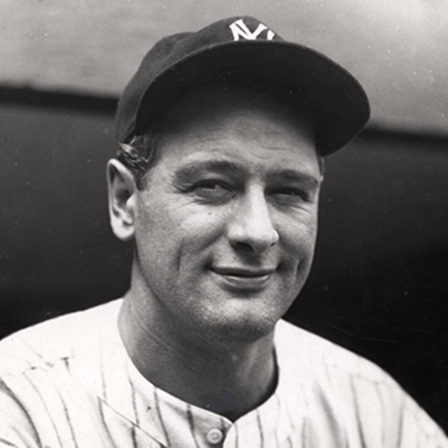
Career Stats
Regular Season
| Year | G | AB | R | H | 2B | 3B | HR | RBI | BB | SO | SB | AVG | OBP | SLG | OPS |
|---|---|---|---|---|---|---|---|---|---|---|---|---|---|---|---|
| 1935 | 149 | 535 | 125 | 176 | 26 | 10 | 30 | 119 | 132 | 38 | 8 | .329 | .462 | .583 | 1.045 |
| 1936 | 155 | 579 | 167 | 205 | 37 | 7 | 49 | 152 | 130 | 46 | 3 | .354 | .472 | .696 | 1.169 |
| 1937 | 157 | 569 | 138 | 200 | 37 | 9 | 37 | 159 | 127 | 48 | 4 | .351 | .470 | .643 | 1.113 |
| 1938 | 157 | 576 | 115 | 170 | 32 | 6 | 29 | 114 | 107 | 73 | 6 | .295 | .406 | .523 | .928 |
| 1939 | 8 | 28 | 2 | 4 | 0 | 0 | 0 | 1 | 5 | 1 | 0 | .143 | .273 | .143 | .416 |
| Career | 2164 | 8001 | 1888 | 2721 | 544 | 167 | 493 | 1995 | 1508 | 790 | 102 | .340 | .445 | .635 | 1.079 |
Career-best seasons highlighted in gold. Stats via Retrosheet.
Postseason
| Year | G | AB | R | H | 2B | 3B | HR | RBI | BB | SO | SB | AVG | OBP | SLG | OPS |
|---|---|---|---|---|---|---|---|---|---|---|---|---|---|---|---|
| 1926 | 7 | 23 | -- | 8 | -- | -- | 0 | 4 | -- | -- | -- | .348 | -- | -- | -- |
| 1927 | 4 | 13 | -- | 4 | -- | -- | 0 | 4 | -- | -- | -- | .308 | -- | -- | -- |
| 1928 | 4 | 11 | -- | 6 | -- | -- | 4 | 9 | -- | -- | -- | .545 | -- | -- | -- |
| 1932 | 4 | 17 | -- | 9 | -- | -- | 3 | 8 | -- | -- | -- | .529 | -- | -- | -- |
| 1936 | 6 | 24 | -- | 7 | -- | -- | 2 | 7 | -- | -- | -- | .292 | -- | -- | -- |
| 1937 | 5 | 17 | -- | 5 | -- | -- | 1 | 3 | -- | -- | -- | .294 | -- | -- | -- |
| 1938 | 4 | 14 | -- | 4 | -- | -- | 0 | 0 | -- | -- | -- | .286 | -- | -- | -- |
| Career | 34 | 119 | 0 | 43 | 0 | 0 | 10 | 35 | 0 | 0 | 0 | .361 | .361 | .613 | .975 |
Lou Gehrig was a first baseman who played for the New York Yankees from 1923 to 1939. Career stats: .340 batting average, 493 home runs, 1995 RBI.
Lou Gehrig played 2,130 consecutive games for the New York Yankees, hit .340 for his career, drove in 1,995 runs, and posted an OPS of 1.080 that puts him in the same conversation as Ruth and Williams. He also happened to be the finest teammate anyone in that clubhouse ever had -- which is probably why, when ALS took him at 37, the whole country stopped what it was doing to listen. The man played through broken thumbs, back spasms, and fevers that would've benched anyone else. He just didn't think that was anything worth mentioning.
Columbia to the Bronx
Born in the Yorkville neighborhood of Manhattan to German immigrant parents, Gehrig grew up just a few miles from Yankee Stadium. He attended Columbia University on a football scholarship but was discovered as a baseball player when Yankees scout Paul Krichell watched him hit towering home runs on the Columbia campus.
Gehrig signed with the Yankees in 1923 and would spend his entire career in pinstripes, forming one of the most devastating batting tandems in history alongside Babe Ruth.
The Ruth-Gehrig Partnership
For a decade, they were the most feared one-two punch in baseball history. Ruth batted third, Gehrig batted fourth, and opposing pitchers had nowhere to hide. You couldn't pitch around the Babe because the Iron Horse sat right behind him -- and Gehrig made teams pay year after year.
But partnership didn't always mean friendship. Ruth and Gehrig were close early on, but a personal falling-out in the early 1930s (widely attributed to a dispute between their families) left the two men barely speaking for years. They produced historic numbers side by side and hardly said a word off the field. It wasn't until July 4, 1939 -- Lou Gehrig Appreciation Day -- that Ruth embraced his former teammate in front of 61,808 fans.
Their on-field partnership produced staggering results. In 1927, the year Ruth hit 60 home runs, Gehrig hit 47 with 175 RBI and a .373 average. Together, they powered the club to six pennants and four World Series titles.
Yankees Career
Gehrig's consistency was his defining trait. For 13 consecutive seasons, he drove in at least 100 runs. He led the American League in RBI five times and hit .300 or better in 12 consecutive seasons. His consecutive games streak -- playing through broken fingers, back spasms, and debilitating pain -- defined his determination.
| Games | 2,164 |
| Batting Average | .340 |
| Home Runs | 493 |
| RBI | 1,995 |
| OPS | 1.080 |
| WAR | 113.7 |
| MVP Awards | 2 |
| Triple Crown | 1934 |
| World Series Titles | 6 |
| Consecutive Games | 2,130 |
Lou Gehrig was the kind of player every manager dreams of having. He never made excuses, never asked for a day off, and always came to the park ready to play.
The 1934 Triple Crown and the MVP Snag
Gehrig's 1934 season deserves its own reckoning. He won the Triple Crown that year -- batting .363 with 49 home runs and 165 RBI -- and finished fifth in MVP voting. Fifth. Mickey Cochrane won the award, and the baseball writers somehow looked at the best hitter in the American League and shrugged. It remains one of the most baffling MVP votes in the history of the award.
The snub speaks to something larger about Gehrig's career. He didn't court attention or create headlines. He showed up, hit the ball harder than almost anyone alive, and went home. Sportswriters loved Ruth's personality and DiMaggio's mystique. Gehrig gave them consistency, and consistency didn't sell newspapers.
His 1936 MVP season -- 49 home runs, 152 RBI, a .354 average -- finally gave the writers no choice. By then, Ruth had retired, and Gehrig stood alone as the best hitter in the game. It was one of seven career seasons in which he drove in 150 or more runs -- still the most in MLB history -- and he led the Bombers to the first of four consecutive World Series titles. Joe DiMaggio arrived as a rookie that year, and the torch-passing had begun -- but Gehrig still had more to give.
The Streak's Meaning
The consecutive games record -- 2,130 straight from June 1, 1925, to May 2, 1939 -- wasn't just a number. It was a philosophy. Gehrig played through a broken thumb in 1934, back spasms so severe he could barely bend over at first base, fevers, and bruised ribs. His pain tolerance bordered on reckless.
His closest friend on the club, Bill Dickey, later said that Gehrig never complained -- not once. Tony Lazzeri, who played alongside him in the infield for years, called him the toughest man he'd ever known. The streak wasn't about ego or records. Gehrig simply believed his teammates counted on him, and he refused to let them down.
When he hit four home runs in a single game against the Athletics in 1932 -- the first modern-era player to do it -- the headline the next day belonged to John McGraw, who'd announced his retirement. That was Gehrig's career in miniature: historic performance, someone else's spotlight.
Key Moments
The Streak Begins
Gehrig pinch-hits for Pee Wee Wanninger, beginning a consecutive games streak that would last 14 years and become one of baseball's most sacred records.
Four Home Runs in One Game
Gehrig becomes the first player in the modern era to hit four home runs in a single game, a feat accomplished against the Philadelphia Athletics at Shibe Park.
Triple Crown Season
Gehrig wins the Triple Crown with a .363 average, 49 home runs, and 165 RBI -- yet finishes only fifth in MVP voting.
The Streak Ends
Gehrig removes himself from the lineup after 2,130 consecutive games, telling manager Joe McCarthy: "I'm not helping the team." The announcement stuns the baseball world.
Luckiest Man Speech
In one of the most famous moments in American sports history, a dying Gehrig addresses 61,808 fans at Yankee Stadium, declaring himself "the luckiest man on the face of the earth."
Passing
Lou Gehrig dies at age 37, less than two years after his diagnosis. The disease that took his life -- amyotrophic lateral sclerosis -- would forever be known as Lou Gehrig's disease.
The Standard He Set
The Yankees retired his #4 on July 4, 1939 -- the first number retired in MLB history. He was inducted into the Baseball Hall of Fame that same year through a special election, the five-year waiting period waived because everyone already knew. His consecutive games record of 2,130 stood until Cal Ripken Jr. surpassed it on September 6, 1995.
The "luckiest man" speech lasted 277 words. Less than two minutes. He hadn't planned to speak at all -- Eleanor and Joe McCarthy talked him into it. What came out was pure Gehrig: no self-pity, no bitterness, just gratitude for the game and the people in it. The whole ballpark went quiet. Sixty years later, it still does.
Frequently Asked Questions
What was Lou Gehrig's consecutive games record?
Lou Gehrig played in 2,130 consecutive games for the New York Yankees, a streak that lasted from June 1, 1925, to May 2, 1939. The record stood for 56 years until Cal Ripken Jr. of the Baltimore Orioles broke it on September 6, 1995.
What is Lou Gehrig's disease?
Lou Gehrig's disease is the common name for amyotrophic lateral sclerosis (ALS), a progressive neurodegenerative disease that affects nerve cells in the brain and spinal cord. It was named after Lou Gehrig after his diagnosis in 1939 brought widespread public attention to the condition.
What was Lou Gehrig's 'luckiest man' speech?
On July 4, 1939, Lou Gehrig addressed 61,808 fans at Yankee Stadium during a ceremony in his honor, just weeks after being diagnosed with ALS. He declared himself "the luckiest man on the face of the earth" despite knowing his illness was terminal. The speech is considered one of the most iconic moments in American sports history.
How many home runs did Lou Gehrig hit?
Lou Gehrig hit 493 career home runs, all with the New York Yankees, ranking him among the top 25 home run hitters in MLB history. He also drove in 1,995 career RBI, ranking third all-time at the time of his retirement.
Were Babe Ruth and Lou Gehrig friends?
Ruth and Gehrig were close early in their careers -- their families even vacationed together. But a personal falling-out in the early 1930s, widely attributed to a dispute between their wives, left them barely speaking for years. They reconciled publicly on July 4, 1939, at Lou Gehrig Appreciation Day, when Ruth embraced Gehrig at home plate in front of 61,808 fans at Yankee Stadium.
He was the luckiest man on the face of the earth. He had the numbers to prove it -- and the grace to mean it.