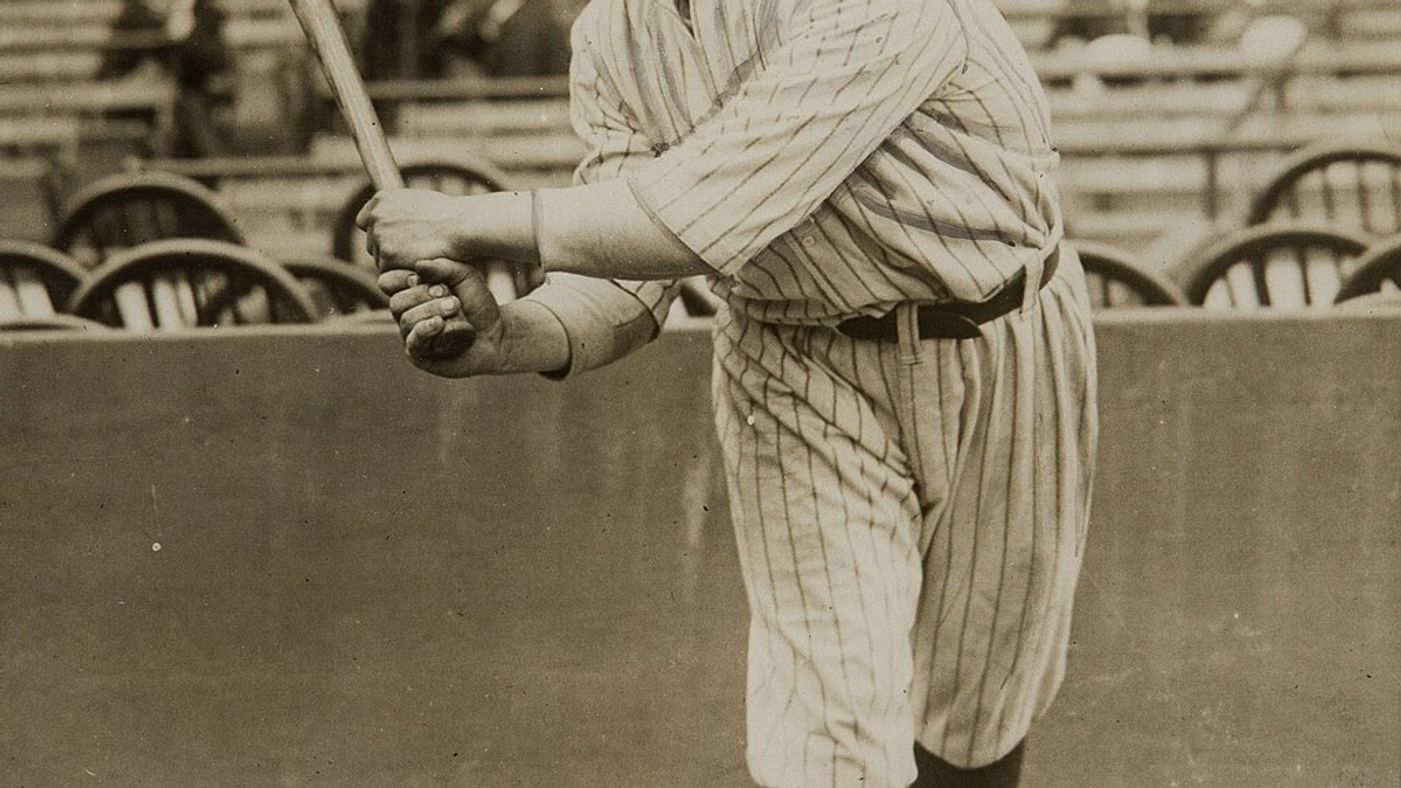
July 4, 1939. A Tuesday afternoon between games of a doubleheader against Washington. 61,808 people inside Yankee Stadium, the heat sitting on the field like a wool blanket. At home plate, a bank of microphones. And behind them, standing in his number 4 pinstripes for the last time anyone would see him play, Lou Gehrig -- thirty-six years old, visibly thinner than the man who'd anchored first base for fourteen seasons, and just over two weeks removed from the worst news a person can receive.
He hadn't planned to say a word.
The Decline
The signs had been there since spring training. Gehrig couldn't turn on a fastball. His legs failed him on routine plays at first base. Through eight games of the 1939 season, he hit .143 -- four hits in twenty-eight at-bats, zero home runs, one RBI. The Iron Horse looked like a man moving through water.
His final game came on April 30 against Washington. Gehrig went 0-for-4. The next day, the team traveled to Detroit. And on the morning of May 2, he walked into manager Joe McCarthy's office at Briggs Stadium and said what nobody else had the nerve to say: take me out.
The streak -- 2,130 consecutive games, running unbroken since June 1, 1925, and a record that had crushed Everett Scott's old mark of 1,307 -- died in a visiting clubhouse. Babe Dahlgren took over at first base and hit a home run. When Gehrig carried the lineup card to the umpires at home plate, the Detroit crowd stood and applauded for two full minutes. A visiting player. In an opposing park. Getting a standing ovation for sitting down.
On June 19 -- his thirty-sixth birthday -- the Mayo Clinic in Rochester, Minnesota gave him the diagnosis. Amyotrophic lateral sclerosis. A disease that destroys the motor neurons controlling voluntary muscle movement. Terminal. Incurable. The doctors told him plainly: two to five years. The clinic's public statement called it "a form of infantile paralysis," which was medically wrong but easier for 1939 America to process (almost nobody had heard of ALS, and polio at least had a name people recognized). That was about to change.
The Speech
The Yankees organized Lou Gehrig Appreciation Day for the Fourth of July -- a date chosen for the holiday crowd and the patriotic overtones that fit Gehrig's public image as the son of German immigrants who'd worked his way to the top of American life. Members of the 1927 Yankees came back for a reunion. Babe Ruth was among them.
Ruth and Gehrig hadn't spoken in roughly five years. The falling-out traced to a personal dispute involving their families -- a remark from Ruth's wife Claire about Gehrig's mother Christina that cut deep. Gehrig was intensely devoted to his mother, and the slight festered into a silence that outlasted Ruth's playing career. They'd shared road trips, hotel rooms, and a lineup for a decade. By 1934, they were strangers in the same dugout.
But on this afternoon, Ruth walked across the infield, straight to Gehrig, and wrapped his arms around him. He whispered something in Gehrig's ear -- nobody knows what. The photographers got the image: Ruth, still enormous in a dark suit, holding the man who'd batted behind him for years. The crowd roared. By most accounts, the embrace drew more emotion from the press box than anything else that day, and the speech hadn't even started.
Gifts came first. A silver trophy from his teammates. Tributes from dignitaries, including Mayor Fiorello La Guardia. Gehrig stood at home plate and accepted all of it, and the crowd kept calling his name. McCarthy went to him. The players urged him. He hadn't prepared anything -- Eleanor Gehrig confirmed this later -- but he stepped to the microphones.
Two minutes. No notes. The most famous speech in the history of American sports.
He didn't open with the line everyone remembers. He opened with understatement so radical it still stops you: "Fans, for the past two weeks you have been reading about a bad break I got." A bad break. The man had just learned he was dying, and he called it a bad break -- the way you'd describe a rainout or a pulled hamstring. Then the rest of it came: "Yet today I consider myself the luckiest man on the face of the earth."
He thanked everyone. The Giants. The groundskeepers. His mother-in-law, who took his side in arguments with her own daughter (and got a laugh from 61,808 people who were trying not to cry). His parents, who worked their whole lives so he could build his body and his future. His wife Eleanor, who he called "a tower of strength."
So I close in saying that I might have had a tough break -- but I have an awful lot to live for.
The stadium went quiet during the speech. Over sixty thousand people, and you could hear the echo off the upper deck. When he finished, he stepped back from the microphones, and the sound that came back was something between an ovation and a cry. Teammates couldn't look at him when he got back to the dugout (DiMaggio, by one account, had to turn away).
That afternoon, the New York Yankees retired his number 4. No Major League team had ever permanently retired a uniform number before. Every number hanging from every rafter in every ballpark in America traces back to that ceremony.
After the Echoes
Gehrig never played again. He took an honorary role with the Yankees and accepted an appointment to the New York City Parole Commission from Mayor La Guardia -- a job he held until his body wouldn't let him anymore. He lost the ability to drive in 1940. By early 1941, he couldn't walk without help.
Lou Gehrig died on June 2, 1941. He was thirty-seven years old. The date fell one day after the sixteenth anniversary of his streak's beginning -- June 1, 1925 to June 2, 1941, close enough to feel like the game was keeping its own cruel score.
Before that Tuesday afternoon in 1939, almost no one in America had heard of amyotrophic lateral sclerosis. Within months, they were calling it Lou Gehrig's Disease. They still do. The ALS Association traces the origin of public awareness and fundraising for the condition directly to that ceremony. Seventy-five years later, the 2014 Ice Bucket Challenge raised $115 million for ALS research in a single summer -- funds that went to a cause the public first learned about because a first baseman stood at home plate and called a death sentence a bad break.
The story goes that his locker stayed empty after that. Nobody touched it.
| Consecutive Games Streak | 2,130 (June 1, 1925 -- April 30, 1939) |
| Final Game | April 30, 1939 vs. Washington (0-for-4) |
| ALS Diagnosis | June 19, 1939 -- Mayo Clinic, Rochester, MN |
| Speech Date | July 4, 1939 -- between doubleheader games |
| Attendance | 61,808 |
| Career Batting Average | .340 |
| Career Home Runs | 493 |
| Career RBI | 1,995 |
| First Retired Number in MLB History | #4, New York Yankees |
The Streak Begins
Gehrig enters as a pinch hitter for Pee-Wee Wanninger. He won't miss another game for 14 years.
Final Game
Gehrig goes 0-for-4 against Washington in what turns out to be his last major league appearance. Nobody announces it that way.
Gehrig Benches Himself
In Detroit, Gehrig walks into Joe McCarthy's office at Briggs Stadium and removes himself from the lineup. The streak dies at 2,130 games. The Detroit crowd gives him a two-minute standing ovation for sitting down.
ALS Diagnosis
On his 36th birthday, the Mayo Clinic gives him the verdict: amyotrophic lateral sclerosis. Terminal. Incurable. Two to five years.
Lou Gehrig Appreciation Day
Between games of a Fourth of July doubleheader, Gehrig speaks for two minutes -- no notes, no preparation -- to 61,808 fans at Yankee Stadium. The Yankees retire his number 4, the first uniform number permanently retired in MLB history.
Gehrig Dies
Lou Gehrig dies in New York City at age 37 -- one day after the 16th anniversary of the start of his consecutive games streak.
Frequently Asked Questions
What did Lou Gehrig say in his farewell speech?
Gehrig spoke for approximately two minutes without notes on July 4, 1939 at Yankee Stadium. He called his terminal ALS diagnosis "a bad break" and declared himself "the luckiest man on the face of the earth." He thanked his teammates, the fans, his wife Eleanor, his parents, and even the groundskeepers. He closed by saying he might have had a tough break, "but I have an awful lot to live for."
Was Babe Ruth at Lou Gehrig's farewell speech?
Yes. Ruth attended as part of a reunion of the 1927 Yankees. He and Gehrig hadn't spoken for roughly five years following a personal dispute between their families. At the ceremony, Ruth crossed the field and embraced Gehrig at home plate -- their first public reconciliation. The photograph of that embrace became one of the most reproduced images in baseball history.
When did Lou Gehrig die?
Gehrig died on June 2, 1941, at age thirty-seven -- one day after the sixteenth anniversary of his consecutive games streak, which began on June 1, 1925. His disease, amyotrophic lateral sclerosis (ALS), is now commonly known as Lou Gehrig's Disease. There's still no cure.