Career Stats
Regular Season
| Year | G | AB | R | H | 2B | 3B | HR | RBI | BB | SO | SB | AVG | OBP | SLG | OPS |
|---|---|---|---|---|---|---|---|---|---|---|---|---|---|---|---|
| 2019 | 59 | 221 | 41 | 52 | 10 | 0 | 12 | 36 | 31 | 72 | 1 | .235 | .325 | .443 | .768 |
| 2020 | 54 | 169 | 28 | 38 | 10 | 2 | 6 | 21 | 41 | 38 | 4 | .225 | .379 | .414 | .793 |
| 2021 | 32 | 108 | 13 | 21 | 3 | 0 | 4 | 14 | 14 | 30 | 0 | .194 | .294 | .333 | .627 |
| 2022 | 130 | 384 | 54 | 83 | 9 | 2 | 8 | 40 | 62 | 109 | 10 | .216 | .330 | .313 | .643 |
| 2023 | 28 | 69 | 9 | 13 | 2 | 0 | 1 | 5 | 7 | 20 | 0 | .188 | .263 | .261 | .524 |
| Career | 651 | 2059 | 321 | 477 | 83 | 8 | 81 | 278 | 326 | 515 | 39 | .232 | .337 | .398 | .734 |
Career-best seasons highlighted in gold. Stats via Retrosheet.
Postseason
| Year | G | AB | R | H | 2B | 3B | HR | RBI | BB | SO | SB | AVG | OBP | SLG | OPS |
|---|---|---|---|---|---|---|---|---|---|---|---|---|---|---|---|
| 2017 | 13 | 46 | -- | 9 | -- | -- | 1 | 5 | -- | -- | -- | .196 | -- | -- | -- |
| 2018 | 3 | 9 | -- | 2 | -- | -- | 0 | 1 | -- | -- | -- | .222 | -- | -- | -- |
| 2019 | 5 | 13 | -- | 2 | -- | -- | 1 | 3 | -- | -- | -- | .154 | -- | -- | -- |
| 2020 | 7 | 26 | -- | 8 | -- | -- | 0 | 3 | -- | -- | -- | .308 | -- | -- | -- |
| 2022 | 2 | 3 | -- | 0 | -- | -- | 0 | 0 | -- | -- | -- | .000 | -- | -- | -- |
| Career | 30 | 97 | 0 | 21 | 0 | 0 | 2 | 12 | 0 | 0 | 0 | .216 | .216 | .278 | .495 |
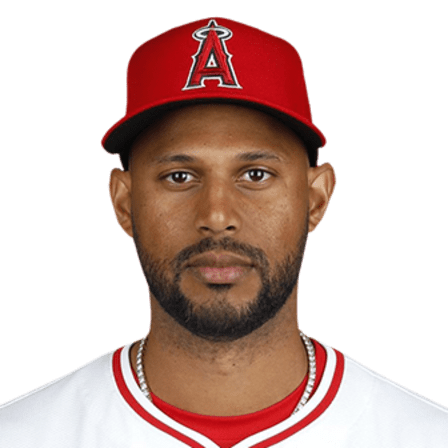
Aaron Hicks was a left fielder who played for the New York Yankees from 2016 to 2023. Career stats: .232 batting average, 81 home runs, 278 RBI.
The New York Yankees got Aaron Hicks from the Twins for a backup catcher, John Ryan Murphy, on November 11, 2015 -- a trade that looked like a footnote at the time and read a lot differently a few years later. Minnesota needed center field cleared out for Byron Buxton. The Yankees needed a backup for Brian McCann named Gary Sanchez. Nobody involved was thinking about Hicks as a $70 million player. That part came later, and so did almost everything that made his eight years in the Bronx more complicated than the trade sheet suggested.
The Arm, First
Hicks arrived with one carrying tool nobody argued about: he could throw. On April 20, 2016, he uncorked a 105.5 mph strike from left field to nail Oakland's Danny Valencia at the plate -- the fastest throw Statcast had ever tracked at that point (Colorado's Brenton Doyle finally beat it in 2023, for what that's worth). He also became the first Yankee since Joe DiMaggio in 1936 to start 20-plus games at all three outfield spots in one season. Cool trivia. Not exactly what you want your headline stat to be when you're hitting .217.
That was 2016 -- eight homers, a .217 average, more "the tools are obviously there" conversations than actual production. 2017 was supposed to answer the question, and for a while it did: Hicks was hitting .290 with 10 homers through late June, a 144 wRC+ that made him look like a legitimate everyday building block. Then two separate oblique strains -- one in each side -- wiped out most of the rest of the year. He finished at .266 with 15 homers and 52 RBI in just 88 games, a genuinely great rate season nobody got to see enough of. Hicks kept doing this to himself and to the Yankees -- get hot, get hurt, start over.
2018, and the Contract That Followed
2018 was the exception that made everyone believe. Hicks played 137 games, hit .248/.366/.467, and set career highs across the board: 27 home runs, 79 RBI, 90 walks. That walk total wasn't just noise -- his 15.5% walk rate ranked fifth in baseball, proof the switch-hitting eye everyone projected on him in the minors had actually shown up. His 27 homers were the most by a switch-hitting center fielder since Carlos Beltran hit 27 in 2008, and it put him in the same "Yankees switch-hitter with a 25-homer season" company as Bernie Williams and Mark Teixeira -- and, further back, Mickey Mantle, who did it ten times. He still didn't make the All-Star team (Aaron Judge, Aroldis Chapman, Luis Severino, and Gleyber Torres went instead), which tells you something about how loaded that roster was.
The Yankees looked at that season and paid for it: seven years, $70 million, announced February 25, 2019, with a club option that could push it to $81.5 million over eight. In hindsight it's one of the more second-guessed extensions of the Brian Cashman era, and not because the money was crazy for a good everyday center fielder. It's because Hicks never played a full healthy season like 2018 again.
One Night in the Bronx
Give him this, though: when it mattered most, he delivered the biggest swing of his Yankees life. Down 3-1 to Houston in the 2019 ALCS, facing elimination, Hicks came off a partially torn elbow ligament to golf a three-run homer off Justin Verlander in the first inning of Game 5 at Yankee Stadium -- right behind a leadoff shot from DJ LeMahieu, marking the first time the Yankees had ever hit two home runs in the first inning of a playoff game. New York won 4-1 to survive another day. Verlander's postgame answer said it all: "I wasn't able to execute anything. I let him back in the count." Small mercy for Hicks -- the series shifted back to Houston, where the Yankees lost the very next game on Jose Altuve's walk-off in Game 6, and Hicks had Tommy John surgery twelve days later.
The Long Injury Tax
That's the throughline of the back half of his Yankees tenure: he kept getting hurt in increasingly specific and cruel ways. Tommy John in October 2019. A shortened, arm-compromised 2020 comeback (.225, 6 homers, but a freakin' .379 OBP -- the eye never left him). A torn tendon sheath in his left wrist in 2021 that Aaron Boone said had built up over years, not one swing -- season over in May. A collision with shortstop Oswaldo Cabrera, charging in from left field in the 2022 ALDS, that wrecked his knee and ended his year again. By 2023 the Stadium crowd had stopped waiting for the tools to reappear and started booing on sight. Hicks said he understood it completely -- there wasn't much else to say to a fan base watching a $70 million contract hit .188.
The Yankees designated him for assignment on May 20, 2023, and released him six days later, still owing him roughly $27.6 million. Four days after that, Baltimore signed him for $720,000 as injury cover for Cedric Mullins. Hicks hit .275 the rest of the way in an Orioles uniform -- including, of course, a home run back at the Stadium that got him booed all over again.
| Yankees Seasons | 8 (2016--2023) |
| Yankees HR | 81 |
| Yankees RBI | 278 |
| Career Slash (Yankees) | .232/.337/.398 |
| Career High HR | 27 (2018) |
| Best Rate Season | .266 AVG, .847 OPS (2017) |
| Postseason Games | 30 |
| Acquired | Trade for John Ryan Murphy, November 11, 2015 |
Born in San Pedro, California
Aaron Michael Hicks is born in San Pedro and later drafted 14th overall by the Twins in 2008, out of Woodrow Wilson High School in Long Beach.
Traded to the Yankees
Minnesota sends Hicks to New York for catcher John Ryan Murphy, clearing center field for Byron Buxton and a backup catcher spot for Gary Sanchez.
The 105.5 mph Throw
Hicks guns down Oakland's Danny Valencia at the plate with the fastest throw Statcast had tracked to that point.
Career Year
Hicks sets career highs across the board -- .248/.366/.467, 27 HR, 79 RBI, 90 walks -- the most homers by a switch-hitting center fielder since Carlos Beltran in 2008.
Signs Seven-Year, $70 Million Extension
Coming off his best season, Hicks signs a long-term deal with a club option that could push the total value to $81.5 million.
Three-Run Homer Off Verlander -- ALCS Game 5
Facing elimination in Houston, Hicks homers off Justin Verlander in the first inning as the Yankees win 4-1 to stay alive in the ALCS.
Tommy John Surgery
Twelve days after his ALCS homer, Hicks undergoes elbow surgery for a partially torn ligament, beginning a run of season-altering injuries.
Released by the Yankees
The Yankees designate Hicks for assignment and release him six days later, still owing him roughly $27.6 million on the remainder of his deal.
Frequently Asked Questions
Why did the Yankees release Aaron Hicks?
Hicks was hitting just .188/.263/.261 with one home run and five RBI through 28 games in 2023, the latest and worst stretch of a decline that started after his 2018 breakout. The Yankees designated him for assignment on May 20, 2023, to open a roster spot, then released him outright on May 26 -- even though they still owed him roughly $27.6 million on his contract.
What was Aaron Hicks' best season with the Yankees?
By raw production, 2018: .248/.366/.467 with career highs of 27 home runs, 79 RBI, and 90 walks in 137 games. By rate stats, his injury-shortened 2017 (.266 average, .847 OPS in 88 games) was actually his best per-plate-appearance stretch -- he just couldn't stay on the field long enough to sustain it.
Who did the Yankees trade for Aaron Hicks?
The Yankees acquired Hicks from the Minnesota Twins on November 11, 2015, in a straight one-for-one deal that sent catcher John Ryan Murphy to Minnesota. The trade cleared center field in Minnesota for prospect Byron Buxton and cleared a backup catching spot in New York for Gary Sanchez.
What injuries did Aaron Hicks have with the Yankees?
A lot of them, and they got progressively worse. Two separate oblique strains cut short his breakout 2017. A partially torn elbow ligament led to Tommy John surgery in October 2019. A torn tendon sheath in his left wrist ended his 2021 season in May. A knee injury from a 2022 ALDS collision ended that postseason for him too. By 2023, the injuries and the decline had become the same story.
Did Aaron Hicks ever make an All-Star team?
No. His best statistical season, 2018, still wasn't enough to crack a Yankees roster that sent Aaron Judge, Aroldis Chapman, Luis Severino, and Gleyber Torres to the All-Star Game instead.