
Career Stats
Regular Season
| Year | G | AB | R | H | 2B | 3B | HR | RBI | BB | SO | SB | AVG | OBP | SLG | OPS |
|---|---|---|---|---|---|---|---|---|---|---|---|---|---|---|---|
| 1993 | 143 | 560 | 83 | 169 | 26 | 1 | 2 | 59 | 74 | 49 | 0 | .302 | .378 | .362 | .740 |
| 1994 | 97 | 366 | 61 | 125 | 19 | 1 | 11 | 55 | 61 | 29 | 2 | .342 | .433 | .489 | .922 |
| 1995 | 126 | 460 | 76 | 149 | 22 | 4 | 5 | 63 | 74 | 50 | 1 | .324 | .412 | .422 | .834 |
| 1996 | 132 | 501 | 80 | 156 | 29 | 2 | 2 | 41 | 67 | 32 | 1 | .311 | .389 | .389 | .778 |
| 1997 | 104 | 353 | 55 | 103 | 23 | 1 | 4 | 28 | 48 | 38 | 0 | .292 | .373 | .397 | .770 |
| Career | 602 | 2240 | 355 | 702 | 119 | 9 | 24 | 246 | 324 | 198 | 4 | .313 | .400 | .407 | .807 |
Career-best seasons highlighted in gold. Stats via Retrosheet.
Postseason
| Year | G | AB | R | H | 2B | 3B | HR | RBI | BB | SO | SB | AVG | OBP | SLG | OPS |
|---|---|---|---|---|---|---|---|---|---|---|---|---|---|---|---|
| 1995 | 4 | 19 | -- | 5 | -- | -- | 1 | 3 | -- | -- | -- | .263 | -- | -- | -- |
| 1996 | 10 | 38 | -- | 6 | -- | -- | 0 | 2 | -- | -- | -- | .158 | -- | -- | -- |
| 1997 | 3 | 7 | -- | 3 | -- | -- | 0 | 2 | -- | -- | -- | .429 | -- | -- | -- |
| Career | 17 | 64 | 0 | 14 | 0 | 0 | 1 | 7 | 0 | 0 | 0 | .219 | .219 | .266 | .484 |
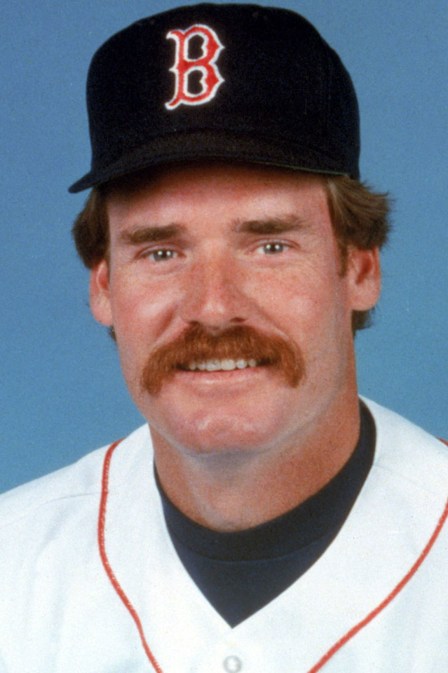
Wade Boggs was a third baseman who played for the New York Yankees from 1993 to 1997. Career stats: .313 batting average, 24 home runs, 246 RBI.
Wade Boggs ate chicken before every game for twenty years. He took exactly 117 ground balls during infield practice. He drew the Hebrew letter chai in the dirt before every at-bat, even though he wasn't Jewish. The superstitions were legendary, borderline pathological, and completely beside the point -- because when Boggs stepped into the batter's box, all that mattered was that he could hit a baseball better than almost anyone who'd ever lived. He came to the New York Yankees in 1993 at age 35, supposedly washed up, and spent five seasons proving that the bat still had plenty of life.
Path to the Bronx
Boggs had already built a Hall of Fame career with the Boston Red Sox by the time he signed with the Yankees as a free agent before the 1993 season. Five batting titles, a .338 career average in Boston, and twelve consecutive seasons of 200 or more hits made him one of the greatest pure hitters of his generation. But the Red Sox let him walk after the 1992 season, and Boggs -- the most famous Red Sox player since Ted Williams -- crossed enemy lines to sign with New York.
The move was controversial in Boston, where fans felt betrayed. In New York, there was skepticism too. Boggs was 35, coming off a .259 season (his worst since his rookie year), and the Yankees wondered if the skills had eroded for good. Manager Buck Showalter penciled him in at third base and hoped for the best.
Yankees Career
Boggs silenced the doubters immediately. In his first season as a Yankee, he hit .302 with a .378 on-base percentage, looking very much like the hitter who'd terrorized American League pitching for a decade. He wasn't the same player who'd hit .368 in 1985, but his batting eye remained extraordinary -- he walked 74 times against just 49 strikeouts, the kind of plate discipline that doesn't age.
The 1993 and 1994 seasons were strong but incomplete -- the 1994 strike wiped out the final two months of a campaign where Boggs was hitting .342 and the Yankees held the best record in the American League. It's one of the great what-ifs in franchise history. That team had a real chance at a championship, and the labor dispute stole it.
| NYY Batting Average | .313 |
| NYY OBP | .399 |
| NYY Hits | 702 |
| NYY Seasons | 5 (1993-1997) |
| World Series Titles | 1 (1996) |
| Hall of Fame | Inducted 2005 |
The payoff came in 1996. Boggs hit .311 during the regular season, and the Yankees finally made their run. In the World Series against the Atlanta Braves, down two games to none, the Yankees stormed back to win four straight. When the final out was recorded in Game 6, Boggs -- eyes brimming -- climbed onto the back of an NYPD horse and rode around Yankee Stadium, tears streaming down his face. It's one of the most iconic celebration images in franchise history: the meticulous, superstitious, controlled perfectionist letting go completely, riding a police horse in pure joy.
His final season in New York, 1997, produced a .292 average before he departed for the expansion Tampa Bay Devil Rays. It was with Tampa Bay in 1999 that Boggs collected his 3,000th career hit -- a home run, fittingly enough, from a man who'd built his career on singles and doubles.
Key Moments
Signs with the Yankees
Boggs leaves the Red Sox as a free agent and signs a three-year deal with New York, crossing the sport's fiercest rivalry line.
The Strike Season
Boggs is hitting .342 when the players' strike ends the season in August. The Yankees have the best record in the AL and never get to play October baseball.
The Horse
After the Yankees clinch the World Series against the Braves, a tearful Boggs rides around Yankee Stadium on the back of an NYPD horse in one of baseball's most memorable celebrations.
3,000th Hit
Playing for the Tampa Bay Devil Rays, Boggs reaches 3,000 career hits with a home run -- the first player in history to reach the milestone with a homer. His Yankees years contributed 702 of those hits.
Hall of Fame
Boggs is elected to the Hall of Fame by the BBWAA with 91.9% of the vote, entering Cooperstown with a lifetime .328 average and 3,010 hits.
The Science of Hitting
Boggs wasn't a natural athlete in the traditional sense. He didn't have blazing speed, he didn't hit towering home runs, and his arm at third base was adequate rather than spectacular. What he had was an understanding of hitting that bordered on the scientific. He studied pitchers obsessively, knew the strike zone better than most umpires, and had the hand-eye coordination to foul off pitches until he got the one he wanted.
His approach at the plate -- patient, disciplined, focused on getting on base -- anticipated the analytics revolution by two decades. Before anyone talked about on-base percentage as a primary stat, Boggs was posting OBPs above .400 year after year, simply because he refused to chase pitches outside the zone. The chicken, the ground balls, the chai symbol -- all of that was ritual. The plate discipline was science.
Frequently Asked Questions
How many batting titles did Wade Boggs win?
Boggs won five AL batting titles, all with the Boston Red Sox (1983, 1985, 1986, 1987, 1988). His highest average was .368 in 1985. He didn't win a batting title during his Yankees years but consistently hit above .300.
Did Wade Boggs win a World Series with the Yankees?
Yes. Boggs won his only World Series championship in 1996, when the Yankees defeated the Atlanta Braves in six games. His emotional horseback ride around Yankee Stadium after the final out became an iconic celebration moment.
What was Wade Boggs's career batting average?
Boggs finished his career with a .328 batting average over 18 seasons, collecting 3,010 hits. He hit .313 during his five seasons with the Yankees.
Did Wade Boggs really eat chicken before every game?
Yes. Boggs ate chicken before every game for approximately twenty years, a superstitious ritual that became one of the most famous in sports history. His wife Debbie developed over 40 different chicken recipes to keep the routine from getting stale.
Wade Boggs came to the Bronx when most people thought the best was behind him, and he spent five seasons reminding them that great hitters don't just fade away. He hit .313 as a Yankee, won a championship, rode a horse around the stadium in tears, and walked away with 3,000 career hits and a plaque in Cooperstown. The superstitions were strange. The results weren't.