
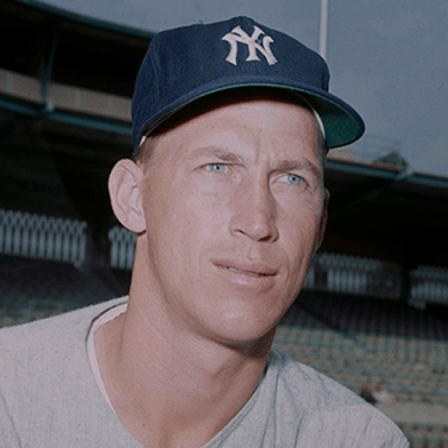
Mel Stottlemyre Sr. was a pitcher who played for the New York Yankees from 1964 to 1974. Career stats: 164-139 record, 2.97 ERA, 1257 strikeouts.
August 12, 1964. A 22-year-old right-hander who'd been pitching in Richmond, Virginia, less than 48 hours earlier walked out to the mound at Yankee Stadium for his first start with the New York Yankees -- and threw a complete game, beating the Chicago White Sox 7-3. Two months later he started twice against Bob Gibson in the World Series. Mel Stottlemyre had one summer of Triple-A ball on his résumé, and the Yankees were already leaning on him like he'd been in the rotation for a decade.
He'd spend the next ten years being the best pitcher on some of the worst teams the franchise ever fielded, wreck his shoulder trying to keep them afloat, and leave the organization so bitterly that he stayed away from Old-Timers' Day for decades. Then he came back and helped win four more championships -- this time from the dugout. Same arm, same team, two separate careers (with a long cold war sitting in between them).
The Kid From Richmond Who Saved a Pennant
Stottlemyre grew up in Mabton, Washington, a farm town in the Yakima Valley, reenacting Yankees-Dodgers games in his backyard with his brother Keith from box scores in the newspaper. By 1964 he was 13-3 with a 1.42 ERA for the Triple-A Richmond Virginians -- the best mark in the International League -- when the Yankees called him up on August 11 to fill a rotation gutted by injuries. He debuted the next day and never really looked like a rookie again.
Over the season's final two months he went 9-3 with a 2.06 ERA, and the Yankees needed every bit of it -- they won the pennant by a single game over the White Sox. When the callup turned into a pennant-saving stretch run, manager Yogi Berra handed him the ball in the World Series against St. Louis three separate times. Stottlemyre won Game 2 with a complete game, got the last two outs of Game 6 in relief, and started Game 7 opposite Gibson -- defensive errors behind him let in three unearned runs in the fourth, and he was gone before the fifth. The Cardinals won it, 7-5. It was the last World Series game Mel Stottlemyre would ever pitch.
| Career Record | 164-139 |
| ERA | 2.97 |
| Innings Pitched | 2,661.1 |
| Strikeouts | 1,257 |
| Complete Games / Shutouts | 152 / 40 |
| All-Star Selections | 5 (1965, 1966, 1968, 1969, 1970) |
| 20-Win Seasons | 3 (1965, 1968, 1969) |
| Career WAR | ~43 |
Ace of a Team That Couldn't Hit
What followed was nine seasons of being excellent for teams that didn't deserve it. The 1965 Yankees collapsed into sixth place -- the end of the dynasty that had won the pennant every year since 1960 -- and Stottlemyre went 20-9 with a 2.63 ERA anyway, leading the American League in innings and complete games. In 1968, the so-called Year of the Pitcher, he went 21-12 with a career-best 2.45 ERA and finished third in Cy Young voting, working a sinker that put ball after ball into the dirt for a lineup that batted .214 as a team (a number that still looks like a typo). He won 20 again in 1969, throwing a league-high 303 innings. Three different 20-win seasons, and the Yankees never sniffed a pennant in any of them.
He could hit a little, too, in the way pitchers occasionally could back then. On September 26, 1964, three weeks into his career, he threw a two-hit shutout and collected five hits of his own at the plate -- a mark that tied the major-league record for a pitcher. On July 20, 1965, he hit an inside-the-park grand slam off Boston's Bill Monbouquette, then went out and finished the game on the mound. Pitchers hitting grand slams inside the park has happened maybe twice in the sport's history. Stottlemyre is one of the two.
The Society for American Baseball Research puts it plainly in its biography of Stottlemyre: from 1965 through 1973, only Bob Gibson, Gaylord Perry, Mickey Lolich, and Juan Marichal won more games than he did. One of the most overlooked pitchers of his generation, buried on a team nobody was watching.
By 1971, he and Fritz Peterson were still carrying a rotation that had no business winning 82 games -- Stottlemyre went 16-12 with seven shutouts and a 2.87 ERA, absorbing 269 innings because the alternative was letting a thin bullpen implode. Give him even one extra run a game across his career and the win total looks a lot more like a Hall of Fame case. Instead it looks like the ledger of a great pitcher who happened to play for the wrong Yankees teams at the wrong time.
The Shoulder Gives Out
The end came fast. Stottlemyre made his last career start on June 11, 1974 -- a loss to the Angels in which shoulder pain took him out after three innings -- and doctors found a torn rotator cuff shortly after. He was 32. He reported to spring training in 1975 hoping to pitch through it, but the pain limited him to batting practice only, and general manager Gabe Paul had led him to believe he'd have all the time he needed to recover. Instead, the Yankees released him in spring training without a single regular-season inning to show for the comeback attempt.
Stottlemyre didn't get over it quietly. "I was lied to by Gabe Paul," he told Seattle Times columnist Larry Stone decades later, in a 2002 interview. He stopped showing up for the Yankees' Old-Timers' Day entirely. A franchise he'd bled for -- 164 wins, all of them in pinstripes, all of them on teams that mostly didn't deserve him -- had let him go like he was replaceable equipment. He wasn't going to pretend otherwise.
Exile, Queens, and the Long Way Back
He didn't disappear from baseball. He worked as a roving minor-league pitching instructor for the expansion Seattle Mariners starting in 1977, then landed the pitching coach job with the Mets in 1984. That's where the second act really started -- Stottlemyre spent nine seasons in Queens shaping a rotation that included Dwight Gooden, Ron Darling, Sid Fernandez, and David Cone, and he was on the staff when the Mets won the 1986 World Series.
In March 1981, while he was still working his way back into the game, his youngest son Jason died of leukemia at age 11 after more than five years fighting the disease. It's the kind of loss that reframes everything else on a résumé. Stottlemyre kept working anyway. His other two sons, Mel Jr. and Todd, both went on to pitch in the majors themselves -- Todd said for years afterward that he carried his brother's memory to the mound every start.
Four More Rings, From the Other Side of the Dugout
In 1996, new manager Joe Torre wanted Stottlemyre as his pitching coach -- and George Steinbrenner himself picked up the phone to make amends for 1975 before the hire went through. Twenty-one years after the Yankees released him without so much as a hearing, they were asking him back, and he said yes.
It worked out fairly well. From 1996 through 2005, the Yankees made the playoffs every single year and won four World Series titles (1996, 1998, 1999, 2000), and Stottlemyre was the coach in the middle of a pitching staff that included Andy Pettitte, David Wells, Roger Clemens, David Cone again, and a converted minor-league infielder named Mariano Rivera who developed the most famous cut fastball in the sport under Stottlemyre's watch. The same organization that let him walk away bitter in 1975 now had him standing on the mound during four separate championship celebrations (his own shoulder, mercifully, wasn't required to throw a single one of those innings).
He didn't get to enjoy all of it in good health. In 1999, still coaching, doctors found multiple myeloma -- a cancer of the bone marrow -- and Stottlemyre underwent a stem cell transplant while staying on the job. He resigned after the 2005 season, worn down by the disease and by a front office that had publicly thanked the Angels' manager for beating the Yankees in the ALDS while saying nothing about Torre. Ron Guidry replaced him.
MLB Debut
Two days off a Triple-A mound in Richmond, Stottlemyre throws a complete game to beat the White Sox 7-3.
World Series Game 2 Win
Stottlemyre outduels Bob Gibson with a complete-game 8-3 win over the Cardinals -- his only World Series victory.
21 Wins, 2.45 ERA
Stottlemyre posts a career-best ERA and finishes third in AL Cy Young voting for a team that batted .214.
Final Career Start
Shoulder pain forces Stottlemyre out after three innings against the Angels. Doctors find a torn rotator cuff shortly after.
Released by the Yankees
A comeback attempt fails and the Yankees release him. Stottlemyre stops attending Old-Timers' Day, staying away for years afterward.
Mets Pitching Coach
Stottlemyre coaches Dwight Gooden, Ron Darling, and Sid Fernandez, winning the 1986 World Series with the Mets.
Yankees Pitching Coach Under Joe Torre
Stottlemyre returns to the Bronx and wins four more World Series titles as pitching coach (1996, 1998, 1999, 2000).
Death
Stottlemyre dies at 77 after a 20-year battle with multiple myeloma, first diagnosed in 1999 while he was still coaching.
Frequently Asked Questions
Why did Mel Stottlemyre's playing career end so early?
A torn rotator cuff. Doctors found it shortly after his final start on June 11, 1974. He was 32. He tried to come back in spring training 1975, but shoulder pain limited him to throwing batting practice only, and the Yankees released him before the season started. He never won 20 games again -- he never pitched in the majors again, period.
How many World Series did Mel Stottlemyre win as a pitching coach?
Four -- 1996, 1998, 1999, and 2000 -- as the Yankees' pitching coach under Joe Torre from 1996 through 2005. He'd never won a World Series as a player despite three appearances (two starts and a relief outing) in the 1964 Series; the championships came in the second act of his career instead.
Was Mel Stottlemyre ever inducted into the Hall of Fame?
No. He's not in Cooperstown, though his case gets debated -- a five-time All-Star with three 20-win seasons and a 2.97 ERA, almost entirely accumulated on Yankees teams that couldn't score runs. The Yankees did honor him with a Monument Park plaque in 2015.
What happened to Mel Stottlemyre's son?
His youngest son, Jason, died of leukemia in March 1981 at age 11, after more than five years battling the disease. Mel's other two sons, Mel Jr. and Todd, both pitched in the major leagues; Todd said he carried Jason's memory to the mound with him every start of his career.
Did Mel Stottlemyre coach for any team besides the Yankees?
Yes. Before returning to the Bronx in 1996, he was the New York Mets' pitching coach from 1984 through 1993, developing Dwight Gooden, Ron Darling, and Sid Fernandez, and winning the 1986 World Series with that staff. He'd also worked as a roving minor-league pitching instructor for the Seattle Mariners starting in 1977.
He beat the Cardinals as a 22-year-old with two months of big-league experience, lost his last chance at a title as that same 22-year-old exactly one week later in Game 7, and didn't get a ring until he was standing in the dugout instead of on the mound, thirty-two years after Richmond. Some guys get one great baseball life. Stottlemyre got two, and he earned both of them the hard way.