
Career Stats
Regular Season
| Year | G | AB | R | H | 2B | 3B | HR | RBI | BB | SO | SB | AVG | OBP | SLG | OPS |
|---|---|---|---|---|---|---|---|---|---|---|---|---|---|---|---|
| 1978 | 122 | 375 | 39 | 91 | 11 | 1 | 4 | 37 | 23 | 23 | 3 | .243 | .286 | .309 | .595 |
| 1979 | 141 | 431 | 47 | 99 | 14 | 2 | 2 | 32 | 37 | 30 | 0 | .230 | .287 | .285 | .572 |
| 1980 | 141 | 489 | 57 | 128 | 26 | 2 | 5 | 52 | 48 | 37 | 0 | .262 | .327 | .354 | .681 |
| 1981 | 73 | 227 | 20 | 54 | 11 | 0 | 7 | 27 | 19 | 17 | 0 | .238 | .300 | .379 | .679 |
| 1982 | 59 | 160 | 11 | 27 | 1 | 1 | 0 | 9 | 8 | 11 | 0 | .169 | .207 | .188 | .395 |
| Career | 694 | 2159 | 228 | 517 | 81 | 10 | 26 | 206 | 174 | 146 | 4 | .239 | .296 | .322 | .619 |
Career-best seasons highlighted in gold. Stats via Retrosheet.
Postseason
| Year | G | AB | R | H | 2B | 3B | HR | RBI | BB | SO | SB | AVG | OBP | SLG | OPS |
|---|---|---|---|---|---|---|---|---|---|---|---|---|---|---|---|
| 1977 | 11 | 33 | -- | 8 | -- | -- | 0 | 4 | -- | -- | -- | .242 | -- | -- | -- |
| 1978 | 10 | 39 | -- | 13 | -- | -- | 0 | 11 | -- | -- | -- | .333 | -- | -- | -- |
| 1980 | 3 | 11 | -- | 2 | -- | -- | 0 | 0 | -- | -- | -- | .182 | -- | -- | -- |
| Career | 24 | 83 | 0 | 23 | 0 | 0 | 0 | 15 | 0 | 0 | 0 | .277 | .277 | .277 | .554 |
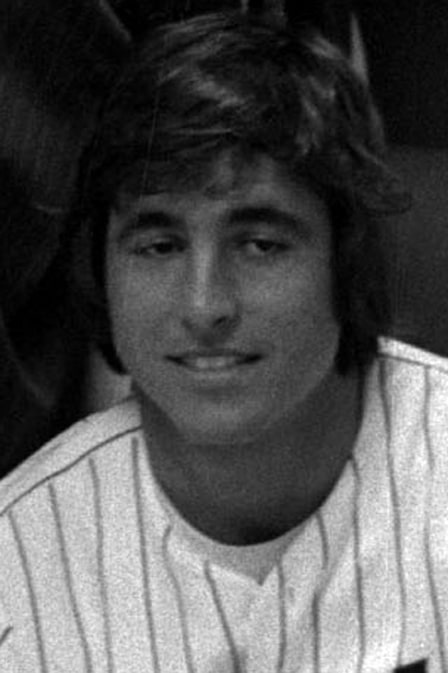
Bucky Dent was a shortstop who played for the New York Yankees from 1977 to 1982. Career stats: .239 batting average, 26 home runs, 206 RBI.
Bucky Dent hit four home runs in 162 games during the 1978 regular season. He hit .239 for his Yankees career. And he's the answer to one of the most famous questions in New York Yankees history: who beat the Red Sox at Fenway with a swing nobody saw coming. Dent was a glove-first shortstop who happened to author the single most quoted piece of profanity in the history of the rivalry -- "Bucky Bleeping Dent" -- and then went out and won a World Series MVP a few weeks later just to make sure you remembered his name for the right reasons, too.
From Savannah to the South Side
Russell Earl Dent was born in Savannah, Georgia, on November 25, 1951 -- born Russell Earl O'Dey, technically, since his parents weren't married. His mother's brother, James Earl Dent, and his wife Sarah took him in as an infant and raised him as their own, giving him their last name even though his birth mother never let them make the adoption legal. (He'd eventually track down his biological father, a man named Russell "Shorty" Stanford, after a search that took the better part of 25 years. Baseball families get complicated. His started that way from day one.) The nickname came from his grandmother, who called him "Cooterbuck" as a toddler. He shortened it. Smart move.
Dent broke in with the Chicago White Sox in 1973, became their regular shortstop in 1974, and finished second in Rookie of the Year voting that year while hitting .276 (not bad, for a guy who'd spend the rest of his career being cheerfully honest about not being much of a hitter). By 1975 he'd made his first All-Star team and led American League shortstops in fielding percentage. He was already exactly what he'd be his entire career: a slick glove who wasn't going to scare anybody with the bat.
The Trade That Made Him a Yankee
The White Sox sent Dent to the Yankees on April 5, 1977, in exchange for outfielder Oscar Gamble, a young pitcher named LaMarr Hoyt, a minor leaguer, and $250,000 cash (baseball trades used to just toss in cash like a garage-sale sweetener -- try picturing that happening today). Dent signed a three-year, $600,000 deal and stepped into the middle of the most chaotic clubhouse in baseball -- Reggie Jackson, Billy Martin, George Steinbrenner, all of it, the Bronx Zoo in full swing. Dent didn't add to the noise. He just played shortstop, hit ninth, and let the louder personalities do the talking. It worked out fine for everybody -- the Yankees won the World Series that October over the Dodgers, with Dent hitting .263 across all six games.
| Yankees Years | 1977--1982 |
| Position | Shortstop |
| Yankees Career Line | .239/.295/.322, 26 HR, 206 RBI (694 games) |
| Peak Season | 1980 -- .262 AVG, 52 RBI, .681 OPS, All-Star |
| World Series Titles | 2 (1977, 1978) |
| 1978 World Series | .417 AVG (10-for-24), 7 RBI, World Series MVP |
| Career Postseason (Yankees) | 24 G, .277 AVG, 15 RBI, 0 HR |
The Swing
Everything else Dent ever did gets filed under the same headline, and there's no getting around it, so here it is: on October 2, 1978, with the Yankees down 2-0 in the seventh inning of a one-game playoff at Fenway Park, Dent lofted a three-run homer over the Green Monster off Mike Torrez. He'd hit four home runs all year. This was his fifth, and it turned a laugher of a Red Sox season into forty-plus years of regional trauma. New England still calls him "Bucky Bleeping Dent," minus the "Bleeping." Dent, for his part, always seemed to find the whole thing more amusing than anything -- a guy who hit a fly ball that happened to carry, forever attached to a nickname that isn't printable in a family newspaper.
The tiebreaker technically counted as a regular-season game, Game 163, which is why it doesn't show up anywhere in Dent's career postseason stats. His postseason log as a Yankee: 24 games, a .277 average, 15 RBI, and zero home runs. Zero. The most famous swing of his life happened in a game that, by rule, never counted as a playoff game at all. Baseball's funny like that.
World Series MVP, Because Why Not
Two weeks after Fenway, Dent kept going. The Yankees beat Kansas City in the ALCS -- Dent hit only .200 in that series, for what it's worth, nobody's perfect -- and then dismantled the Dodgers in the World Series for the second straight October. Dent hit .417, went 10-for-24, drove in seven runs, and walked away with World Series MVP honors. He also committed the Yankees' only two errors of the series, which is the kind of detail that gets buried under an MVP trophy but is very much part of the story: elite bat for six games, human glove for two of them. Nobody remembers the errors. Everybody remembers the average.
The Long Slide Out
Dent stuck around as the regular shortstop through 1980, his best offensive year -- .262, 52 RBI, a career-high .681 OPS, a second All-Star selection, and yet another season leading AL shortstops in fielding percentage. But by 1982 the Yankees had traded for Roy Smalley, manager Bob Lemon wanted Smalley in the lineup more often than not, and Dent found himself in a part-time role he didn't ask for and didn't want. His batting average cratered. He asked out. On August 8, 1982, the Yankees traded him to the Texas Rangers for outfielder Lee Mazzilli, closing the book on six freakin' seasons in pinstripes. He played for the Rangers through 1983 and finished his career with the Kansas City Royals in 1984 -- a 12-year run across four teams that ended with a .247 career average, 40 home runs, and 423 RBI. Not a Hall of Fame résumé. Nobody ever said it was. That was never the point of Bucky Dent.
Back in the Bronx, Briefly
Steinbrenner brought Dent back in 1989 -- this time to manage. He replaced the fired Dallas Green on August 18, 1989, with the club sitting at 56-65 and going nowhere, and finished that season 18-22. It didn't get better. The 1990 Yankees stumbled to 18-31 under Dent before Steinbrenner fired him on June 6, 1990 -- at Fenway Park, of all places, the same building where Dent authored the greatest moment of his playing career. Steinbrenner had reportedly wanted Billy Martin back in the dugout the whole time; those plans died with Martin on Christmas Day 1989 in a car accident, and Dent got caught holding a job nobody above him actually wanted him to keep. Stump Merrill took over. It was one more managerial change in a stretch of them under Steinbrenner -- nobody was counting anymore.
Dent didn't disappear after that. He opened the Bucky Dent Baseball School in South Florida, running it for roughly 37 years across Pompano Beach, Boca Raton, and Delray Beach. The main field is built as a replica of Fenway Park, Green Monster included -- frozen at the exact moment of his home run, in case anyone forgot. "My passion was to run the best school for kids," he said of it, "but not only for baseball. I wanted to give life lessons, too."
Born in Savannah, Georgia
Born Russell Earl O'Dey, raised from infancy by his uncle James Earl Dent and his wife Sarah, who gave him their surname.
Establishes Himself in Chicago
Becomes the White Sox's regular shortstop in 1974 (finishes 2nd in AL Rookie of the Year voting) and makes his first All-Star team in 1975.
Traded to the Yankees
White Sox send Dent to New York for Oscar Gamble, LaMarr Hoyt, a minor leaguer, and $250,000. He signs a three-year, $600,000 deal and takes over at shortstop.
The Home Run at Fenway
Hits a three-run homer off Mike Torrez in the AL East tiebreaker, turning a 2-0 deficit into a 3-2 Yankees lead in a game New York goes on to win.
World Series MVP
Bats .417 (10-for-24) with 7 RBI as the Yankees beat the Dodgers in six games for their second straight title.
Traded to Texas
Dealt to the Rangers for outfielder Lee Mazzilli after losing his everyday job to Roy Smalley, ending his Yankees playing career.
Manages the Yankees
Replaces Dallas Green on August 18, 1989. Goes 18-22 down the stretch, then 18-31 in 1990 before being fired on June 6, 1990.
Frequently Asked Questions
What is Bucky Dent's real name?
Russell Earl Dent, born Russell Earl O'Dey. His aunt and uncle raised him and gave him the Dent surname, though his birth mother never allowed a formal legal adoption. "Bucky" came from his grandmother's childhood nickname for him, "Cooterbuck."
Did Bucky Dent ever hit a home run in the playoffs?
Not technically. His career postseason log as a Yankee shows 24 games, a .277 average, and zero home runs. The legendary October 2, 1978 blast at Fenway came in the AL East tiebreaker game, which counted as Game 163 of the regular season -- not a playoff game -- so it never shows up in his postseason numbers at all.
Why was Bucky Dent traded away from the Yankees in 1982?
The Yankees had acquired shortstop Roy Smalley, and manager Bob Lemon wanted Smalley in the lineup more often than not, squeezing Dent into a part-time role. Dent's batting average collapsed and he asked out. New York traded him to the Texas Rangers on August 8, 1982, for outfielder Lee Mazzilli.
Did Bucky Dent manage the Yankees?
Yes. George Steinbrenner hired him on August 18, 1989, to replace the fired Dallas Green. Dent went 18-22 to finish 1989 and started 1990 at 18-31 before Steinbrenner fired him on June 6, 1990 -- at Fenway Park, the same ballpark where he'd hit the most famous home run of his playing career.
What did Bucky Dent do after baseball?
He opened the Bucky Dent Baseball School in South Florida, which ran for roughly 37 years across Pompano Beach, Boca Raton, and Delray Beach. Its main field is built as a replica of Fenway Park, with a Green Monster frozen at the moment of his 1978 home run.
Dent never hit more than 8 home runs in a season and never batted higher than .262 for a full year in pinstripes. None of that matters. Somewhere in New England, there are grown adults who still can't say his full name without the middle word, and somewhere in the Bronx, a light-hitting shortstop from Savannah, Georgia, is remembered as one of the most important Yankees who ever put on the uniform. He earned both.