
Career Stats
Regular Season
| Year | G | AB | R | H | 2B | 3B | HR | RBI | BB | SO | SB | AVG | OBP | SLG | OPS |
|---|---|---|---|---|---|---|---|---|---|---|---|---|---|---|---|
| 1979 | 74 | 264 | 42 | 72 | 12 | 0 | 8 | 33 | 25 | 32 | 1 | .273 | .339 | .409 | .748 |
| 1980 | 100 | 297 | 41 | 80 | 9 | 1 | 13 | 57 | 34 | 28 | 2 | .269 | .339 | .438 | .777 |
| 1981 | 50 | 117 | 14 | 31 | 6 | 0 | 6 | 24 | 12 | 15 | 0 | .265 | .331 | .470 | .801 |
| 1982 | 65 | 141 | 12 | 32 | 6 | 0 | 7 | 30 | 12 | 15 | 2 | .227 | .288 | .418 | .706 |
| 1983 | 9 | 22 | 2 | 4 | 2 | 0 | 1 | 1 | 1 | 1 | 0 | .182 | .217 | .409 | .626 |
| Career | 1261 | 4446 | 645 | 1238 | 192 | 29 | 175 | 688 | 493 | 565 | 75 | .278 | .350 | .453 | .803 |
Career-best seasons highlighted in gold. Stats via Retrosheet.
Postseason
| Year | G | AB | R | H | 2B | 3B | HR | RBI | BB | SO | SB | AVG | OBP | SLG | OPS |
|---|---|---|---|---|---|---|---|---|---|---|---|---|---|---|---|
| 1980 | 1 | 4 | -- | 0 | -- | -- | 0 | 0 | -- | -- | -- | .000 | -- | -- | -- |
| 1981 | 7 | 7 | -- | 1 | -- | -- | 0 | 0 | -- | -- | -- | .143 | -- | -- | -- |
| Career | 8 | 11 | 0 | 1 | 0 | 0 | 0 | 0 | 0 | 0 | 0 | .091 | .091 | .091 | .182 |
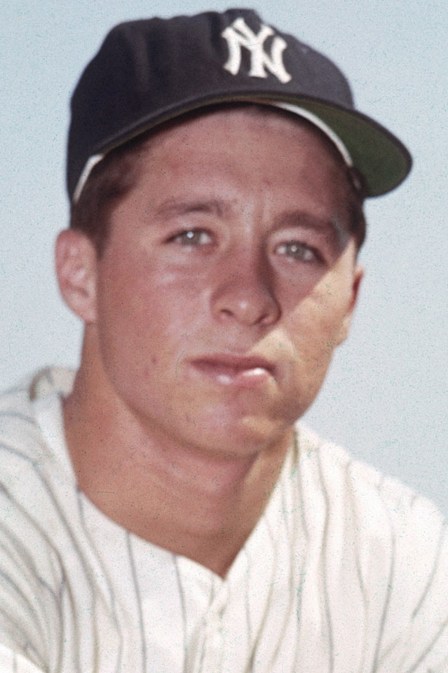
Bobby Murcer was an outfielder who played for the New York Yankees in 1965-1966, 1969-1974, 1979-1983.
Tom Greenwade had an eye for Oklahoma ballplayers.
In 1949, he drove to Commerce and signed a teenage shortstop named Mickey Mantle. Fifteen years later, in June 1964, the same scout drove to Oklahoma City, watched Bobby Ray Murcer work out at Southeast High School, and wrote a $10,000 check on behalf of the New York Yankees. Same scout. Same state. Same position -- shortstop, which the organization would eventually move him off of, same as Mantle. The comparison wasn't invented by a headline writer. Greenwade sealed it the moment he wrote the check.
Murcer spent a decade being positioned as the franchise's future, posted four consecutive All-Star seasons on clubs that couldn't sniff a pennant, and then -- hours after delivering the eulogy for his best friend -- drove in all five runs in one of the most emotionally wrenching wins in franchise history. He wasn't the next Mantle. He was Bobby Murcer, which turned out to be plenty.
| Yankees Career Seasons | 13 |
| Career BA (NYY) | .278 |
| Career HR (NYY) | 175 |
| Career RBI (NYY) | 688 |
| Peak Season (1971) | .331 BA, 25 HR, 94 RBI |
| All-Star Selections | 5 (1971-1975) |
| Gold Gloves | 1 (1972, CF) |
The Oklahoma Successor
Bobby Ray Murcer was born May 20, 1946, in Oklahoma City. He made his major league debut on September 8, 1965, at nineteen -- appeared in eleven games, hit his first home run, and played in Mickey Mantle Day at Yankee Stadium before that September was out. Then the Army called.
He served 1967 and 1968 in the US Army (Fort Huachuca, Arizona, radio corps -- about as far from center field as the government could place you without sending you overseas). Two years pulled from what should have been his developmental prime. He came back in 1969 wearing #1, shifted from shortstop to center field for good, and inherited a franchise that no longer had Mickey Mantle in the lineup and was still trying to figure out what it was.
The comparison followed him everywhere. Mantle addressed it directly, eventually, with a line that said everything about both men: "The first time I ever heard of Bobby Murcer, they said a kid from Oklahoma was gonna be the next Mickey Mantle. They were right. Sure enough, he couldn't play shortstop either."
Murcer wore it well. He didn't have much choice.
Carrying the Lean Years
What the franchise asked of Murcer from 1969 through 1974 wasn't fair, but nobody was asking. The Yankees were bad -- no pennants, no October baseball, stuck between the dynasty that ended in 1964 and the one that would begin in 1976 -- and Murcer was the one player compelling enough to make you forgive yourself for still showing up at the Stadium.
In 1971, he hit .331 with 25 home runs and 94 RBI, leading the American League in on-base percentage (.427) and OPS (.969). The Yankees finished 82-80 and fourth in a six-team division. That was his life: genuinely excellent, quietly irrelevant.
The following year in 1972, he went deeper -- 33 home runs, 96 RBI, 102 runs scored, 314 total bases, and a Gold Glove in center field. He also hit for the cycle on August 29 against the Texas Rangers, needing the home run last and delivering it in the ninth inning to tie the game (the Yankees won it in extras). He'd done it on a team going nowhere fast, in a season nobody outside the Bronx remembered.
He made the All-Star team four consecutive years, 1971 through 1974, as the franchise's primary star on clubs that most American League fans couldn't name three players from. That takes a particular kind of resilience -- being great enough to stand out nationally while losing locally, year after year, wearing #1 for a franchise that had retired better numbers. He had it.
The Trade
On October 22, 1974, the 1974 season barely over, GM Gabe Paul called Murcer and told him -- matter-of-factly, the way you'd report a weather change -- that he'd been traded straight-up to the San Francisco Giants for Bobby Bonds. No warning. No negotiation.
Murcer had spent a decade being built up as the cornerstone. The call was management's verdict: a very good player, it turned out, wasn't the same as the generational star the organization had been projecting since Greenwade handed him that check in Oklahoma City. He was twenty-eight. They'd decided to go in another direction.
He went to San Francisco (see the Bobby Bonds trade for the full accounting of how that turned out), made a fifth All-Star team with the Giants in 1975, got traded to the Cubs in February 1977, and ground out two more seasons in Chicago. The Yankees brought him back on June 26, 1979, for a minor league pitcher named Paul Semall and cash. George Steinbrenner had once told Murcer: "As long as I'm with the Yankees, you'll be with the Yankees, too." He was six years late -- but he kept his word.
Six weeks after Murcer rejoined the club, Thurman Munson was dead.
The Night He Gave the Bronx Everything It Had Left
Munson died on August 2, 1979, in a plane crash at Akron-Canton Regional Airport. He was thirty-two, the team captain, and the closest friend Murcer had in that clubhouse. Thurman Munson's death sent the entire organization sideways. On the morning of August 6, the Yankees flew to Canton, Ohio, for Munson's funeral. Murcer delivered one of the eulogies.
Then the team flew back to New York to play the Baltimore Orioles at Yankee Stadium that evening. A Monday night, nationally televised on ABC. Billy Martin offered Murcer the night off (which, given what Murcer had been doing that morning, was maybe the only decent thing a manager could offer). Murcer declined.
Ron Guidry started and pitched all nine innings, striking out nine, allowing four runs. The Yankees trailed 4-0 going into the bottom of the seventh -- a deficit that, on any other night, empties half the upper deck before the beer vendors pack it in.
Murcer came up with two runners on. He hit a three-run home run off Dennis Martinez. The Orioles still led, 4-3.
He came up again in the ninth. Bucky Dent and Willie Randolph on base. Two outs. The count went to 0-2. Tippy Martinez on the mound -- a former Yankee who knew this stadium and this crowd as well as anyone. On the 0-2 pitch, Murcer went the other way. A single to the opposite field. Dent scored. Randolph scored. Final: Yankees 5, Orioles 4.
He'd driven in all five runs. He'd buried his best friend that morning and driven in all five runs that night.
After the game, he found Diana Munson in the clubhouse. He gave her the bat and never used it again.
The Booth
Murcer played his final major league game on June 11, 1983, going 0-for-1 against Milwaukee. Nine days later, on June 20, the Yankees released him to open a roster spot for a kid named Don Mattingly (not the worst reason to be let go, when you think about it). Steinbrenner offered him a job in the broadcast booth that same day. Murcer took it before the conversation ended and was on the air with WPIX that night.
He spent the next twenty-five years, on and off, in the Yankees broadcast booth -- WPIX, SportsChannel, MSG, WNYW, and the YES Network from its launch in 2002 through 2008, with a stretch in the front office in the mid-1980s. He won three Emmy Awards for live sports coverage. His Oklahoma warmth and his genuine love for the organization came through in every broadcast, which is harder to sustain across a quarter-century than it sounds.
On Christmas Eve 2006, doctors told him he had a glioblastoma -- the most aggressive form of brain tumor, with a typical prognosis of roughly fourteen months. He returned to YES Network in 2007 anyway, working a reduced schedule, and got his memoir -- "Yankee for Life," co-written with Glen Waggoner -- published in May 2008 while he was still fighting.
Bobby Murcer died on July 12, 2008. He was sixty-two.
Signed by Tom Greenwade
The same scout who signed Mickey Mantle out of Commerce, Oklahoma, in 1949 signs Murcer for a $10,000 bonus out of Southeast High School in Oklahoma City. The Mantle comparison is built into the deal from day one.
MLB Debut at Age 19
Murcer makes his major league debut, appearing in 11 games and hitting his first home run. He plays in Mickey Mantle Day at Yankee Stadium before the season ends.
US Army Service
Murcer spends two years in the US Army, radio corps, at Fort Huachuca, Arizona. He returns in 1969 wearing #1 and moves permanently to center field.
Hits for the Cycle vs. Texas Rangers
Murcer hits for the cycle against Texas, needing the home run last. He delivers it in the ninth inning to tie the game; the Yankees win in extra innings.
Traded to SF Giants for Bobby Bonds
GM Gabe Paul calls without warning to inform Murcer he's been traded one-for-one to the San Francisco Giants for Bobby Bonds. It ends Murcer's first stint in the Bronx after four consecutive All-Star seasons.
Drives in All Five Runs on the Day of Munson's Funeral
Hours after delivering Thurman Munson's eulogy in Canton, Ohio, Murcer hits a 3-run home run off Dennis Martinez in the 7th inning, then a 2-run walk-off single off Tippy Martinez in the 9th -- scoring Bucky Dent and Willie Randolph -- to beat Baltimore 5-4. He gives the bat to Diana Munson after the game.
Retires -- Released for Don Mattingly
Nine days after his final game (June 11, an 0-for-1 against Milwaukee), the Yankees release Murcer to open a roster spot for Don Mattingly. Steinbrenner offers him a broadcast job that same day, and he's on the air with WPIX that night.
Diagnosed with Glioblastoma
Murcer is diagnosed with glioblastoma -- the most aggressive form of brain tumor. He returns to YES Network broadcasting in 2007, publishes his memoir "Yankee for Life" in May 2008, and keeps working until shortly before his death on July 12, 2008, at age 62.
Frequently Asked Questions
Was Bobby Murcer really the next Mickey Mantle?
He wasn't -- and Mantle said it best himself. "The first time I ever heard of Bobby Murcer, they said a kid from Oklahoma was gonna be the next Mickey Mantle. They were right. Sure enough, he couldn't play shortstop either." Murcer was a genuinely outstanding player: four consecutive All-Star seasons, a Gold Glove, and some of the best offensive numbers in the American League from 1971 through 1973. But Mantle was Mantle. The comparison was unfair from the moment Tom Greenwade handed Murcer a $10,000 check in 1964.
Why was Bobby Murcer traded to the San Francisco Giants?
On October 22, 1974, GM Gabe Paul traded Murcer straight-up to the Giants for Bobby Bonds. Murcer had posted four straight All-Star seasons but struggled in 1974 -- just 10 home runs and a .274 average -- and the Yankees decided to go in another direction. The trade was management's acknowledgment that a very good player wasn't the generational star the franchise had been building toward since 1964. Murcer was 28 when the call came.
What happened on August 6, 1979?
One of the most remarkable individual performances in franchise history, under circumstances nobody would have chosen. Murcer flew to Canton, Ohio that morning to deliver the eulogy at the funeral of Thurman Munson, who'd died in a plane crash four days earlier. That evening he flew back to New York and played against Baltimore. Trailing 4-0, he hit a 3-run home run off Dennis Martinez in the 7th to make it 4-3. Then in the 9th, on an 0-2 count with Bucky Dent and Willie Randolph on base, he hit a walk-off single off Tippy Martinez to the opposite field. Both runners scored. Final: Yankees 5, Orioles 4. He drove in all five runs. After the game he gave the bat to Diana Munson and never picked it up again.
How long was Bobby Murcer a Yankees broadcaster?
On and off, for twenty-five years -- from his retirement announcement on June 20, 1983 (nine days after his last game) until his death in 2008. He worked for WPIX, SportsChannel, MSG, WNYW, and the YES Network, with a stretch in the front office in the mid-1980s. He won three Emmy Awards for live sports coverage. Diagnosed with glioblastoma on Christmas Eve 2006, he returned to YES Network in 2007, published his memoir "Yankee for Life" in May 2008, and kept working until shortly before he died on July 12, 2008, at age 62.
That bat -- the one from August 6, 1979 -- he gave to Diana Munson in the clubhouse after the game. He never touched it again. Some things you don't take back.