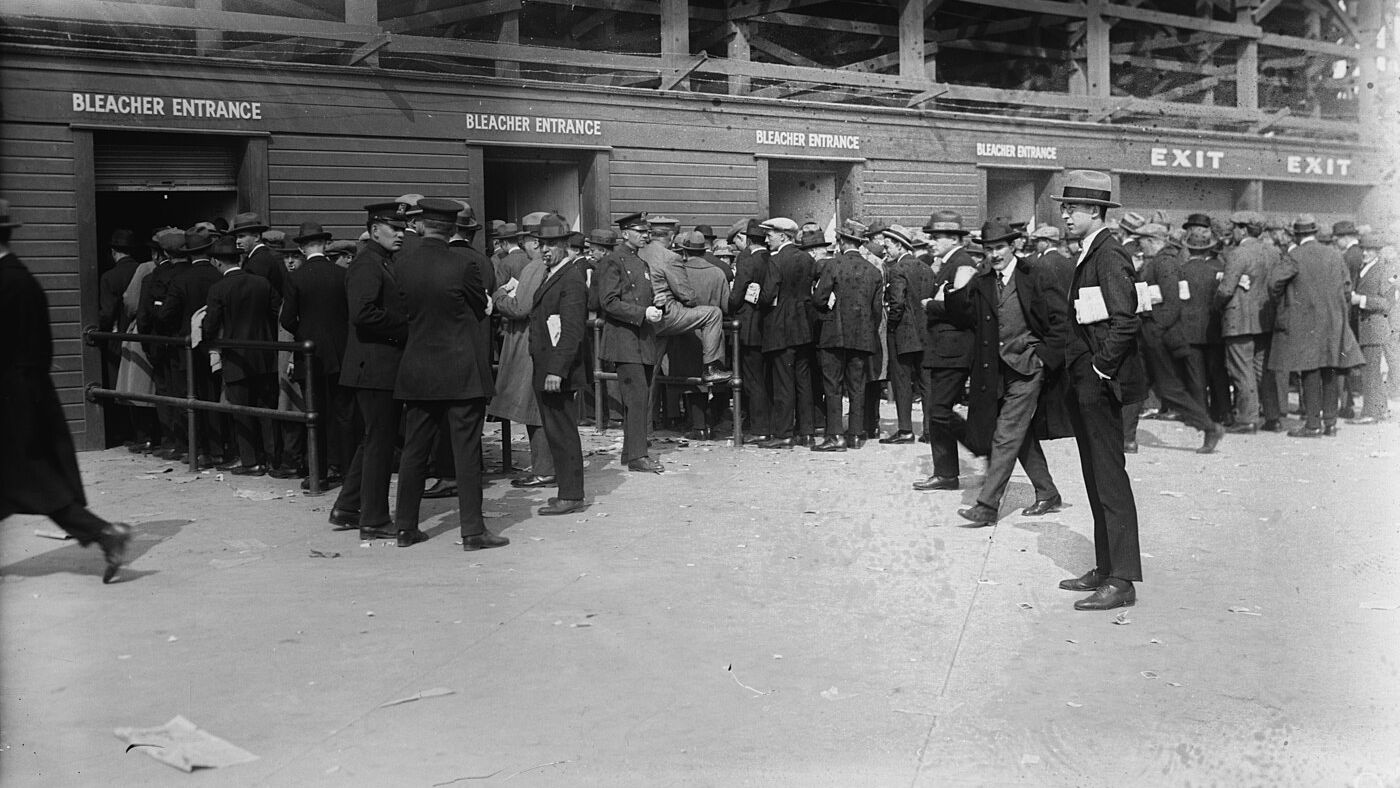
October 15, 1923. A Monday afternoon at the Polo Grounds in upper Manhattan. The New York Yankees led the World Series four games to two, and the final score read 6-4. When the last out settled into a Yankee glove, Miller Huggins -- all five feet six inches of him -- had his championship. Jacob Ruppert had his return on investment. And Babe Ruth, who'd spent two Octobers getting embarrassed by the Giants, had his answer.
The Yankees had existed since 1903. They'd never won a thing.
The Buildup
The road to the 1923 championship ran through two straight humiliations at the hands of John McGraw's Giants. In the 1921 World Series -- played entirely at the Polo Grounds, since both teams shared the park -- the Giants took five of eight games in the old best-of-nine format. Ruth batted .313 and hit a home run but couldn't finish the Series healthy, nursing an arm abscess through the final games. McGraw's pitching staff outworked the Yankees when it counted.
Then came 1922. And it was worse. The Giants swept the Yankees four games to none (with one tie, called on account of darkness after Game 2). Ruth hit .118. McGraw didn't bother hiding his contempt. He told reporters the home run king could be handled by smart pitching -- that Ruth was a regular-season spectacle who wilted when the games got serious.
Two Octobers. Two losses. Same opponent. The New York newspapers called it "the shadow of McGraw."
But behind the scenes, the Yankees' infrastructure was shifting in ways McGraw couldn't control. The Giants had evicted their tenants from the Polo Grounds after the 1920 season, tired of watching Ruth's Yankees outdraw them in their own ballpark (1.29 million fans in 1920 alone). Ruppert's response wasn't to beg for a lease extension. He bought land across the Harlem River in the South Bronx, hired the Osborn Engineering Company, and built the largest ballpark in America in under a year.
Yankee Stadium opened on April 18, 1923. An estimated 74,200 fans crammed into a building designed for fewer. Ruth hit a home run. Somebody in the press box typed "The House That Ruth Built," and the name stuck before the ink dried.
The regular season that followed was a demolition. The Yankees went 98-54, winning the pennant by 16 games over Detroit. Ruth hit .393 with 41 home runs, 131 RBI, and an OPS of 1.309. He won the AL Most Valuable Player Award -- the only MVP of his career, because the rules at the time barred previous winners from future eligibility (a policy so absurd it almost sounds made up, but wasn't).
Herb Pennock, a crafty left-hander acquired from the Red Sox that January, won 19 games. Waite Hoyt won 17. Bob Shawkey stabilized the back end. Three of the four rotation arms -- Pennock, Hoyt, and "Sad Sam" Jones -- had been purchased or traded from Boston, part of Ed Barrow's systematic raid on his former club's roster. Barrow had managed the Red Sox to the 1918 championship. Now he was the Yankees' general manager, assembling a dynasty out of parts he knew better than anyone.
The Giants won the National League pennant again. For the third straight October, the two New York teams would meet. But the dynamic had changed. The Yankees weren't tenants anymore. They were hosts.
The Moment
The Series opened at Yankee Stadium on October 10, and McGraw drew first blood in the most theatrical way possible. Casey Stengel -- a 33-year-old Giants outfielder who'd been traded twice in two years and was widely considered finished -- hit an inside-the-park home run in the ninth inning off Joe Bush to win Game 1, 5-4. Stengel lost a shoe rounding second base, wobbled his way home, and slid in headfirst. Then he thumbed his nose at the Yankees' dugout. Commissioner Kenesaw Mountain Landis later reprimanded Stengel formally for the taunting. Stengel didn't seem to care.
Ruth had homered in Game 1, but it wasn't enough. The narrative held: October belonged to McGraw.
Game 2 shifted to the Polo Grounds. Ruth answered with two home runs off Hugh McQuillan, and Pennock held the Giants to two runs. Yankees 4, Giants 2. Series tied.
Game 3, back at Yankee Stadium, was Stengel again. He hit a solo shot off Sad Sam Jones in the seventh inning -- the game's only run. Art Nehf threw a complete-game shutout. Giants 1, Yankees 0. New York's National League faithful believed their team had the Yankees' measure for a third straight October.
They were wrong. Game 4 was a rout. Shawkey and the offense buried the Giants 8-4 at the Polo Grounds. Game 5 was worse -- Joe Bush pitched brilliantly at Yankee Stadium and the Yankees rolled 8-1. The team that had been swept a year earlier now led three games to two.
Game 6, October 15, the Polo Grounds. Art Nehf on the mound for the Giants against the Yankees' bullpen committee. The game stayed close -- the Giants wouldn't fold quietly -- but the Yankees held the lead and won 6-4. When the final out dropped, it was over.
Ruth finished the Series batting .368 with three home runs and eight walks in six games. The Giants had tried to pitch around him -- those eight walks told the whole tactical story -- and he'd punished them every time they came near the strike zone. His three home runs set a World Series record. The .118 of 1922 was buried.
| Series Result | Yankees 4, Giants 2 |
| Ruth's Series BA | .368 |
| Ruth's Series HR | 3 (WS record at the time) |
| Ruth's Series Walks | 8 |
| Ruth's Series OBP | .556 |
| Series MVP (unofficial) | Herb Pennock (2 wins) |
This is the one I wanted most. They said I couldn't do it in October. I guess we showed them.
The Aftermath
The championship didn't just give the Yankees their first title. It rearranged New York's baseball hierarchy permanently.
McGraw had won the National League pennant three straight years -- 1921, 1922, 1923. He returned one more time -- losing to Washington in the 1924 World Series -- and then never again. The man who'd mocked Ruth's October credentials spent the rest of his career watching from the wrong side of the city. He retired in 1932 and died two years later. Ten NL pennants, three World Series titles -- the last one coming in 1922, the year before Ruth and Huggins ended his reign.
For Ruppert, the 1923 title was validation of a plan eight years in the making. He'd bought the club in 1915. He'd purchased Ruth. He'd hired Barrow. He'd built Yankee Stadium. When reporters asked him what the championship meant, he answered the way a man who ran a beer empire answered everything -- with the restrained satisfaction of someone who'd placed a bet and watched it pay off exactly as calculated.
I said when I bought this team that I would spare no expense to make New York the greatest city for baseball in the world. Today I am satisfied we have accomplished what we set out to do.
The 1923 championship opened an account the franchise has been drawing from ever since. The next few years brought a brief stumble -- Washington won the AL in 1924 and 1925, and the '25 season was a disaster, with Ruth missing time due to illness and Huggins finally suspending and fining him $5,000 for insubordination. But a 20-year-old kid named Lou Gehrig, who'd signed with the club during the 1923 season and played 13 games that year (he wasn't on the World Series roster), took over at first base on June 2, 1925 when Wally Pipp asked out with a headache. Pipp never got the job back. And Gehrig didn't miss a game for the next fourteen years.
By 1927, Ruth and Gehrig were the most feared tandem in baseball history. Murderers' Row went 110-44 and swept the Pirates in the World Series. The 1928 squad swept the Cardinals. Ruth hit .625 in that Series -- a number that still looks like a typo.
Between 1921 and 1932, the Yankees played in seven World Series and won four. Every one of them traced back to the afternoon of October 15, 1923, when the franchise won for the first time.
Ruth Purchased from Red Sox
Ruppert buys Ruth for $100,000 -- the transaction that built the dynasty's foundation.
First Pennant, First Failure
The Yankees win their first AL pennant but lose the World Series to the Giants, 5 games to 3.
Swept by McGraw
The Giants sweep the Yankees 4-0 (with one tie). Ruth hits .118. McGraw taunts.
Yankee Stadium Opens
74,200 fans pack the new ballpark. Ruth christens it with a home run.
First Championship
The Yankees beat the Giants in six games. Ruth bats .368 with 3 HR. The dynasty begins.
Murderers' Row
Ruth hits 60 HR. Gehrig drives in 175. The Yankees go 110-44 and sweep the World Series.
Frequently Asked Questions
When did the Yankees win their first World Series?
The New York Yankees won their first World Series on October 15, 1923, defeating the New York Giants four games to two. It was the third consecutive Fall Classic between the two teams -- the Giants had won in 1921 and 1922 -- and the first World Series played at Yankee Stadium. Babe Ruth hit .368 with three home runs in the Series. The 1923 title was the first of the franchise's 27 World Series championships.
How did Babe Ruth perform in the 1923 World Series?
Ruth batted .368 with three home runs, three RBI, and eight walks in six games. The three home runs set a single-World-Series record at the time. The Giants walked him eight times trying to neutralize his bat, but his .556 on-base percentage showed the strategy didn't work. Ruth's performance was a direct answer to John McGraw's public claims that he couldn't produce in October -- he'd hit just .118 in the 1922 World Series loss to the same Giants team.
Did Lou Gehrig play in the 1923 World Series?
No. Gehrig signed with the Yankees during the 1923 season and appeared in 13 regular-season games, but he wasn't on the World Series roster. Wally Pipp was the starting first baseman for the championship team. Gehrig didn't become the everyday first baseman until June 2, 1925, when Pipp asked out of the lineup with a headache. Gehrig went on to win six World Series titles with the Yankees, but 1923 wasn't one of them.