Career Stats
Regular Season
| Year | G | GS | W | L | SV | IP | H | ER | K | BB | ERA | WHIP |
|---|---|---|---|---|---|---|---|---|---|---|---|---|
| 1929 | 30 | 23 | 9 | 11 | 2 | 180.1 | 230 | 94 | 57 | 35 | 4.69 | 1.47 |
| 1930 | 30 | 19 | 11 | 7 | 0 | 183.2 | 234 | 93 | 55 | 21 | 4.56 | 1.39 |
| 1931 | 29 | 25 | 11 | 6 | 0 | 220.0 | 287 | 104 | 80 | 38 | 4.25 | 1.48 |
| 1932 | 25 | 21 | 9 | 5 | 0 | 162.0 | 226 | 89 | 61 | 43 | 4.94 | 1.66 |
| 1933 | 30 | 5 | 7 | 4 | 4 | 96.0 | 145 | 61 | 30 | 35 | 5.72 | 1.88 |
| Career | 405 | 268 | 162 | 90 | 23 | 2578.1 | 2940 | 1045 | 827 | 568 | 3.65 | 1.36 |
Career-best seasons highlighted in gold. Stats via Retrosheet.
Postseason
| Year | G | GS | W | L | SV | IP | H | ER | K | BB | ERA | WHIP |
|---|---|---|---|---|---|---|---|---|---|---|---|---|
| 1923 | 3 | -- | 2 | 0 | 1 | 17.1 | -- | -- | -- | -- | 3.63 | -- |
| 1926 | 3 | -- | 2 | 0 | 0 | 22.0 | -- | -- | -- | -- | 1.23 | -- |
| 1927 | 1 | -- | 1 | 0 | 0 | 9.0 | -- | -- | -- | -- | 1.00 | -- |
| 1932 | 2 | -- | 0 | 0 | 2 | 4.0 | -- | -- | -- | -- | 2.25 | -- |
| Career | 9 | 0 | 5 | 0 | 3 | 52.1 | 0 | 0 | 0 | 0 | 0.00 | 0.00 |
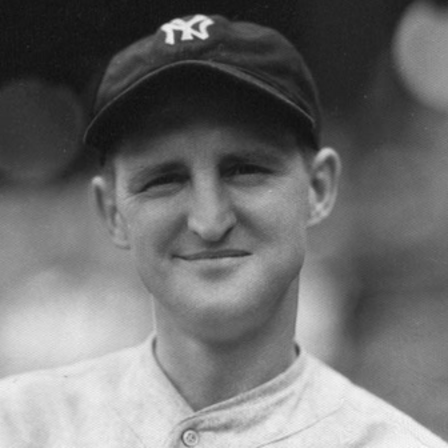
Herb Pennock was a pitcher who played for the New York Yankees from 1923 to 1933. Career stats: 162-90 record, 3.65 ERA, 827 strikeouts.
The left arm that won four World Series rings for the New York Yankees belonged to a man who looked more like a Wall Street banker than a baseball pitcher. Herb Pennock stood 6-feet tall and weighed barely 160 pounds soaking wet, threw nothing that would register on a modern radar gun, and somehow managed to compile a 241-162 career record with a knack for performing his best when the games mattered most. His World Series record -- 5-0, with a 1.95 ERA -- tells you everything about the kind of pitcher he was. When October arrived, Pennock was the man you wanted on the mound.
Path to the Bronx
Pennock's journey to the Yankees started in the most unlikely place possible: Connie Mack's Philadelphia Athletics. Mack signed the 18-year-old out of prep school in 1912, and Pennock spent four seasons learning his craft in Philadelphia (missing most of 1913 to illness) before Mack sold him to the Red Sox on waivers in 1915 for a mere $2,500 -- a decision Mack would later call his biggest mistake. He pitched reasonably well in Boston, going 61-59 over six-plus seasons, but the Red Sox were falling apart -- selling off their best players to fund owner Harry Frazee's Broadway productions.
In January 1923, the Yankees acquired Pennock from Boston for three players and $50,000. It was another chapter in the pipeline that funneled Red Sox talent to the Bronx during the 1920s, and Pennock made the most of it immediately. In his first season as a Yankee, he went 19-6 with a 3.13 ERA and helped the franchise win its first World Series title.
Yankees Career
Pennock's best years came in pinstripes. He won 162 games for the Yankees over eleven seasons, relying on pinpoint control, a devastating curveball, and the ability to change speeds in ways that left hitters off balance. He didn't overpower anyone -- his fastball wouldn't have broken a pane of glass, as the saying went -- but he could place it wherever he wanted, and he mixed his pitches with an intelligence that modern pitching coaches would admire.
In 1924, he went 21-9 with a 2.83 ERA. In 1926, he posted a 23-11 record. But it was his postseason work that separated Pennock from his contemporaries. During the 1927 World Series against the Pirates, he threw a complete-game three-hitter in Game 3, retiring the first 22 batters he faced before Pie Traynor broke up the bid with a leadoff single in the eighth -- an astonishing display of control that ranks among the greatest pitching performances in Series history.
| NYY Record | 162-90 |
| NYY ERA | 3.54 |
| World Series Record | 5-0 |
| World Series ERA | 1.95 |
| Career Record | 241-162 |
| Hall of Fame | Inducted 1948 |
Pennock was also part of the 1928 championship team and the 1932 squad that swept the Cubs. By then he was in his late thirties, pitching in a reduced role, but still effective enough to contribute. He made his final appearance in 1934 at age 40 and retired with 241 career wins.
Key Moments
Traded to the Yankees
The Yankees acquire Pennock from the Red Sox for three players and $50,000, continuing the talent pipeline from Boston to New York that defined the era.
First Championship
Pennock wins Game 2 of the World Series against the Giants, helping the Yankees capture their first title in franchise history.
22 Straight Retired
In Game 3 of the World Series, Pennock throws a complete-game three-hitter against the Pirates, retiring the first 22 batters he faces before Pie Traynor's leadoff single in the eighth.
23-Win Season
Posts a 23-11 record with a 3.62 ERA, leading the Yankees to the American League pennant.
Hall of Fame Induction
The BBWAA elects Pennock to Cooperstown. Tragically, he had died just weeks earlier on January 30, 1948, at age 53.
The Craft of Pitching
Pennock represented something that's largely disappeared from modern baseball: the pitcher as artist. He didn't rely on velocity or movement -- he relied on deception, location, and an understanding of hitters that bordered on the intuitive. Babe Ruth, who'd been Pennock's teammate in Boston before they reunited in New York, called him the craftiest pitcher he'd ever seen. Coming from a man who'd faced every arm of his era, that was high praise.
His approach would look familiar to students of pitching theory. Pennock changed speeds constantly, worked the corners, and never gave hitters the same look twice. He didn't try to strike everyone out -- he trusted his defense and aimed for contact he could control. In an era of power pitching, he won with brains.
Frequently Asked Questions
What was Herb Pennock's World Series record?
Pennock went 5-0 with a 1.95 ERA in World Series play, winning championships in 1923, 1927, 1928, and 1932 with the Yankees. His October dominance included a legendary Game 3 in the 1927 Series where he retired the first 22 Pirates batters he faced.
How did Herb Pennock come to the Yankees?
The Yankees acquired Pennock from the Boston Red Sox on January 30, 1923, for three players and $50,000. He was part of the broader exodus of talent from Boston to New York during that decade.
What kind of pitcher was Herb Pennock?
Pennock was a finesse left-hander who relied on pinpoint control, a sharp curveball, and excellent change of speeds rather than raw velocity. He was known for his intelligence on the mound and his ability to outthink hitters in pressure situations.
When was Herb Pennock elected to the Hall of Fame?
The BBWAA elected Pennock to the Hall of Fame in 1948. He had died on January 30, 1948 -- just weeks before the election results were announced -- making him one of the few Hall of Famers inducted posthumously.
Herb Pennock won 241 games without ever throwing hard, posted a perfect 5-0 record in the World Series without ever losing his composure, and helped build a dynasty without ever demanding the spotlight. The left arm from Pennsylvania proved that pitching didn't require overpowering stuff -- it required knowing exactly what to throw, and when, and where. That was enough. More than enough.