
Career Stats
Regular Season
| Year | G | AB | R | H | 2B | 3B | HR | RBI | BB | SO | SB | AVG | OBP | SLG | OPS |
|---|---|---|---|---|---|---|---|---|---|---|---|---|---|---|---|
| 1944 | 9 | 7 | 1 | 1 | 0 | 0 | 0 | 1 | 2 | 1 | 1 | .143 | .333 | .143 | .476 |
| 1945 | 1 | 0 | 0 | 0 | 0 | 0 | 0 | 0 | 1 | 0 | 0 | -- | 1.000 | -- | -- |
| Career | 10 | 7 | 1 | 1 | 0 | 0 | 0 | 1 | 3 | 1 | 1 | .143 | .400 | .143 | .543 |
Career-best seasons highlighted in gold. Stats via Retrosheet.
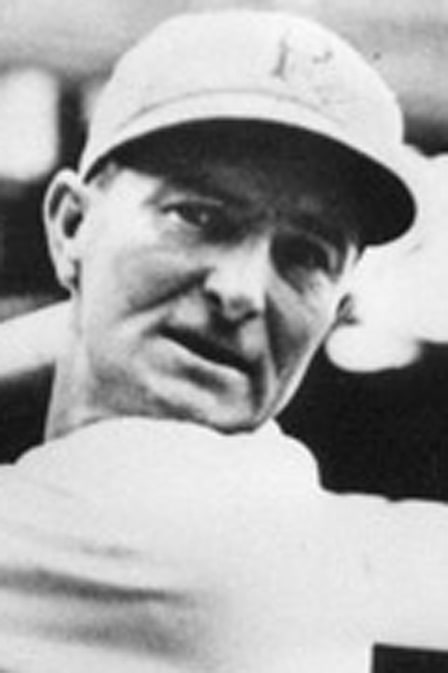
Paul Waner was an outfielder who played for the New York Yankees from 1944 to 1945. Career stats: .143 batting average, 1 RBI, 1 hits.
April 26, 1945. The Yankees were down 7-5 in the eighth inning of a game that meant nothing in a season that was already sinking toward fourth place. With a runner on and one out, the pitcher's spot came up, and Joe McCarthy sent a 42-year-old bench player to the plate to pinch hit. Paul Waner worked the count and drew a walk. The next batter walked too, moving him to second. Then the inning ended, and he stood there stranded. A couple of days later, the Yankees released him. He went home and never played professional baseball again.
That walk was the last plate appearance of a 20-year Hall of Fame career. It's an odd note to end on -- no line drive, no ovation, just a guy taking four pitches he didn't like. But it's honest. By 1945, that's what was left of Paul Waner's bat, and the Yankees were the last team willing to find out.
Big Poison in Pittsburgh
None of that anticlimax matters much if you don't know what came before it. Waner debuted with the Pittsburgh Pirates in 1926 and turned into one of the best pure hitters the National League had ever seen. In 1927, his second season, he hit .380 with 131 RBI and won the NL MVP (not bad for a 5-foot-8, 153-pound outfielder nobody figured to hit for that kind of average). His younger brother Lloyd broke in as a rookie center fielder that same year and hit .355 with 223 hits of his own. The two of them combined for 460 hits, and a Brooklyn fan with a foghorn voice supposedly mangled "person" into "poison" describing them -- Paul became Big Poison, Lloyd became Little Poison, and the names stuck for good.
Waner won two more batting titles after that, .362 in 1934 and .373 in 1936, and he could still hit well enough in 1942, playing for the Boston Braves by then, to line a single off his old Pirates teammate Rip Sewell for career hit number 3,000 -- only the seventh player in major league history to get there. He finished with 3,152 hits and a .333 career average. Cooperstown elected him in 1952.
That October 1927 Series ring he never got -- the Yankees swept his Pirates in four straight, Ruth and Gehrig and the rest of Murderers' Row running through Pittsburgh like it wasn't there. Seventeen years later, Waner would put on that same uniform. Baseball has a sense of humor about these things.
The Long Way Back
The Pirates let him go after 1940, and the next four years were a tour of National League bench jobs: eleven forgettable games with Brooklyn in 1941, two seasons in Boston, a return to the Dodgers in 1943 where he still hit .311 in part-time work. By September 1944, at 41, he was hitting well enough for a last-place Brooklyn club that had nothing to play for (well enough being relative -- nobody confused him with the 1927 version anymore). They released him September 1. The Yankees, chasing the Browns and Tigers and Red Sox in one of the tightest pennant races of the decade, signed him that same day.
| Yankees Years | 1944-1945 |
| Yankees Games | 10 |
| Yankees Batting Line | .143/.400/.143 |
| Yankees Hits / At-Bats | 1-for-7 |
| Career Totals (20 seasons, 4 teams) | .333 AVG, 3,152 H, 3x NL Batting Champion |
| Career Awards | 1927 NL MVP |
| Hall of Fame | Elected 1952 |
Ten Games in Pinstripes
He got a hit in his first Yankees at-bat, then went cold -- 0-for-6 the rest of the way, with two walks mixed in, across nine games down the stretch. New York stayed in the race into September before fading to third. Waner wasn't the reason they faded and he wasn't the reason they'd stayed close either; he was a 41-year-old former batting champion filling a roster spot on a team that had lost DiMaggio and Rizzuto to the war and needed bodies who could still swing a bat at the major league level.
McCarthy brought him back for 1945 anyway, which says something about how thin the roster still was. Waner sat out the first six games of the season (not exactly a vote of confidence, but he was still on the roster, which by that point counted for something). When he finally got his one chance -- that pinch-hit walk on April 26 -- it was already close to over. He was gone within the week.
Ten games, seven at-bats, one single. That's the entire Yankees ledger. It's a rounding error against 3,152 career hits, and it should stay a rounding error -- nobody remembers Paul Waner because of what he did in pinstripes. They remember him because of what he did in Pittsburgh for fifteen years before the Yankees ever entered the picture. But he wore the uniform, he drew a walk in his last big-league at-bat wearing it, and that's enough to earn him a page here.
Born in Harrah, Oklahoma
Paul Glee Waner is born; he'll debut in the majors 23 years later.
NL MVP with the Pirates
Hits .380 with 131 RBI in his second big-league season, winning the NL MVP. The Yankees sweep his Pirates in the World Series that October.
3,000th Career Hit
Singles off former teammate Rip Sewell while playing for the Boston Braves, becoming the seventh player in MLB history to reach 3,000 hits.
Signed by the Yankees
Released by the last-place Dodgers, signs with New York the same day. Goes 1-for-7 in nine games as the Yankees fade to third place.
Final Plate Appearance
Draws a pinch-hit walk against Philadelphia. Released days later, ending a 20-year career.
Elected to the Hall of Fame
Cooperstown inducts Waner on the strength of his Pittsburgh career -- three batting titles, 3,152 hits, a .333 average.
Frequently Asked Questions
Did Paul Waner play for the Yankees?
Yes, briefly. The Hall of Fame outfielder, who built his legendary career with the Pittsburgh Pirates, signed with the Yankees on September 1, 1944, after Brooklyn released him, and finished his career there in 1945. He appeared in 10 total games across the two seasons, going 1-for-7 with three walks.
What did Paul Waner do to get into the Hall of Fame?
Almost none of it happened in New York. Waner won three NL batting titles (1927, 1934, 1936) and the 1927 NL MVP with the Pittsburgh Pirates, finished with 3,152 career hits and a .333 average, and became the seventh player in MLB history to reach 3,000 hits. Cooperstown elected him in 1952, entirely on the strength of his Pittsburgh career.
Why is Paul Waner called 'Big Poison'?
The nickname supposedly traces to a Brooklyn fan whose accent turned "person" into "poison" while describing Paul and his younger brother Lloyd, both Pirates outfielders. Sportswriters picked it up during the 1927 season, when the brothers combined for 460 hits, and it stuck for both of their careers -- Paul as Big Poison, Lloyd as Little Poison.
How did Paul Waner's career end?
Anticlimactically. After going 1-for-7 with the Yankees in 1944, McCarthy brought him back for 1945, but he didn't appear until April 26, when he drew a pinch-hit walk against Philadelphia. New York released him within days, and at 42, after 20 major league seasons, he retired.