
Career Stats
Regular Season
| Year | G | AB | R | H | 2B | 3B | HR | RBI | BB | SO | SB | AVG | OBP | SLG | OPS |
|---|---|---|---|---|---|---|---|---|---|---|---|---|---|---|---|
| 1940 | 107 | 376 | 45 | 92 | 11 | 1 | 9 | 54 | 48 | 33 | 0 | .245 | .333 | .351 | .684 |
| 1941 | 110 | 353 | 35 | 101 | 15 | 5 | 7 | 74 | 45 | 17 | 2 | .286 | .372 | .416 | .788 |
| 1942 | 82 | 268 | 28 | 79 | 13 | 1 | 2 | 37 | 26 | 11 | 2 | .295 | .359 | .373 | .732 |
| 1943 | 87 | 249 | 31 | 87 | 20 | 2 | 4 | 35 | 43 | 12 | 2 | .349 | .445 | .494 | .939 |
| 1946 | 54 | 134 | 10 | 35 | 8 | 0 | 2 | 10 | 19 | 12 | 0 | .261 | .357 | .366 | .723 |
| Career | 1823 | 6432 | 946 | 2015 | 349 | 72 | 204 | 1242 | 689 | 295 | 36 | .313 | .380 | .485 | .865 |
Career-best seasons highlighted in gold. Stats via Retrosheet.
Postseason
| Year | G | AB | R | H | 2B | 3B | HR | RBI | BB | SO | SB | AVG | OBP | SLG | OPS |
|---|---|---|---|---|---|---|---|---|---|---|---|---|---|---|---|
| 1932 | 4 | 16 | -- | 7 | -- | -- | 0 | 4 | -- | -- | -- | .438 | -- | -- | -- |
| 1936 | 6 | 25 | -- | 3 | -- | -- | 1 | 5 | -- | -- | -- | .120 | -- | -- | -- |
| 1937 | 5 | 19 | -- | 4 | -- | -- | 0 | 3 | -- | -- | -- | .211 | -- | -- | -- |
| 1938 | 4 | 15 | -- | 6 | -- | -- | 1 | 2 | -- | -- | -- | .400 | -- | -- | -- |
| 1939 | 4 | 15 | -- | 4 | -- | -- | 2 | 5 | -- | -- | -- | .267 | -- | -- | -- |
| 1941 | 5 | 18 | -- | 3 | -- | -- | 0 | 1 | -- | -- | -- | .167 | -- | -- | -- |
| 1942 | 5 | 19 | -- | 5 | -- | -- | 0 | 0 | -- | -- | -- | .263 | -- | -- | -- |
| 1943 | 5 | 18 | -- | 5 | -- | -- | 1 | 4 | -- | -- | -- | .278 | -- | -- | -- |
| Career | 38 | 145 | 0 | 37 | 0 | 0 | 5 | 24 | 0 | 0 | 0 | .255 | .255 | .359 | .614 |
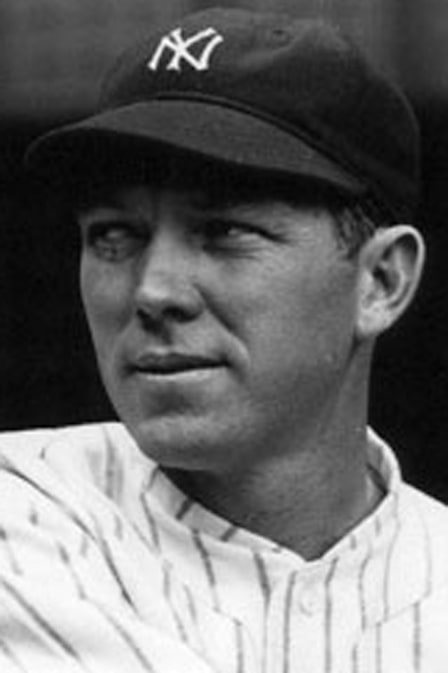
Bill Dickey was a catcher who played for the New York Yankees in 1928-1943, 1946. Career stats: .313 batting average, 204 home runs, 1242 RBI.
Bill Dickey hit .362 in 1936 and almost nobody talks about it. That's what happens when Joe DiMaggio shows up for his rookie year the same season -- the kid from San Francisco swallowed the headlines whole, and Dickey, the quiet catcher from Arkansas, just kept doing what he'd done since 1929. Catching every day. Hitting .300-plus like it was nothing. Winning rings. Dickey played 17 seasons for the New York Yankees, won eight World Series, and people who should know better still call him "the forgotten Yankee."
The Arkansas Kid
Dickey didn't come from a baseball factory. Born in Bastrop, Louisiana in 1907, he grew up in Little Rock, Arkansas, playing sandlot ball and catching for semi-pro teams before the Yankees signed him out of the Southern Association. He got his first cup of coffee in 1928 -- ten games, .200 average, back to the minors. By 1929, he'd won the starting job at 21 years old, hitting .324 in his first full season. Manager Miller Huggins died that September (the kind of gut-punch year that marks a franchise), and when Joe McCarthy took over in 1930, Dickey became McCarthy's guy behind the plate. That partnership defined both their careers.
McCarthy once said Dickey "isn't just a catcher -- he's a ballclub." That wasn't flattery. Dickey ran the pitching staff like a field general, called games with an intelligence that pitchers trusted completely, and did it all while putting up offensive numbers that no catcher of his era could touch.
The Peak
| Games | 1,789 |
| Batting Average | .313 |
| Home Runs | 202 |
| RBI | 1,209 |
| OPS | .868 |
| WAR | 56.4 |
| All-Star Selections | 11 |
| World Series Titles | 8 |
| Seasons Over .300 | 11 of 13 |
The numbers are staggering for a catcher. Dickey hit .300 or better in 11 of his 13 full seasons. His 1937 line -- .332 with 29 home runs and 133 RBI -- stood as the best offensive season any AL catcher had ever produced. He caught 100-plus games in 13 straight years, a durability record that held for decades. And he did all of this in an era when catchers wore equipment that looked like it came from a hardware store (because it basically did).
1936 through 1939 -- four straight championships -- is where Dickey's career hits its stride. He's putting up a 1.045 OPS in '36, driving in 133 in '37, crushing 27 homers in '38. The Yankees swept through October like a storm every single fall. Dickey caught every one of those pitching staffs, handled every one of those pressure situations, and hit in the middle of a lineup that included DiMaggio and Lou Gehrig.
Bill Dickey isn't just a catcher. He's a ballclub. He takes charge of those pitchers like a general.
The Reynolds Incident (and the Edge Underneath)
Dickey's reputation paints the quiet professional. But on July 4, 1932, Washington's Carl Reynolds barreled into him at the plate, and Dickey responded by breaking Reynolds's jaw with a single punch. The league suspended him 30 days and fined him a thousand bucks -- real money in 1932. Dickey expressed genuine regret afterward, and the incident didn't define him. But it's a useful reminder that behind the soft-spoken Arkansas demeanor, a competitor lived who didn't take kindly to getting run over at home plate. (Catchers never do.)
The Teacher
Dickey served in the Navy during 1944-45, came back at 39 as player-manager in 1946, and quickly figured out that managing wasn't for him. He stepped down in September with a 57-48 record -- not because the team was bad, but because the political side of running a clubhouse didn't suit his temperament. (Some guys are built to play the game, not to babysit grown men.)
But his greatest contribution after playing came in 1949, when Casey Stengel brought him back as a coach. His assignment: turn a raw, unconventional young catcher named Yogi Berra into a real major league receiver. Dickey overhauled Berra's footwork, his throwing mechanics, his game-calling. The result speaks for itself -- Berra became the greatest catcher in the game's history.
Bill Dickey is learning me all his experiences.
That quote is classic Berra -- the grammar's a mess, but the feeling's dead-on. And the detail that ties it all together: both men wore number 8. When Berra joined the team, he picked up Dickey's old number. On July 22, 1972, the Yankees retired number 8 for both of them in the same ceremony. Two Hall of Fame catchers, one number, mentor and student.
Starting Job Won
Dickey takes over as the Yankees' everyday catcher at 21, hitting .324 in his first full season.
Career Year
Posts a .362 average with 22 homers and 107 RBI -- a 1.045 OPS that DiMaggio's rookie fanfare completely buries.
Best Catcher Season in AL History
Hits .332 with 29 home runs and 133 RBI, setting the standard for offensive production from behind the plate.
Final Ring, Then War
Hits .351 in 85 games, wins his eighth World Series, and enlists in the Navy.
The Teacher Returns
Comes back to the Yankees as a coach under Stengel, begins transforming Yogi Berra into a Hall of Famer.
Hall of Fame
The BBWAA votes him in with 202 of 252 ballots -- 80.2% of the vote. Catchers don't always get their due, but the writers got this one right.
The BBWAA inducted Dickey into the Hall of Fame in 1954 -- 202 of 252 ballots, good for 80.2% of the vote. The writers don't always get it right with catchers (the position's hardest to quantify, easiest to overlook), but they recognized what Dickey brought to the table. He caught more games, hit for a higher average, and won more championships than any catcher of his generation. (The BBWAA and catchers agreeing on something -- mark the calendar.)
He went home to Little Rock, lived quietly, and died on November 12, 1993, at 86. His locker-room presence, his eight rings, his .313 career average from the most punishing position on the field -- all of it tends to get buried under the bigger names he played alongside. But walk through the numbers, watch how the dynasty of the 1930s functioned, trace the line from Dickey to Berra, and you'll find the same guy at the center of it all. The quiet one. The one nobody remembers to talk about, even though they should.
Frequently Asked Questions
What was Bill Dickey's career batting average?
Bill Dickey hit .313 over 17 seasons with the Yankees, batting .300 or better in 11 of his 13 full seasons. That average is remarkable for any position but historically rare for a catcher.
How many World Series did Bill Dickey win?
Dickey won eight World Series championships with the Yankees: 1928, 1932, 1936, 1937, 1938, 1939, 1941, and 1943. He caught for the pitching staff in each of those runs.
Did Bill Dickey teach Yogi Berra how to catch?
Yes. Dickey returned to the Yankees as a coach in 1949 and worked intensively with Berra, overhauling his receiving mechanics, footwork, and game-calling. Berra credited Dickey as the key figure in his development, famously saying, "Bill Dickey is learning me all his experiences."
Why do Bill Dickey and Yogi Berra share a retired number?
Both Dickey and Berra wore uniform number 8 during their Yankees careers. Berra picked up the number after Dickey retired. The Yankees retired #8 for both players in a shared ceremony on July 22, 1972 -- the only retired number in franchise history belonging to two players.