
Career Stats
Regular Season
| Year | G | AB | R | H | 2B | 3B | HR | RBI | BB | SO | SB | AVG | OBP | SLG | OPS |
|---|---|---|---|---|---|---|---|---|---|---|---|---|---|---|---|
| 1952 | 154 | 587 | 91 | 149 | 25 | 10 | 2 | 43 | 69 | 42 | 17 | .254 | .337 | .341 | .678 |
| 1953 | 134 | 413 | 54 | 112 | 21 | 3 | 2 | 54 | 71 | 39 | 4 | .271 | .383 | .351 | .734 |
| 1954 | 132 | 320 | 50 | 62 | 11 | 0 | 2 | 16 | 47 | 24 | 4 | .194 | .297 | .247 | .544 |
| 1955 | 82 | 146 | 21 | 40 | 4 | 1 | 1 | 9 | 22 | 18 | 7 | .274 | .380 | .336 | .716 |
| 1956 | 32 | 52 | 6 | 12 | 0 | 0 | 0 | 6 | 7 | 6 | 3 | .231 | .322 | .231 | .553 |
| Career | 1687 | 5907 | 896 | 1613 | 242 | 63 | 40 | 573 | 672 | 405 | 151 | .273 | .347 | .356 | .703 |
Career-best seasons highlighted in gold. Stats via Retrosheet.
Postseason
| Year | G | AB | R | H | 2B | 3B | HR | RBI | BB | SO | SB | AVG | OBP | SLG | OPS |
|---|---|---|---|---|---|---|---|---|---|---|---|---|---|---|---|
| 1941 | 5 | 18 | -- | 2 | -- | -- | 0 | 0 | -- | -- | -- | .111 | -- | -- | -- |
| 1942 | 5 | 21 | -- | 8 | -- | -- | 1 | 1 | -- | -- | -- | .381 | -- | -- | -- |
| 1947 | 7 | 26 | -- | 8 | -- | -- | 0 | 2 | -- | -- | -- | .308 | -- | -- | -- |
| 1949 | 5 | 18 | -- | 3 | -- | -- | 0 | 1 | -- | -- | -- | .167 | -- | -- | -- |
| 1950 | 4 | 14 | -- | 2 | -- | -- | 0 | 0 | -- | -- | -- | .143 | -- | -- | -- |
| 1951 | 6 | 25 | -- | 8 | -- | -- | 1 | 3 | -- | -- | -- | .320 | -- | -- | -- |
| 1952 | 7 | 27 | -- | 4 | -- | -- | 0 | 0 | -- | -- | -- | .148 | -- | -- | -- |
| 1953 | 6 | 19 | -- | 6 | -- | -- | 0 | 0 | -- | -- | -- | .316 | -- | -- | -- |
| 1955 | 7 | 15 | -- | 4 | -- | -- | 0 | 1 | -- | -- | -- | .267 | -- | -- | -- |
| Career | 52 | 183 | 0 | 45 | 0 | 0 | 2 | 8 | 0 | 0 | 0 | .246 | .246 | .279 | .525 |
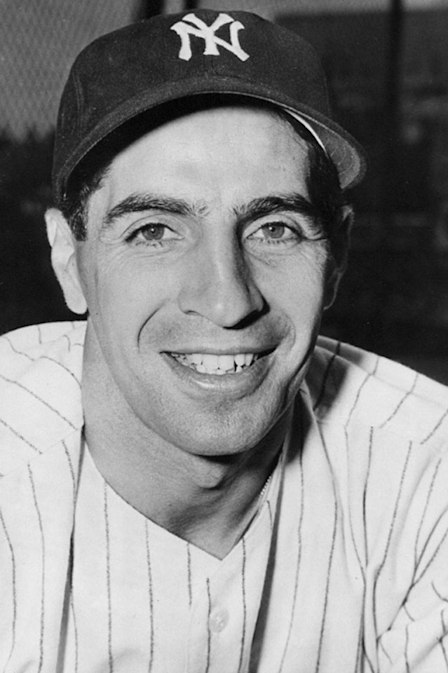
Phil Rizzuto was a shortstop who played for the New York Yankees in 1941-1942, 1946-1956. Career stats: .273 batting average, 40 home runs, 573 RBI.
The Brooklyn Dodgers told Phil Rizzuto to go get a shoeshine box. Casey Stengel -- then managing the Dodgers -- looked at the 5'6" kid from Glendale, Queens and decided he couldn't play in the big leagues. The New York Giants passed too. So Rizzuto signed with the New York Yankees, played thirteen seasons in the Bronx, won seven World Series rings, took home an MVP award, and then broadcast the team's games for another four decades. Stengel, of course, ended up managing him for five straight titles. Rizzuto never let him forget it.
Too Small for Brooklyn
Philip Francis Rizzuto grew up playing sandlot ball around the city in the mid-1930s, when New York still had three teams and a kid from the Brooklyn-Queens border could dream about any of them. He tried out for the two National League clubs first. Both said no. The Dodgers' rejection became the stuff of legend -- Stengel's shoeshine box line got repeated so many times that nobody's entirely sure of the original wording anymore (which is sort of how baseball mythology works). The Yankees, already the most dominant organization in the sport, signed him and sent him through the minors. He hit .347 for Kansas City in 1940 and earned Minor League Player of the Year. By the time he arrived in the Bronx on April 14, 1941, at age 23, he was ready.
And he proved it immediately. Rizzuto batted .307 as a rookie, the Yanks won the Series over those same Dodgers, and the kid nobody wanted started at shortstop for the best team on earth.
Three Years Gone
Then the war came. Rizzuto enlisted in the Navy in 1942 and missed the next three seasons -- ages 25, 26, and 27, the years when most ballplayers hit their absolute peak. He served in the Pacific, including time in the Philippines and New Guinea. He came back in 1946 a different person. His timing was off, he hit .257, and the club finished third. The three lost years will always haunt Rizzuto's statistical record -- the invisible line between what he accomplished and what he might've been.
He found his footing again in 1947. The Yankees beat the Dodgers in the Series that fall, and The Scooter's glove at short anchored a pitching-and-defense machine about to go on one of the great runs in baseball history.
The Scooter's Best Year
| Career Batting Average | .273 |
| Home Runs | 38 |
| RBI | 563 |
| OBP | .351 |
| Career WAR (bWAR) | 42.1 |
| AL MVP | 1950 |
| World Series Rings | 7 |
| All-Star Selections | 5 (1942, 1950-1953) |
The 1950 season was something else. Rizzuto hit .324, racked up 200 hits, scored 125 runs, and drew 92 walks against 39 strikeouts -- a contact-to-discipline ratio that makes modern hitters look reckless. His bWAR hit 6.8, a career high. He won the American League MVP, beating out Billy Goodman, his own teammate Yogi Berra (who finished third -- imagine losing the MVP to your shortstop), and Bob Lemon. The Yanks swept the Phillies in the Series. For a shortstop in 1950, that kind of offensive production didn't happen, and he did it while playing defense that made Berra call him "the smartest guy on the field."
He is the best shortstop I have seen in my time, and I have seen some beauties.
What followed was the dynasty's peak. Five consecutive championships from 1949 through 1953 -- Rizzuto at short, Berra behind the plate, DiMaggio in center until his 1951 retirement opened the position for Mantle. The Scooter held it all together at the spot where steadiness matters most. His bat cooled as he aged into his mid-thirties, but his glove and his baseball brain kept him on the field.
The Unceremonious Exit
On August 25, 1956, the Yankees released Rizzuto to clear a roster spot. He was 38. He'd played just 31 games that season, hitting .231. The timing was rotten -- it came during Old-Timers' Day festivities at the Stadium, and by all accounts the organization handled it with all the warmth of a form letter (thirteen seasons, seven rings, an MVP, and they showed him the door like a temp whose contract ran out). No ceremony, no farewell. He took it personally. Who wouldn't?
Holy Cow
The broadcasting career made Rizzuto more famous than playing ever did. An entire generation knew him only as a voice -- excitable, genuine, completely willing to lose track of the game to wish someone a happy anniversary. He was the opposite of polished, and that's exactly why people loved him.
Then there was Meat Loaf. In 1977, Rizzuto walked into a studio and recorded a baseball play-by-play sequence for the middle of "Paradise by the Dashboard Light" on the album Bat Out of Hell. The track became a massive hit. Rizzuto later claimed he didn't realize the baseball metaphor was actually about teenage romance until his grandchildren explained it to him (most people who knew him suspect he understood perfectly and just enjoyed the bit).
Cooperstown, Finally
The Hall of Fame question hung over Rizzuto for decades. The baseball writers never gave him enough votes. Critics pointed at the .273 career average, the 38 home runs, the three lost war years thinning an already modest statistical profile. Supporters countered with the seven rings, the MVP, the elite defense, and the argument that the war years cost him his prime. The Veterans Committee finally elected him in 1994 -- thirty-three years after he first became eligible. He was 76 years old.
I didn't think it would ever happen. I had accepted it wasn't going to happen. When they called me I was standing in my kitchen and I had to sit down.
MLB Debut
Takes the field as the Yankees' starting shortstop at age 23. Bats .307 in his rookie season.
Military Service
Serves in the U.S. Navy in the Pacific theater, missing three full seasons during his athletic prime.
AL MVP Season
Hits .324 with 200 hits, 125 runs, and 92 walks. Wins the American League MVP award as the Yankees sweep the Phillies in the World Series.
Five Straight Titles
Anchors the shortstop position through five consecutive World Series championships under Casey Stengel.
Released by the Yankees
Cut from the roster at age 38 during Old-Timers' Day festivities. Moves immediately into broadcasting.
Paradise by the Dashboard Light
Records baseball play-by-play narration for Meat Loaf's hit single, introducing himself to a generation that never saw him play.
Hall of Fame Induction
Elected to Cooperstown by the Veterans Committee, thirty-three years after first becoming eligible.
Frequently Asked Questions
What was Phil Rizzuto's career batting average?
Rizzuto hit .273 across 13 Yankees seasons (1941-1942, 1946-1956). His best year was 1950, when he batted .324 with 200 hits and won the AL MVP award.
How many World Series did Phil Rizzuto win?
Seven. Rizzuto won championships in 1941, 1947, 1949, 1950, 1951, 1952, and 1953 -- all with the Yankees.
Was Phil Rizzuto in 'Paradise by the Dashboard Light'?
Yes. He provided the baseball play-by-play narration in the middle section of the Meat Loaf song from the 1977 album "Bat Out of Hell." He later claimed he didn't understand the song's metaphor until his grandchildren told him.
Why did it take so long for Phil Rizzuto to make the Hall of Fame?
The baseball writers never gave him enough votes during his regular eligibility window. Critics cited his modest power numbers and .273 average. The Veterans Committee finally elected him in 1994, when he was 76 years old.
The Dodgers told him to go get a shoeshine box. He got seven rings instead.