
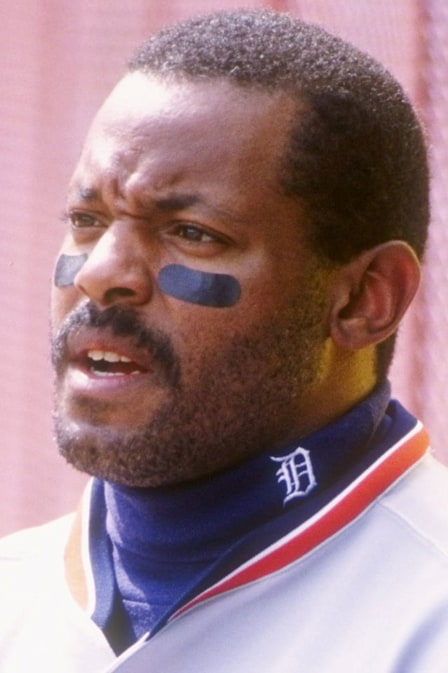
Career Stats
Regular Season
| Year | G | AB | R | H | 2B | 3B | HR | RBI | BB | SO | SB | AVG | OBP | SLG | OPS |
|---|---|---|---|---|---|---|---|---|---|---|---|---|---|---|---|
| 1996 | 53 | 200 | 30 | 52 | 8 | 0 | 13 | 37 | 24 | 48 | 0 | .260 | .342 | .495 | .837 |
| 1997 | 98 | 361 | 40 | 94 | 15 | 0 | 13 | 61 | 51 | 87 | 0 | .260 | .358 | .410 | .768 |
| Career | 151 | 561 | 70 | 146 | 23 | 0 | 26 | 98 | 75 | 135 | 0 | .260 | .347 | .440 | .788 |
Career-best seasons highlighted in gold. Stats via Retrosheet.
Postseason
| Year | G | AB | R | H | 2B | 3B | HR | RBI | BB | SO | SB | AVG | OBP | SLG | OPS |
|---|---|---|---|---|---|---|---|---|---|---|---|---|---|---|---|
| 1996 | 14 | 52 | -- | 16 | -- | -- | 3 | 14 | -- | -- | -- | .308 | -- | -- | -- |
| 1997 | 2 | 8 | -- | 1 | -- | -- | 0 | 1 | -- | -- | -- | .125 | -- | -- | -- |
| Career | 16 | 60 | 0 | 17 | 0 | 0 | 3 | 15 | 0 | 0 | 0 | .283 | .283 | .433 | .717 |
Cecil Fielder was a designated hitter who played for the New York Yankees from 1996 to 1997. Career stats: .260 batting average, 26 home runs, 98 RBI.
Cecil Fielder joined the New York Yankees at the July 31, 1996 trade deadline, brought in from Detroit to add right-handed thump to a lineup that couldn't hit lefties, and had a ring by that October. He's the guy who hit 51 home runs in 1990 -- a number nobody in baseball had touched since George Foster in 1977 -- and six years later he was a 32-year-old DH nicknamed "Big Daddy," riding the bench in Atlanta one night and starting at first base the next. He didn't fit the profile of a typical trade-deadline rental. He fit anyway.
Path to the Bronx
Fielder's road to superstardom ran through Japan, which isn't the normal route. He spent four seasons in Toronto (1985-1988) stuck behind Fred McGriff at first base, barely playing, and frustrated enough to sign with the Hanshin Tigers of Japan's Central League for 1989 rather than keep waiting for an opening that wasn't coming. He hit 38 homers batting cleanup for Hanshin. He came back a different hitter.
Detroit signed him for 1990, and the payoff was immediate and enormous: 51 home runs, 132 RBI, a runner-up finish in the AL MVP race, and a permanent place in the record books as the first player to reach 50 in a season since Foster's 52 (and the first American Leaguer since Mantle and Maris both cleared 50 in 1961). He hit numbers 50 and 51 on the final day of the season -- at Yankee Stadium, of all places, the ballpark he'd call home six years later. He led the AL in homers again in 1991 (44) and topped the league in RBI three straight years (1990-1992). Two MVP runner-up finishes. Three All-Star teams. By the mid-90s he was still a name, if not quite the same terror at the plate.
Yankees Career
The trade that brought him to New York happened about 90 minutes before the deadline: Yankees sent outfielder Ruben Sierra and minor-league pitcher Matt Drews to Detroit for Fielder, reportedly the first trade in MLB history involving two players who'd each already hit 220-plus career homers. (The Yankees also flipped Mark Hutton to Florida for reliever David Weathers that same day -- a separate move, easy to conflate with the Fielder deal since both landed on the same afternoon.)
| Yankees Seasons | 1996-1997 |
| AVG / OBP / SLG (NYY) | .260 / .352 / .440 |
| Home Runs (NYY) | 26 |
| RBI (NYY) | 98 |
| Career HR | 319 |
| Career RBI | 1,008 |
| World Series Rings | 1 (1996) |
| All-Star Selections | 3 (1990, 1991, 1993) |
Joe Torre wasn't shy about why he wanted him. "All the questions have been about left-handed pitching, left-handed pitching," Torre said after the deal. "This should neutralize things to really better our lineup." Fielder, for his part, sounded almost relieved to land somewhere with a real shot: he called it weird, then said he was relaxed and ready to help (a fair response for a guy who'd spent the back half of his career on teams going nowhere).
He gave the Yankees exactly what they traded for in 1996 -- 13 home runs and 37 RBI in 53 games down the stretch, enough thump to survive the AL East race and get to October. Then came the twist nobody expected: Tino Martinez, the Yankees' regular first baseman, went cold in the postseason (5-for-33 with one extra-base hit since the ALDS), and Torre benched him for Games 3, 4, and 5 of the World Series at Atlanta's Fulton County Stadium, where the National League rules meant no DH and somebody had to sit. Fielder started at first instead. He hit .391 in the Series, and his RBI double in Game 5 drove in the only run of a 1-0 win. The Yankees closed the Braves out in six games -- their first title since 1978 -- and Big Daddy had a ring nobody saw coming when the trade was made.
All the questions have been about left-handed pitching, left-handed pitching. This should neutralize things to really better our lineup.
What Came Next
1997 wasn't a repeat. Fielder played the entire season in pinstripes -- 98 games, 13 homers, a .260/.358/.410 line -- but the power was fading and the everyday at-bats were harder to come by (he was 33, and the league had started pitching around him more carefully than it used to). His Yankees contract ran out at the end of the year, and he left as a free agent that December, signing with the Angels. The Yankees, for what it's worth, kept right on winning without him -- three more titles followed by 2000.
Legacy
Fielder retired with 319 career home runs. His son Prince Fielder grew up around big-league clubhouses, became a middle-of-the-order force in his own right with Milwaukee, Detroit, and Texas, and finished his own career with 319 home runs. Same number. Different Fielder. Cecil and Prince are only the second father-son pair in MLB history to each clear 300 career homers (Bobby and Barry Bonds got there first), and they're the only father-son duo where both guys had a 50-homer season.
Tino Martinez went on to be the Yankees' first baseman for the rest of the dynasty, but for three games in Atlanta that October, it was Fielder's job. That's the kind of Yankees career this was -- brief, specific, and exactly what the team needed when it needed it.
Stuck in Toronto
Fielder spends four seasons buried on the Blue Jays' bench behind Fred McGriff, unable to get consistent playing time at first base.
Revival in Japan
Frustrated with his role, Fielder signs with the Hanshin Tigers of Japan's Central League and hits 38 home runs batting cleanup, rebuilding his career overseas.
51st Home Run
Fielder hits his 50th and 51st home runs of the season on the final day at Yankee Stadium -- the first player to reach 50 in a season since George Foster in 1977.
Traded to the Yankees
Detroit sends Fielder to New York for Ruben Sierra and Matt Drews at the trade deadline, adding right-handed power for the stretch run.
Starting at First in Atlanta
With Tino Martinez slumping, Torre starts Fielder at first base for Games 3, 4, and 5 of the World Series at Fulton County Stadium. Fielder hits .391 in the Series, including a Game 5 RBI double in a 1-0 win.
World Series Champion
The Yankees beat the Braves in six games for their first title since 1978. Fielder wins his only ring.
Leaves as a Free Agent
After playing out the full 1997 season in pinstripes, Fielder signs a one-year deal with the Anaheim Angels.
Frequently Asked Questions
When did the Yankees trade for Cecil Fielder?
The Yankees acquired Cecil Fielder from the Detroit Tigers on July 31, 1996, the trade deadline, sending outfielder Ruben Sierra and minor-league pitcher Matt Drews to Detroit in return.
How many home runs did Cecil Fielder hit in 1990?
Fielder hit 51 home runs for Detroit in 1990, leading all of MLB. He was the first player to reach 50 home runs in a season since George Foster hit 52 in 1977, and the first American League player to do it since Mickey Mantle and Roger Maris both topped 50 in 1961.
Was Cecil Fielder on the 1996 World Series championship team?
Yes. Fielder started at first base for Games 3, 4, and 5 of the 1996 World Series against Atlanta -- played at Fulton County Stadium, where the lack of a DH meant Tino Martinez sat while Fielder played the field. Fielder hit .391 in the Series and won his only World Series ring.
Did the Yankees release Cecil Fielder in 1997?
No. Fielder played the entire 1997 season with the Yankees, batting .260 with 13 home runs in 98 games. His contract expired after the season, and he left as a free agent, signing with the Anaheim Angels that December.
Is Cecil Fielder related to Prince Fielder?
Yes, Prince Fielder is Cecil Fielder's son. Both players finished their MLB careers with exactly 319 home runs, making them the second father-son duo in MLB history (after Bobby and Barry Bonds) to each hit 300-plus career homers.