Career Stats
Regular Season
| Year | G | AB | R | H | 2B | 3B | HR | RBI | BB | SO | SB | AVG | OBP | SLG | OPS |
|---|---|---|---|---|---|---|---|---|---|---|---|---|---|---|---|
| 1998 | 150 | 603 | 117 | 160 | 25 | 4 | 17 | 64 | 76 | 70 | 31 | .265 | .361 | .405 | .766 |
| 1999 | 150 | 603 | 120 | 176 | 36 | 4 | 18 | 68 | 83 | 57 | 28 | .292 | .393 | .454 | .847 |
| 2000 | 102 | 400 | 75 | 113 | 22 | 2 | 5 | 26 | 46 | 45 | 15 | .282 | .366 | .385 | .751 |
| 2001 | 137 | 521 | 66 | 130 | 20 | 3 | 9 | 44 | 58 | 73 | 38 | .250 | .339 | .351 | .690 |
| Career | 539 | 2127 | 378 | 579 | 103 | 13 | 49 | 202 | 263 | 245 | 112 | .272 | .352 | .402 | .754 |
Career-best seasons highlighted in gold. Stats via Retrosheet.
Postseason
| Year | G | AB | R | H | 2B | 3B | HR | RBI | BB | SO | SB | AVG | OBP | SLG | OPS |
|---|---|---|---|---|---|---|---|---|---|---|---|---|---|---|---|
| 1998 | 13 | 52 | -- | 12 | -- | -- | 1 | 3 | -- | -- | -- | .231 | -- | -- | -- |
| 1999 | 12 | 46 | -- | 13 | -- | -- | 1 | 4 | -- | -- | -- | .283 | -- | -- | -- |
| 2000 | 13 | 42 | -- | 10 | -- | -- | 0 | 4 | -- | -- | -- | .238 | -- | -- | -- |
| 2001 | 16 | 58 | -- | 13 | -- | -- | 0 | 4 | -- | -- | -- | .224 | -- | -- | -- |
| Career | 54 | 198 | 0 | 48 | 0 | 0 | 2 | 15 | 0 | 0 | 0 | .242 | .242 | .273 | .515 |
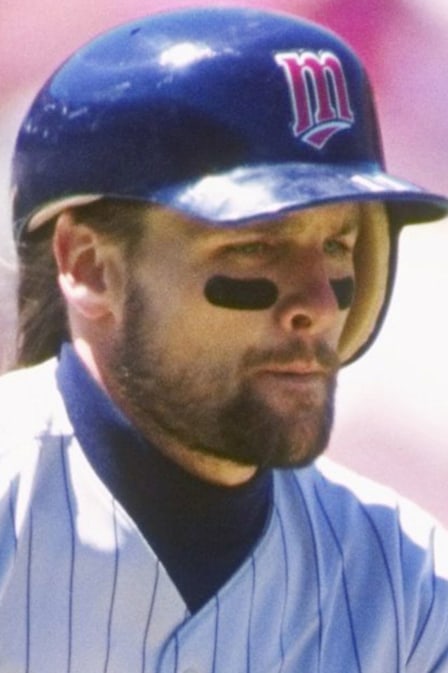
Chuck Knoblauch was a left fielder who played for the New York Yankees from 1998 to 2001. Career stats: .272 batting average, 49 home runs, 202 RBI.
Chuck Knoblauch came to the New York Yankees in 1998 as the missing piece at the top of the order -- a leadoff hitter and second baseman who'd already won a Rookie of the Year award and a ring in Minnesota -- and he delivered exactly that for three championship seasons. He also became the answer to one of the strangest questions in franchise history: how does a Gold Glove infielder just... lose the ability to throw a baseball forty feet? Knoblauch's Yankees tenure is really two stories running at the same time, one about a lineup piece who helped win three titles, the other about a throwing crisis so public it eventually hit a broadcaster's mother in the face. Both are true. Neither cancels the other out.
The Trade That Set the Table
The Twins sent Knoblauch to the Bronx on February 6, 1998, for a package of four players and cash -- Eric Milton, Cristian Guzman, Brian Buchanan, Danny Mota, and $3 million. Minnesota actually got something real back (Guzman became a two-time All-Star shortstop), but nobody in New York was losing sleep over it. The Yankees needed a proven leadoff man in front of Jeter and Bernie Williams, and Knoblauch had just hit .291 with 62 stolen bases in his final Twins season. He'd already won the 1991 AL Rookie of the Year Award (a near-unanimous 26 of 28 first-place votes) and a championship ring as a 23-year-old on Minnesota's classic seven-game World Series win over Atlanta (the Jack Morris ten-inning Game 7 shutout, still one of the greatest pitching performances anybody's ever watched). This wasn't a reclamation project. It was a proven winner walking into a lineup that was about to become historic.
| Yankees Batting Average | .272 |
| Yankees OBP | .366 |
| Yankees OPS+ | 100 |
| Home Runs (NYY) | 49 |
| RBI (NYY) | 202 |
| Stolen Bases (NYY) | 112 |
| World Series Titles (NYY) | 3 |
| 1991 AL Rookie of the Year | Yes (MIN) |
1998-99: The Table-Setter
He was exactly what the Yankees paid for at first. In 1998, Knoblauch started at second and leadoff for a team that won 114 games -- still argued about as the greatest Yankees squad ever assembled -- and picked up his first ring in pinstripes when the club swept San Diego. Jeter and the rest of the young core got to bat behind a guy who'd already done the whole "win in October" thing before most of them had a full season in the majors.
Then came 1999, statistically his best year in New York: .292/.393/.454, a career-high 18 homers, 68 RBI, 120 runs scored. The Yankees swept Atlanta in the World Series. On paper, Knoblauch was thriving. In the field, something had already started to break -- his throwing errors at second base doubled from 13 the year before to 26, the most by any AL second baseman that season and the most by a Yankee infielder since Graig Nettles's 26 back in 1973. Nobody wanted to say the word yet. Everybody was thinking it.
The Yips
By June 2000 there was no more pretending. On June 15, at the Stadium against the White Sox, Knoblauch made three throwing errors in six innings -- one in the third, two more in the fifth and sixth that scored runs directly -- and voluntarily pulled himself from a 12-3 loss. He left the ballpark in street clothes before the game even ended. Two days later, in the same series, an errant throw sailed off the roof of the Yankees' dugout and struck Marie Olbermann -- broadcaster Keith Olbermann's mother -- in the face as she sat in the stands. That's not a punchline. That's a guy whose mechanics had betrayed him so completely that fans in the seats weren't freakin' safe from a routine relay throw. (The Yankees still won the World Series that October. Baseball doesn't care about your subplot.)
For 2001, Joe Torre made the call everybody could see coming and moved Knoblauch to left field, taking the short throw to first out of the equation entirely. He never played second base in the majors again. The bat went with the position -- a career-low .691 OPS -- and he hit .056 in that year's World Series before getting benched for Game 7, which the Yankees lost to Arizona on Luis Gonzalez's walk-off. He signed with Kansas City in 2002, hit .210 in 80 games, and retired in 2003 at 34. The yips didn't just cost him a position. They took the whole rest of his career with them.
Traded to the Yankees
Minnesota sends Knoblauch to New York for Eric Milton, Cristian Guzman, Brian Buchanan, Danny Mota, and $3 million.
First Ring in Pinstripes
Knoblauch leads off for a 114-win Yankees team that sweeps San Diego in the World Series.
The Meltdown Game
Three throwing errors in six innings against the White Sox. Knoblauch leaves the Stadium in street clothes before the game ends.
The Olbermann Incident
An errant throw off the dugout roof strikes Keith Olbermann's mother in the stands, making back-to-back New York back pages.
Moved to Left Field
Joe Torre shifts Knoblauch off second base permanently, removing the throw to first that had become impossible for him to make.
Frequently Asked Questions
What caused Chuck Knoblauch's throwing yips?
There's no clean medical explanation -- the yips are a poorly understood psychological/mechanical breakdown, not an injury. Knoblauch's throwing errors at second base doubled from 13 in 1998 to 26 in 1999, and the crisis peaked on June 15, 2000, when he made three throwing errors in one game against the White Sox and voluntarily left the Stadium mid-game.
Why did the Yankees move Chuck Knoblauch to left field?
Manager Joe Torre moved him for the 2001 season specifically to eliminate the short throw to first base that had become unreliable, including the June 17, 2000 incident where an errant throw struck broadcaster Keith Olbermann's mother in the stands. Knoblauch never played second base in the majors again.
How many World Series rings does Chuck Knoblauch have?
Four total across his career: one with the Minnesota Twins in 1991 and three with the Yankees in 1998, 1999, and 2000. He wasn't on the Yankees' 1996 championship team and the club lost the 2001 World Series, his final season in pinstripes.
Was Chuck Knoblauch a good hitter for the Yankees?
Solid, if diminished from his Minnesota peak. He hit .272/.366/.402 with a 100 OPS+ across four Yankees seasons, with 1999 as his best year (.292 average, 18 home runs, 68 RBI). He'd hit .319 with a 127 OPS+ over his final four Twins seasons, so the drop-off was real -- but he was still an effective leadoff hitter on three championship teams.
Knoblauch's number never got retired and his name doesn't come up on any Monument Park plaque. But it comes up plenty in 1998 World Series box scores, and it comes up every single time anyone talks about players who lost the game to something the game couldn't fix. He's a three-time champion and a cautionary tale wearing the same uniform, and the Bronx years are the reason both descriptions are accurate.