
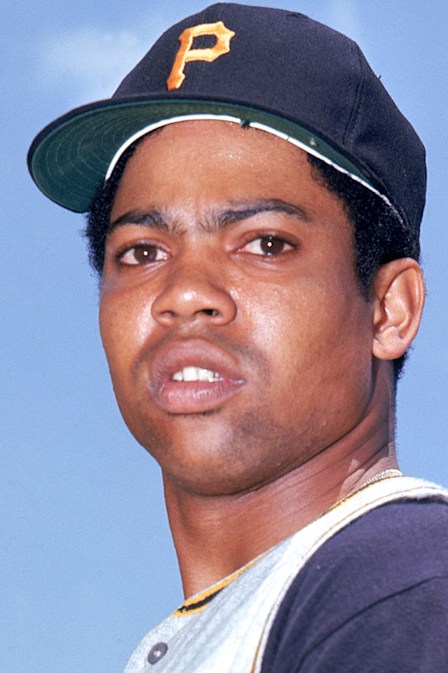
Career Stats
Regular Season
| Year | G | GS | W | L | SV | IP | H | ER | K | BB | ERA | WHIP |
|---|---|---|---|---|---|---|---|---|---|---|---|---|
| 1976 | 32 | 32 | 17 | 8 | 0 | 211.2 | 195 | 75 | 65 | 76 | 3.19 | 1.28 |
| 1977 | 3 | 3 | 1 | 1 | 0 | 19.2 | 18 | 4 | 5 | 8 | 1.83 | 1.32 |
| Career | 35 | 35 | 18 | 9 | 0 | 231.1 | 213 | 79 | 70 | 84 | 3.07 | 1.28 |
Career-best seasons highlighted in gold. Stats via Retrosheet.
Postseason
| Year | G | GS | W | L | SV | IP | H | ER | K | BB | ERA | WHIP |
|---|---|---|---|---|---|---|---|---|---|---|---|---|
| 1976 | 2 | -- | 1 | 1 | 0 | 11.1 | -- | -- | -- | -- | 5.56 | -- |
| Career | 2 | 0 | 1 | 1 | 0 | 11.1 | 0 | 0 | 0 | 0 | 0.00 | 0.00 |
Dock Ellis was a pitcher who played for the New York Yankees from 1976 to 1977. Career stats: 18-9 record, 3.07 ERA, 70 strikeouts.
October 12, 1976. Yankee Stadium. First inning of ALCS Game 3, and the Kansas City Royals are already teeing off -- three runs, three hits, seven men to the plate before Dock Ellis records the third out. It looks like the kind of start that ends a series, or at least a season. Ellis doesn't blink. He shuts the Royals out the rest of the way, Chris Chambliss homers, and the New York Yankees win 5-3. That's the whole Dock Ellis story in one afternoon: get hit early, refuse to fold, win anyway.
Most baseball fans who know the name know a different game entirely -- the no-hitter he threw for Pittsburgh on June 12, 1970, a 2-0 win over San Diego that Ellis later said he pitched under the influence of LSD (he didn't reveal it publicly until 1984, and never walked it back). That happened six years and one trade before he ever put on pinstripes. It's not a Yankees story. What is a Yankees story is 1976 -- one of the best single seasons a Yankees pitcher had in the entire decade, and one that ended, less than a year later, in a clubhouse blowup nobody saw coming.
Arriving in a Blockbuster That Wasn't About Him
The Yankees got Ellis almost as an afterthought. On December 11, 1975, general manager Gabe Paul sent pitcher Doc Medich to Pittsburgh for three players -- Ellis, left-hander Ken Brett, and a 21-year-old second baseman named Willie Randolph. Pittsburgh writers still call it one of the worst trades in franchise history, and they're not wrong, but almost none of the damage came from Ellis. Randolph was the return that mattered for the next thirteen years. Ellis, at 30 and coming off a down year, was closer to the "why not" part of the deal.
He'd already lived a full baseball life by then -- a 19-game winner and World Series champion with the 1971 Pirates, and the National League's starting pitcher that same year in the All-Star Game, when he and Oakland's Vida Blue became the first two Black pitchers ever to start an All-Star Game on the same day (Ellis had publicly doubted baseball would let it happen, then went out and did it anyway). New York didn't know quite what it was getting. What it got was the best regular season of his career.
| Yankees Tenure | 1976-1977 (2 seasons) |
| Yankees Record | 18-9, 3.07 ERA, 231.1 IP |
| Yankees Strikeouts | 70 |
| 1976 Season | 17-8, 3.15 ERA, 211.2 IP |
| 1976 Award | AL Comeback Player of the Year (The Sporting News) |
| 1976 Postseason | 2 G, 1-1, 5.56 ERA |
| Career (12 seasons) | 138-119 |
The Comeback Season
1976 was the year everything lined up. Ellis went 17-8 with a 3.15 ERA and threw 211.2 innings, his first 200-inning season since 1971, anchoring a rotation for a Yankees team that hadn't won a pennant in twelve years. The Sporting News named him AL Comeback Player of the Year -- Tommy John took the NL honor that same year, coming back from the surgery that now carries his name, which puts some perspective on the company Ellis was keeping. Thurman Munson, in his MVP season, caught most of those starts. It worked.
Then came October, and Ellis got the ball in a series that had already gone sideways once. The Yankees had split the first two games in Kansas City, and the ALCS was tied 1-1 when Ellis took the mound for Game 3 back at the Stadium. He weathered that ugly first inning, settled in, and got the win. Kansas City tied the series again in Game 4. Two days later, Chris Chambliss ended it with one swing in the bottom of the ninth of Game 5, and the Yankees were pennant winners for the first time since 1964. Ellis's Game 3 start doesn't get remembered the way Chambliss's home run does. It's the reason there was a Game 5 to remember at all.
The World Series went worse. Cincinnati's Big Red Machine swept New York in four games, and Ellis drew the Game 3 assignment at Yankee Stadium against a Reds rookie named Pat Zachry. He didn't survive the fourth inning -- a Dan Driessen homer did him in -- and took the loss in a 6-2 defeat that pushed the Reds to the brink of the sweep. It was the low point of an otherwise terrific year, and in the Bronx Zoo era that was starting to take shape, even the low points came in front of 56,667 people at the Stadium.
The Yankees got me at a fire sale, and now they don't want to give me any money.
Gone in Three Starts
Ellis made $80,000 in 1976 and wanted a real raise off a 17-win season. When the front office didn't move fast enough that winter, he said so -- loudly, and specifically about the new owner. "I think he should stay up in his office, push his buttons, count his money, and stay out of the locker room," Ellis told reporters about George Steinbrenner that spring. It's the kind of line that plays well decades later and terribly in the moment. Steinbrenner wasn't a guy who let that go unanswered.
Three starts into the 1977 season, the Yankees traded Ellis to Oakland, along with outfielder Larry Murray and infielder Marty Perez, for a durable right-hander named Mike Torrez. New York got the better end of that swap -- Torrez would go 14-12 and win two World Series games that October -- but it's hard to call the trade anything but a direct consequence of a pay fight that got personal fast. Ellis lasted barely two months in Oakland before the Rangers bought his contract for $275,000 that June. He pitched two more seasons, made a brief return to Pittsburgh in 1979, and retired that winter with 138 career wins (the Rangers, for what it's worth, got the better half of that deal -- Ellis notched the only save of his career there).
What Came After
The most Dock Ellis thing about Dock Ellis's story might be what happened a decade later. He'd gotten sober himself in 1980, and by 1986 the Yankees -- the same organization he'd feuded his way out of -- hired him back, not to pitch, but to counsel their minor leaguers on drug and alcohol abuse. He spent the rest of his life doing that kind of work, with addicts, with inmates, with troubled kids who needed to hear it from somebody who'd actually lived it. He died in Los Angeles on December 19, 2008, at 63, of complications from chronic liver disease.
People will always remember him first for a no-hitter he says he doesn't remember pitching. The Yankees ought to remember him for something closer to the opposite -- a pitcher who showed up in the Bronx firing off three runs in the first inning of a pennant race and simply refused to let that be the story.
Born in Los Angeles
Dock Phillip Ellis Jr. is born in Los Angeles, California.
Traded to the Yankees
Pittsburgh sends Ellis, Willie Randolph, and Ken Brett to New York for pitcher Doc Medich.
17-8, AL Comeback Player of the Year
Goes 17-8 with a 3.15 ERA in 211.2 innings, his first 200-inning season since 1971, and wins The Sporting News' AL Comeback Player of the Year award.
Wins ALCS Game 3
Survives a three-run first inning to beat Kansas City 5-3 at Yankee Stadium, putting the Yankees up 2-1 in the series on the way to New York's first pennant since 1964.
Traded to Oakland
After three starts and a public pay dispute with George Steinbrenner, the Yankees deal Ellis, Larry Murray, and Marty Perez to Oakland for Mike Torrez.
Dies at 63
Passes away in Los Angeles from complications of chronic liver disease, after a second career spent counseling minor leaguers and others battling addiction.
Frequently Asked Questions
What was Dock Ellis's record with the Yankees?
Ellis went 18-9 with a 3.07 ERA over 35 games (231.1 innings) across the 1976 and 1977 seasons. Nearly all of that came in 1976, when he went 17-8 with a 3.15 ERA and won AL Comeback Player of the Year.
Did Dock Ellis pitch the famous LSD no-hitter for the Yankees?
No. That no-hitter came on June 12, 1970, while Ellis was pitching for the Pittsburgh Pirates -- six years before he ever joined the Yankees. His Yankees tenure (1976-1977) was a completely separate chapter of his career.
How did Dock Ellis end up with the Yankees?
The Yankees acquired Ellis, Willie Randolph, and Ken Brett from Pittsburgh on December 11, 1975, in exchange for pitcher Doc Medich. Randolph became the long-term prize of the deal, but Ellis delivered the best single season of the return in 1976.
Why did the Yankees trade Dock Ellis after less than one full season back?
A public contract dispute. Ellis made $80,000 in 1976 and wanted a raise after his 17-win season; when it didn't come, he criticized owner George Steinbrenner in spring training. Three starts into the 1977 season, on April 27, 1977, the Yankees traded him to Oakland along with Larry Murray and Marty Perez for Mike Torrez.
Is Dock Ellis in the Baseball Hall of Fame?
No. Ellis retired after the 1979 season with a career record of 138-119 across 12 seasons. He's remembered more for the 1970 no-hitter and his outspokenness than for a Cooperstown-caliber resume, but his 1976 Yankees season remains one of the best single-season comeback stories in the team's Bronx Zoo era.