Career Stats
Regular Season
| Year | G | AB | R | H | 2B | 3B | HR | RBI | BB | SO | SB | AVG | OBP | SLG | OPS |
|---|---|---|---|---|---|---|---|---|---|---|---|---|---|---|---|
| 1976 | 156 | 641 | 79 | 188 | 32 | 6 | 17 | 96 | 27 | 80 | 1 | .293 | .323 | .441 | .764 |
| 1977 | 157 | 600 | 90 | 172 | 32 | 6 | 17 | 90 | 45 | 73 | 4 | .287 | .336 | .445 | .781 |
| 1978 | 161 | 621 | 80 | 170 | 26 | 3 | 12 | 90 | 41 | 60 | 2 | .274 | .321 | .383 | .704 |
| 1979 | 149 | 554 | 61 | 155 | 27 | 3 | 18 | 63 | 34 | 53 | 3 | .280 | .324 | .437 | .761 |
| 1988 | 1 | 1 | 0 | 0 | 0 | 0 | 0 | 0 | 0 | 1 | 0 | .000 | .000 | .000 | .000 |
| Career | 884 | 3379 | 414 | 953 | 171 | 25 | 79 | 454 | 199 | 360 | 10 | .282 | .322 | .418 | .740 |
Career-best seasons highlighted in gold. Stats via Retrosheet.
Postseason
| Year | G | AB | R | H | 2B | 3B | HR | RBI | BB | SO | SB | AVG | OBP | SLG | OPS |
|---|---|---|---|---|---|---|---|---|---|---|---|---|---|---|---|
| 1976 | 9 | 37 | -- | 16 | -- | -- | 2 | 9 | -- | -- | -- | .432 | -- | -- | -- |
| 1977 | 11 | 41 | -- | 8 | -- | -- | 1 | 4 | -- | -- | -- | .195 | -- | -- | -- |
| 1978 | 7 | 26 | -- | 8 | -- | -- | 0 | 2 | -- | -- | -- | .308 | -- | -- | -- |
| Career | 27 | 104 | 0 | 32 | 0 | 0 | 3 | 15 | 0 | 0 | 0 | .308 | .308 | .394 | .702 |
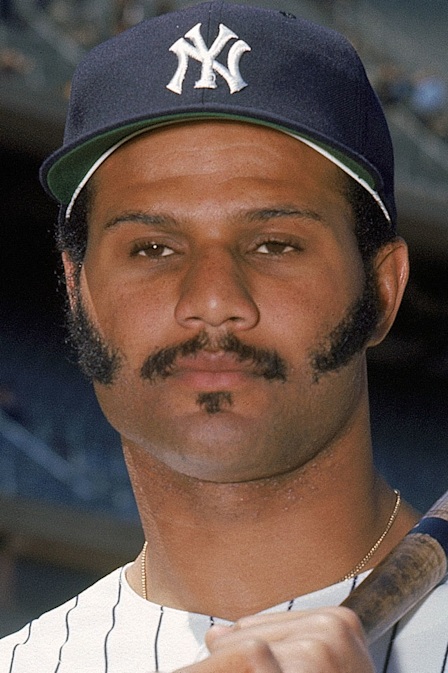
Chris Chambliss was a first baseman who played for the New York Yankees in 1974-1979, 1988. Career stats: .282 batting average, 79 home runs, 454 RBI.
October 14, 1976. Yankee Stadium, bottom of the ninth. The score was tied at six. The New York Yankees hadn't won a pennant since 1964, and the Kansas City Royals -- young, dangerous, and not intimidated by the Bronx -- were one out from extra innings that felt very much like they could go their way.
Chris Chambliss stepped in to lead off the inning. Mark Littell was on the mound.
Littell threw the first pitch. Chambliss turned on it.
The ball rose toward the right-field seats and cleared the wall -- and before it came down, the entire stadium did.
Pennant.
The Quiet One on the Loudest Team in Baseball
By 1976, the Yankees were already becoming the Bronx Zoo -- George Steinbrenner pulling levers, Billy Martin chewing his fingernails to the quick, Thurman Munson feuding with the front office, Reggie Jackson a season away from arriving and making everything louder still. The club that had finally pieced itself back together was a circus held inside a pennant race.
And then there was Chambliss.
He didn't bark, didn't hold press conferences, didn't make the back page except when he drove in runs -- which he did constantly, and which nobody seemed to notice until it mattered. Baseball Digest called him the "Quiet Clutch Hitter" in December 1976. That was about the most accurate thing anyone wrote about him that year.
What almost no one remembered by then: Chambliss had been the #1 overall pick in the January 1970 draft. The Cleveland Indians took him first overall out of UCLA, where he'd led the Bruins with 15 home runs and 45 RBI. He went straight to Triple-A Wichita, hit .342, and won Triple-A Rookie of the Year. The following season he debuted in Cleveland, hit .275 with 9 home runs in 111 games, and won the American League Rookie of the Year award. He was the first player ever to win Rookie of the Year honors at both the Triple-A and Major League levels in back-to-back years.
By the time he hit the 1976 walk-off, he'd been in the game for six years. Almost nobody mentioned the draft position.
The Friday Night Massacre
On April 26, 1974, the Yankees sent four pitchers -- Fritz Peterson, Steve Kline, Fred Beene, and Tom Buskey -- to Cleveland in exchange for Chambliss, pitcher Dick Tidrow, and pitcher Cecil Upshaw. The New York media immediately named it "The Friday Night Massacre."
The reaction in the Yankee clubhouse wasn't exactly celebratory. Thurman Munson heard the news and said, "You've got to be kidding me." Mel Stottlemyre, the club's ace, put it simpler: "You just don't trade four pitchers." Bobby Murcer said, "I can't believe this trade."
They weren't wrong about the trade feeling strange. They were wrong about what it meant.
The Yankees had also wanted out from under Fritz Peterson, whose domestic arrangement with teammate Mike Kekich (the two men had famously swapped wives before the 1973 season) was the kind of distraction even this organization didn't need. But that was the side plot. The main point was that Chambliss was coming to New York.
His first season was rough -- a .243 average and an OPS+ of 86, the second-worst of his career. He was twenty-five, learning a new league, playing in a new city, and doing it on a team that was still figuring out whether it could compete. In 1975, everything clicked: .304 with 150 games played, a proper full season. By 1976 he was hitting .293 with 17 home runs and 96 RBI, made the All-Star team, and finished fifth in the AL MVP vote.
He was the quiet anchor of a club that had just rediscovered itself.
The Swing and the Mob
Back to October 14. Chambliss at the plate. First pitch. He didn't take it, didn't look for a breaking ball, didn't wait out the at-bat. He turned on a Littell fastball and drove it into the right-field seats, and in roughly forty-five seconds the Yankees ended a twelve-year pennant drought.
But this is where the story gets strange.
Chambliss never touched home plate. Not then, anyway.
Tens of thousands of fans poured onto the field before he completed the bases. Someone tackled him near second, someone grabbed for his helmet, he went down to one knee. He fought through the mob, reached the vicinity of home plate, and retreated to the dugout. Graig Nettles told him that umpire Art Frantz was still on the field, still waiting for the official touch to make the home run count.
Chambliss went back out. Home plate had been stolen. "Home plate was already stolen," he said later, recalling what he found, "so it was a bare ground there but I put my foot on it and we went back." The umpire ruled the home run official. MLB subsequently amended Rule 4.09 to allow umpires to award bases in cases of fan interference -- the direct result of what happened after the ALCS walk-off. Everyone calls it the Chris Chambliss Rule.
He hit .524 in that ALCS (11-for-21). The homer gets remembered. The other ten hits don't come up as often.
1977 and 1978
The 1977 Yankees were everything the 1976 club wasn't -- louder, more combustible, more famous, and more dysfunctional. Reggie Jackson arrived and immediately ignited a slow burn with Munson. Billy Martin managed like a man who knew he'd be fired eventually and was determined to make it interesting. Steinbrenner fired people and hired them back.
Chambliss hit .287 with 17 home runs and 90 RBI, drove in the most runs of anyone on the club's post-All-Star roster, and spent most of his press mentions as the seventh paragraph of someone else's controversy.
In Game 6 of the 1977 World Series against the Dodgers -- the night Reggie Jackson hit three home runs off three consecutive pitches from three different pitchers -- Chambliss hit a two-run homer in the second inning off Burt Hooton that tied the game at 2-2. That set the table. The Yankees won 8-4 and took the Series.
The 1978 season was more of the same: .274, 12 home runs, 90 RBI again, another World Series ring over the Dodgers. He won the Gold Glove at first base that year -- .997 fielding percentage, four errors in 1,481 chances. Back-to-back championships, back-to-back 90-RBI seasons, the same quiet, steady production while the storm raged around him. Nobody wrote about it at the time. (That's not unusual. This is the history that tends to get written later, by people who went back to look.)
The Departure
In 1979, Munson died in a plane crash in August. The Yankees finished fourth. At season's end, the club decided they needed a catcher and Chambliss was the currency to get one.
On November 1, 1979, New York traded Chambliss, infielder Damaso Garcia, and pitcher Paul Mirabella to the Toronto Blue Jays for catcher Rick Cerone, pitcher Tom Underwood, and outfielder Ted Wilborn. The math was simple: Munson was gone, and someone had to catch.
Chambliss never played a game in a Blue Jays uniform. Toronto flipped him and infielder Luis Gomez to Atlanta on December 5, 1979 -- five weeks after acquiring him -- in exchange for outfielder Barry Bonnell, pitcher Joey McLaughlin, and infielder Pat Rockett. (Five weeks. He was a Blue Jay on paper for five weeks and never took the field.) He reported to Atlanta for the 1980 season and played seven more years for the Braves, hitting 20 home runs in both 1982 and 1983.
His Yankees career had ended on a ledger line, not a ceremony.
The Quiet Legacy
The numbers, when you lay them out: .279/.334/.415 career slash line, 185 home runs, 972 RBI, 109 OPS+, 27.5 career bWAR over 17 seasons. With the Yankees specifically: .282, 79 home runs, 454 RBI in 884 games. One Gold Glove. Two World Series rings. A walk-off home run that ended twelve years of frustration and gifted New York a rule named after him.
Then came the coaching career. Chambliss returned to the Yankees as their hitting coach and was on the bench for the 1996, 1998, 1999, and 2000 championship teams. He's one of two men -- Willie Randolph is the other -- who wore a Yankees uniform across all six of the franchise's World Series titles from 1977 through 2000.
Six championships. His fingerprints are on all of them.
The 1976 home run is on every highlight reel and always will be. But he built it on six years of unglamorous work -- three mediocre seasons in Cleveland, a rough first year in New York, then a quiet climb to the best first baseman on one of the most famous teams in baseball history. The circus needed a still point. Chambliss was it.
When he touched that bare dirt where home plate used to be, he made it count.
| Yankees Career BA | .282 |
| Yankees HR | 79 |
| Yankees RBI | 454 |
| Career BA | .279 |
| Career HR | 185 |
| Career RBI | 972 |
| Career OPS+ | 109 |
| Career bWAR | 27.5 |
| 1976 ALCS BA | .524 (11-for-21) |
| World Series Rings | 2 (1977, 1978) |
| Gold Gloves | 1 (1978) |
Born in Dayton, Ohio
Carroll Chambliss and his wife Christene welcome Chris, the third of four sons. The family relocates frequently due to Carroll's service as a Navy chaplain -- Ohio, Missouri, Illinois, and eventually Oceanside, California, where Chris attends high school.
#1 Overall Pick by the Cleveland Indians
After leading UCLA with 15 HR and 45 RBI in 1969 -- and twice declining to sign with the Cincinnati Reds -- Chambliss is selected by the Cleveland Indians with the first overall pick in the January 1970 MLB draft. He goes directly to Triple-A Wichita, hits .342, and wins Triple-A Rookie of the Year.
AL Rookie of the Year with Cleveland
In his first major league season, Chambliss hits .275 with 9 home runs and 48 RBI in 111 games, winning the American League Rookie of the Year award with 11 of 24 first-place votes. He's the first player to win Rookie of the Year honors at both the Triple-A and MLB levels in consecutive years.
The Friday Night Massacre
The Yankees acquire Chambliss, Dick Tidrow, and Cecil Upshaw from Cleveland in exchange for four pitchers. The New York media calls it "The Friday Night Massacre." Thurman Munson's reaction: "You've got to be kidding me." The trade changes the Yankees' future.
Walk-Off HR Ends a 12-Year Pennant Drought
Leading off the bottom of the ninth in Game 5 of the ALCS, Chambliss hits Mark Littell's first pitch into the right-field seats. The Yankees win 7-6. The field is immediately stormed; Chambliss fights through the mob, eventually touches the bare dirt where home plate had been stolen, and the pennant is official. MLB amends Rule 4.09 as a result -- the Chris Chambliss Rule.
Back-to-Back World Series Championships
Chambliss drives in 90 runs in both championship seasons. In Game 6 of the 1977 World Series, he hits a game-tying two-run homer off Burt Hooton before Reggie Jackson's three-homer performance takes over. The Yankees beat the Dodgers both times.
Gold Glove at First Base
Chambliss wins the Gold Glove Award at first base with a .997 fielding percentage -- just four errors in 1,481 chances. The defensive recognition adds to what's already a quietly complete year: .274, 12 home runs, 90 RBI, and another World Series ring.
Traded to Toronto -- and Then Atlanta
The Yankees trade Chambliss to the Toronto Blue Jays as part of the package that brings back catcher Rick Cerone to replace the late Thurman Munson. Five weeks later, on December 5, Toronto flips him and infielder Luis Gomez to Atlanta. Chambliss never plays a game for the Blue Jays. He'll spend seven seasons with the Braves, hitting 20 home runs twice.
Frequently Asked Questions
What did Chris Chambliss hit the walk-off home run against?
Chambliss hit the walk-off homer off Kansas City Royals reliever Mark Littell -- on the first pitch of the at-bat, leading off the bottom of the ninth inning in Game 5 of the 1976 ALCS. The Yankees won 7-6 and ended a 12-year pennant drought. Chambliss had gone 11-for-21 (.524) in the series before that final swing.
Did Chambliss touch home plate after the 1976 walk-off?
Not immediately. Tens of thousands of fans stormed the field before Chambliss completed his trip around the bases. He was tackled, mobbed, and forced to fight his way through the crowd without touching home plate. Graig Nettles informed him that umpire Art Frantz was still on the field waiting for the official touch. Chambliss was escorted back out -- but fans had already dug up and stolen home plate. He touched the bare dirt where it had been, and the home run was ruled official.
What is the Chris Chambliss Rule?
After the 1976 ALCS home plate incident, MLB amended Rule 4.09 to allow umpires to award bases in cases of fan interference that prevents a runner from completing the bases. The amendment is informally known as the Chris Chambliss Rule. Without it, a repeat of the 1976 chaos could have invalidated an otherwise clean home run.
Was Chris Chambliss a good player overall, or just known for one moment?
Chambliss was a genuinely good player across 17 major league seasons. His career slash line was .279/.334/.415 with an OPS+ of 109, meaning he was nine percent better than the average hitter adjusted for era -- consistently, over a long career. He hit 185 home runs, drove in 972 runs, and accumulated 27.5 career bWAR. With the Yankees, he posted back-to-back 90-RBI seasons in 1977 and 1978 while the club won consecutive World Series titles. He also won the 1971 AL Rookie of the Year and the 1978 Gold Glove. The walk-off is the most famous thing he did. It wasn't the only thing.
What happened to Chris Chambliss after the Yankees?
The Yankees traded him to Toronto on November 1, 1979 to acquire catcher Rick Cerone after Thurman Munson's death. Toronto flipped him to Atlanta five weeks later, and Chambliss never played in a Blue Jays uniform. He played seven seasons for the Braves (1980-1986), hitting 20 home runs in both 1982 and 1983. After retiring as a player, he managed in the minor leagues (1989-1992), winning Minor League Manager of the Year in 1990. He then returned to the Yankees as their hitting coach -- winning four more World Series rings in 1996, 1998, 1999, and 2000 and building the patient, disciplined offense that defined the dynasty years.