Career Stats
Regular Season
| Year | G | GS | W | L | SV | IP | H | ER | K | BB | ERA | WHIP |
|---|---|---|---|---|---|---|---|---|---|---|---|---|
| 1980 | 10 | 8 | 4 | 4 | 0 | 50.2 | 65 | 25 | 28 | 18 | 4.44 | 1.64 |
| Career | 10 | 8 | 4 | 4 | 0 | 50.2 | 65 | 25 | 28 | 18 | 4.44 | 1.64 |
Career-best seasons highlighted in gold. Stats via Retrosheet.
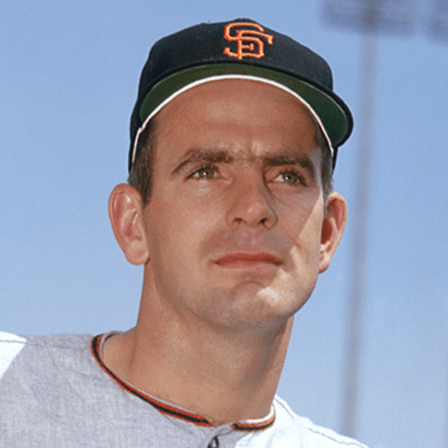
Gaylord Perry was a pitcher who played for the New York Yankees in 1980. Career stats: 4-4 record, 4.44 ERA, 28 strikeouts.
August 16, 1980. A Saturday night at Yankee Stadium, and the pitcher on the mound for the New York Yankees was 41 years old, already owned two Cy Young Awards from two different leagues, and had spent nearly two decades making American League and National League hitters alike wonder exactly what he'd put on the baseball. Gaylord Perry's Yankees career lasted exactly one summer. It's still one of the strangest, most star-studded footnotes in the encyclopedia.
A Trade Deadline Rental With a Cooperstown Resume
By August 1980, Perry had already won 24 games and the AL Cy Young for a fifth-place Cleveland team in 1972, then done it again in the National League with San Diego in 1978, becoming the first pitcher in history to win the award in both leagues. He'd thrown a no-hitter against Bob Gibson. He'd written a memoir confessing, cheerfully, to doctoring baseballs with just about everything except salt and pepper and chocolate sauce. What he hadn't done, in eighteen full big-league seasons split between the Giants, Indians, Rangers, and Padres, was pitch in the Bronx.
That changed on August 14, 1980, when the Yankees sent pitcher Ken Clay and a player to be named later (minor leaguer Marv Thompson, who never appeared in a big-league game) to Texas for Perry. The Yankees were locked in an AL East race and wanted a durable veteran to round out a rotation behind Ron Guidry and Tommy John. Perry, at that point 6-9 with a 3.43 ERA in 24 starts for the Rangers, fit the job description. He was two years from his 300th win. He wasn't, by August of 1980, anyone's idea of an ace anymore. He was a name -- and a reputation that walked in ahead of him.
Yankees Career
Perry made his Yankees debut two days after the trade, starting against the defending American League champion Baltimore Orioles. The reputation preceded him everywhere he went by 1980, and the Bronx was no exception -- Pinstripe Alley later reported that the club had even trained a camera on him during one home start, hoping to catch on film what umpires around the league had spent eighteen years failing to prove in person. Nobody ever did. In more than 5,100 career innings, Perry was ejected for doctoring a baseball exactly once, and it happened two years later in a different uniform entirely.
| Yankees Record | 4-4 |
| Yankees ERA | 4.44 |
| Yankees Games (Starts) | 10 (8) |
| Yankees Innings | 50.2 |
| Yankees Strikeouts | 28 |
| Career Record | 314-265 |
| Hall of Fame | Inducted 1991 |
The results were unremarkable -- a 4-4 record and a 4.44 ERA across ten appearances, eight of them starts, down the stretch of a pennant race. The 1980 Yankees won the AL East anyway, finishing 103-59, three games ahead of Baltimore. Perry didn't pitch in the ALCS. Kansas City swept New York in three straight, George Brett's three-run homer off Rich Gossage in Game 3 closing the door, and manager Dick Howser was pushed out six weeks later, on November 21, despite the 103 wins. Perry became a free agent on October 23, 1980, and the Yankees didn't bring him back. His entire tenure in pinstripes had lasted ten games and ten weeks.
The Spitter, the Legend, and a Strange Bit of Symmetry
Perry's reputation was never really about any single pitch. He'd learned the spitball from a bullpen mate with the Giants in the 1960s, then spent the rest of his career letting hitters believe he was still throwing it whether he was or not -- touching his cap, his belt, his collar, making a slow show of it on the mound before firing a perfectly legal fastball. It worked because nobody could ever prove otherwise, and because Perry, unlike most players accused of cheating, seemed to enjoy the accusation as much as the pitch itself.
I reckon I tried everything on the old apple, but salt and pepper and chocolate sauce.
Two years after he left the Bronx, that same reputation and that same right arm caught up with baseball history in an odd way. Pitching for Seattle on May 6, 1982, Perry threw a complete game to become the 15th pitcher in major-league history to reach 300 career wins -- the first to do it since Early Wynn in 1963. The team he beat for win number 300 was the Yankees, the same club that had rented him for a single summer two Augusts earlier.
No-Hitter Against Bob Gibson
Perry no-hits the Cardinals 1-0 at Candlestick Park, outdueling Bob Gibson. The next night, St. Louis's Ray Washburn no-hits the Giants -- the first time in MLB history that no-hitters were thrown on consecutive nights by the same two clubs.
First Cy Young, in the American League
Goes 24-16 with a 1.92 ERA for a fifth-place Cleveland team and wins the AL Cy Young Award.
Second Cy Young, in the National League
Goes 21-6 for San Diego at age 39/40, becoming the first pitcher in history to win the Cy Young in both leagues.
Traded to the Yankees
New York sends Ken Clay and a player to be named later to Texas for the 41-year-old Perry, adding a rotation arm for the stretch run.
300th Career Win -- Against the Yankees
Pitching for Seattle, Perry throws a complete game to beat the Yankees 7-3, becoming the 15th pitcher in MLB history to reach 300 wins.
Hall of Fame Induction
Elected on his third try, after climbing from 68% of the vote in 1989 to 72% in 1990 to 77% in 1991.
A Farm Kid Who Outlasted Everyone
Perry was born in Williamston, North Carolina, in 1938, the son of a tenant farmer who grew tobacco, peanuts, corn, and soybeans. His older brother Jim Perry made the majors too, and won his own Cy Young Award with Minnesota in 1970 -- the Perrys remain the only brothers in baseball history to each win one, and they were briefly teammates in Cleveland in 1974 and 1975. Gaylord outlasted almost everyone: 22 seasons, eight teams, a Bronx stopover so brief it barely registers next to the rest of it. He retired in 1983 with 314 wins, a 3.11 ERA, and a Hall of Fame case nobody could keep off a ballot even while half the league insisted he'd been getting away with something for two decades. He went home to North Carolina afterward and ran a farm, several hundred acres of it, the same crops his father had grown before any scout ever noticed the arm.
Frequently Asked Questions
How long did Gaylord Perry play for the Yankees?
Perry pitched for the Yankees for one season, acquired in a trade with the Texas Rangers on August 14, 1980. He appeared in 10 games (8 starts), going 4-4 with a 4.44 ERA before becoming a free agent after the season.
What was Gaylord Perry traded to the Yankees for?
The Yankees sent pitcher Ken Clay and a player to be named later (minor leaguer Marv Thompson) to the Texas Rangers in exchange for Perry on August 14, 1980.
Did Gaylord Perry pitch in the postseason for the Yankees?
No. The 1980 Yankees won the AL East at 103-59 but were swept 3-0 by the Kansas City Royals in the ALCS, and Perry didn't appear in the series.
When was Gaylord Perry inducted into the Hall of Fame?
Perry was elected to the Hall of Fame in 1991, his third year on the ballot, receiving 77% of the vote after 68% in 1989 and 72% in 1990. He finished his career with a 314-265 record, a 3.11 ERA, and 3,534 strikeouts across 22 seasons.
Perry's plaque in Cooperstown doesn't mention the Yankees at all, and it barely needs to -- ten games in the Bronx were a rounding error against 22 seasons and 314 wins everywhere else. But for one hot stretch of August and September in 1980, the most notorious alleged cheat in baseball wore pinstripes, and nobody, not even the guy with a camera on him, ever caught him doing anything but pitching.