
Career Stats
Regular Season
| Year | G | AB | R | H | 2B | 3B | HR | RBI | BB | SO | SB | AVG | OBP | SLG | OPS |
|---|---|---|---|---|---|---|---|---|---|---|---|---|---|---|---|
| 1997 | 149 | 553 | 89 | 179 | 42 | 0 | 21 | 117 | 75 | 92 | 10 | .324 | .399 | .514 | .913 |
| 1998 | 152 | 602 | 95 | 191 | 40 | 2 | 24 | 116 | 57 | 103 | 15 | .317 | .372 | .510 | .882 |
| 1999 | 153 | 597 | 70 | 170 | 39 | 4 | 19 | 110 | 66 | 89 | 11 | .285 | .353 | .459 | .812 |
| 2000 | 142 | 566 | 79 | 160 | 26 | 0 | 18 | 100 | 51 | 90 | 14 | .283 | .336 | .424 | .760 |
| 2001 | 137 | 510 | 77 | 136 | 33 | 1 | 21 | 70 | 48 | 59 | 22 | .267 | .330 | .459 | .789 |
| Career | 1254 | 4700 | 720 | 1426 | 304 | 14 | 185 | 858 | 586 | 710 | 80 | .303 | .381 | .492 | .873 |
Career-best seasons highlighted in gold. Stats via Retrosheet.
Postseason
| Year | G | AB | R | H | 2B | 3B | HR | RBI | BB | SO | SB | AVG | OBP | SLG | OPS |
|---|---|---|---|---|---|---|---|---|---|---|---|---|---|---|---|
| 1995 | 5 | 18 | -- | 6 | -- | -- | 3 | 6 | -- | -- | -- | .333 | -- | -- | -- |
| 1996 | 13 | 38 | -- | 7 | -- | -- | 1 | 2 | -- | -- | -- | .184 | -- | -- | -- |
| 1997 | 5 | 19 | -- | 8 | -- | -- | 2 | 7 | -- | -- | -- | .421 | -- | -- | -- |
| 1998 | 13 | 55 | -- | 15 | -- | -- | 2 | 4 | -- | -- | -- | .273 | -- | -- | -- |
| 1999 | 11 | 44 | -- | 11 | -- | -- | 0 | 5 | -- | -- | -- | .250 | -- | -- | -- |
| 2000 | 16 | 58 | -- | 18 | -- | -- | 0 | 7 | -- | -- | -- | .310 | -- | -- | -- |
| 2001 | 13 | 38 | -- | 11 | -- | -- | 2 | 3 | -- | -- | -- | .289 | -- | -- | -- |
| Career | 76 | 270 | 0 | 76 | 0 | 0 | 10 | 34 | 0 | 0 | 0 | .281 | .281 | .393 | .674 |
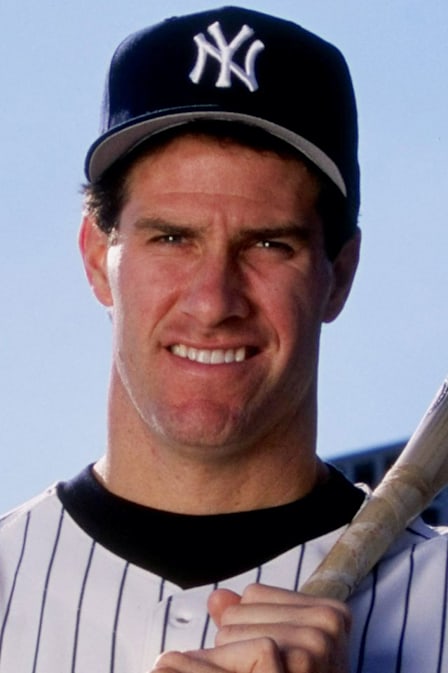
Paul O'Neill was a right fielder who played for the New York Yankees from 1993 to 2001. Career stats: .303 batting average, 185 home runs, 858 RBI.
Paul O'Neill was the New York Yankees' right fielder from 1993 to 2001, a five-time All-Star and four-time World Series champion who became the emotional heartbeat of the late-'90s dynasty. He wasn't the most talented player on those teams. He didn't have Jeter's grace or Bernie's effortless swing or Mo's unhittable cutter. What he had was something harder to measure and impossible to fake -- he cared more than any human being should about an at-bat in a baseball game. And that's exactly why 56,000 people chanted his name while he stood in right field for the last time.
The Trade That Built a Dynasty
The Reds sent O'Neill and minor league first baseman Joe DeBerry to the Yankees on November 3, 1992, for Roberto Kelly. At the time, everyone thought Cincinnati won. Kelly was younger, faster, flashier -- everything the '90s wanted in an outfielder. O'Neill was 29, coming off a .246 season, and had a reputation for destroying Gatorade coolers when he went 0-for-4. (The cooler thing was real. The equipment staff basically kept Gatorade on backorder for nine years.)
But Gene Michael and Buck Showalter's scouts saw what Cincinnati didn't: a left-handed pull hitter with line drives tailor-made for that short right-field porch at the Stadium. They were so right it's almost annoying. O'Neill hit .311 in his first season in pinstripes, and he never stopped hitting.
That trade sits on every "most lopsided deals in Yankees history" list for a reason. Kelly bounced around for a few mediocre years. O'Neill won four rings in the Bronx.
The Warrior
The nickname came from George Steinbrenner, and it stuck because it was true. O'Neill didn't just play hard -- he waged a personal war against his own failure every single night. He'd destroy the dugout water cooler after a strikeout, then go stand in right field arguing with himself about the pitch he missed. Teammates found it equal parts terrifying and inspiring. Bernie Williams once said watching O'Neill care that much made HIM care more.
Paul O'Neill gives everything he has every time he puts on the uniform. Sometimes that means a Gatorade cooler gets destroyed, but you want that. You want a player who cares that much.
Torre understood something critical about O'Neill -- you never had to motivate the guy. You actually had to do the opposite. O'Neill punished himself harder than any manager ever could, so Torre just let him play. That patience, combined with the short porch and a lineup full of guys who could protect him, turned a good Cincinnati outfielder into the heart of a dynasty.
The Numbers
| Yankees Batting Average | .303 |
| Yankees OBP | .377 |
| Yankees OPS | .856 |
| Home Runs (NYY) | 185 |
| RBI (NYY) | 858 |
| World Series Titles | 5 |
| Batting Titles | 1 (1994) |
| All-Star Selections | 5 |
That 1994 season deserves its own paragraph. O'Neill hit .359 -- the highest batting average by a Yankee in the post-DiMaggio era. His slash line was .359/.460/.603 with a 1.063 OPS. In 103 games. The strike killed that season, and we'll never know what he could've done with a full year, but he had more than enough plate appearances for the batting title. He took it. (And a Silver Slugger. The man was freakin' locked in.)
The Dynasty Years
O'Neill was there for all of it. The 1996 comeback against Atlanta, down 0-2 in the Series. The 1998 juggernaut that won 114 games and might be the greatest team ever assembled. The 1999 sweep. The 2000 Subway Series. Four titles in five years, and O'Neill wasn't some passenger along for the ride -- he was driving the bus.
Jeter has said O'Neill set the standard for what it meant to wear pinstripes. Think about that. The Captain himself looked at Paulie and said, "That's the bar." When the young guys came up -- Jeter, Rivera, Pettitte, Posada -- they watched how O'Neill approached every at-bat like his life depended on it, and they absorbed it. (You can draw a straight line from O'Neill's intensity to that entire core four mentality. He didn't build the dynasty alone, but he set the thermostat.)
And then there's the moment nobody who watched it will ever forget. During the 1999 World Series, O'Neill's father Chick -- the man who'd taught him the game, who'd instilled that perfectionist fury -- passed away. O'Neill played in the clinching Game 4 anyway. After the final out, cameras caught him alone in the outfield, weeping. Joy and grief at the exact same time. It was the most human moment in the history of that dynasty. (I'm not crying. You're crying.)
The Goodbye
2001 was supposed to be the end, and everyone knew it. O'Neill was 38, his knees were shot, and he'd told people close to him this was his last ride. Then September 11 happened, and suddenly the World Series wasn't just baseball anymore.
When the Series came back to the Stadium for Game 5 on November 1, somebody in the bleachers started chanting "Paul O'Neill." It spread. Section by section, deck by deck, until 56,000 people were calling his name. O'Neill stood in right field, trying to hold it together, and the chant just kept going. His teammates watched from the dugout. Nobody had ever seen anything like it.
The Yanks lost that Series to Arizona in seven games. O'Neill went 0-for-4 in the final game. He walked off the field at Bank One Ballpark, and that was it. But his goodbye didn't happen in Phoenix. It happened at the Stadium, with those chants echoing off the upper deck, in a city that was still broken and needed something to hold onto.
Traded to the Yankees
The Reds send O'Neill and minor league first baseman Joe DeBerry to New York for Roberto Kelly -- a deal that looks more lopsided every year.
Wins the Batting Title
O'Neill's .359 average captures the AL batting crown when the players' strike ends the season. First Yankee to win it since Mattingly in 1984.
First Championship in Pinstripes
The Yankees beat the Braves in six games for their first title since 1978. O'Neill earns his second ring.
A Ring for Chick
O'Neill plays through his father's death during the World Series. The Yankees sweep the Braves, and O'Neill breaks down in the outfield after the final out.
The Chant
Yankee Stadium chants O'Neill's name during Game 5 of the World Series. The most emotional farewell in franchise history.
Number 21 Retired
The Yankees retire O'Neill's number in a ceremony at Yankee Stadium.
Frequently Asked Questions
What was Paul O'Neill's career batting average?
O'Neill hit .288 across 17 MLB seasons and .303 as a Yankee from 1993 to 2001. He won the 1994 AL batting title with a .359 average -- the highest by a Yankee in the post-DiMaggio era.
Why did the fans chant Paul O'Neill's name during the 2001 World Series?
During Game 5 at Yankee Stadium on November 1, 2001, fans began chanting "Paul O'Neill" in what became one of the most emotional moments in franchise history. O'Neill had signaled his retirement, and the post-September 11 crowd wanted to send him off properly. The chant spread through the entire stadium and lasted several minutes.
How did Paul O'Neill come to the Yankees?
The Reds traded O'Neill and minor league first baseman Joe DeBerry to the Yankees on November 3, 1992, for center fielder Roberto Kelly. GM Gene Michael identified O'Neill's left-handed swing as a perfect fit for Yankee Stadium's short right-field porch. It became one of the most lopsided trades in Yankees history.
How many World Series rings does Paul O'Neill have?
O'Neill won five World Series championships: one with the 1990 Cincinnati Reds and four with the Yankees in 1996, 1998, 1999, and 2000.
Those chants at the Stadium -- that's the whole story of Paul O'Neill, really. He wasn't the most gifted guy on the field. He was the one who cared the most. And when 56,000 people chanted his name into the October night, they weren't just saying goodbye. They were saying, "We saw you. Every at-bat. Every cooler. Every time you refused to accept anything less than your best. We saw all of it." That's what wearing pinstripes is supposed to look like.