
Career Stats
Regular Season
| Year | G | AB | R | H | 2B | 3B | HR | RBI | BB | SO | SB | AVG | OBP | SLG | OPS |
|---|---|---|---|---|---|---|---|---|---|---|---|---|---|---|---|
| 1939 | 35 | 105 | 18 | 29 | 5 | 1 | 0 | 12 | 13 | 10 | 4 | .276 | .347 | .343 | .690 |
| 1940 | 73 | 231 | 35 | 70 | 11 | 4 | 4 | 37 | 20 | 11 | 7 | .303 | .364 | .437 | .801 |
| 1941 | 67 | 209 | 25 | 60 | 17 | 2 | 1 | 36 | 22 | 10 | 0 | .287 | .355 | .402 | .757 |
| 1942 | 70 | 214 | 19 | 49 | 10 | 0 | 2 | 34 | 17 | 20 | 1 | .229 | .286 | .304 | .590 |
| Career | 245 | 759 | 97 | 208 | 43 | 7 | 7 | 119 | 72 | 51 | 12 | .274 | .337 | .377 | .714 |
Career-best seasons highlighted in gold. Stats via Retrosheet.
Postseason
| Year | G | AB | R | H | 2B | 3B | HR | RBI | BB | SO | SB | AVG | OBP | SLG | OPS |
|---|---|---|---|---|---|---|---|---|---|---|---|---|---|---|---|
| 1941 | 1 | 0 | -- | 0 | -- | -- | 0 | 0 | -- | -- | -- | -- | -- | -- | -- |
| 1942 | 1 | 1 | -- | 1 | -- | -- | 0 | 0 | -- | -- | -- | 1.000 | -- | -- | -- |
| Career | 2 | 1 | 0 | 1 | 0 | 0 | 0 | 0 | 0 | 0 | 0 | 1.000 | 1.000 | 1.000 | 2.000 |
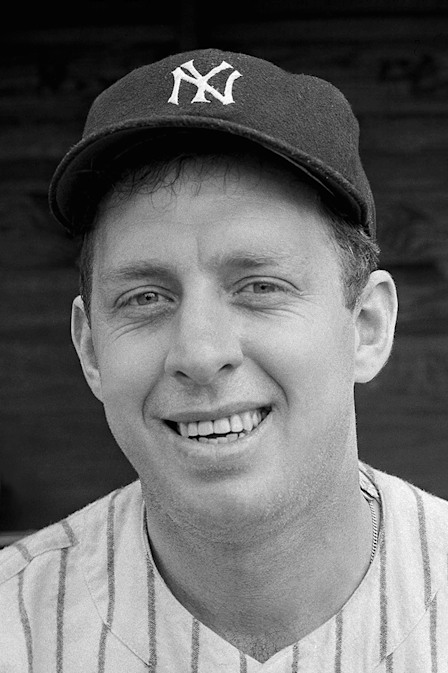
Buddy Rosar was a catcher who played for the New York Yankees from 1939 to 1942. Career stats: .274 batting average, 7 home runs, 119 RBI.
In July 1942, Buddy Rosar walked out on the Yankees mid-pennant race to take a police exam. He came back a hero to nobody in the front office and was gone from the Bronx within six months. That's the kind of career Warren Vincent "Buddy" Rosar had -- quietly excellent, occasionally chaotic, and never quite the headline act.
The Kid Behind Dickey
Rosar broke into the majors on April 29, 1939, a 24-year-old catcher out of Buffalo stuck behind Bill Dickey, one of the best backstops the game has ever produced (a future Hall of Famer with 11 All-Star nods of his own). There isn't a worse spot on a roster to be young and talented. Rosar played sparingly that first year, watching from the bench as the Yankees won it all, then started carving out real time in 1940 as Dickey, at 33, needed the occasional rest.
He made the most of it. Rosar hit .298 that season, a career year, with a .357 on-base percentage and 37 RBI in just 73 games -- numbers that would've made him a regular on most rosters in baseball. Instead they made him the best bench player on a stacked one.
On July 19, 1940, Rosar hit for the cycle against Cleveland, still the only Yankees catcher ever to do it. The day before, he'd hit a grand slam. Two career days out of a backup catcher, back to back, and he still couldn't crack the lineup on a permanent basis. Dickey's job was that safe.
| Full Name | Warren Vincent Rosar |
| Yankees Tenure | 1939-1942 (backup catcher to Bill Dickey) |
| 1940 -- Career Year | .298 AVG / .357 OBP, 37 RBI in 73 G |
| Signature Feat | Only Yankees catcher to hit for the cycle (7/19/1940) |
| Career MLB Line | .261/.330/.334, 18 HR, 367 RBI (13 seasons) |
| All-Star Selections | 5 (1942 NYY, 1943 CLE, 1946-48 PHA) |
| Fielding Record | 147 consecutive errorless games (1946-47), an MLB record when it ended |
| World Series | 2 games (1941, 1942), 1-for-1 |
The Walkout
The 1942 season ended Rosar's time in New York, and it didn't end quietly. With his wife expecting and a wartime economy making every ballplayer think about what came next (baseball's future was genuinely uncertain in 1942), Rosar asked Joe McCarthy for a few days off to get back to Buffalo -- to be there for the birth and to sit for the city's police entrance exam. McCarthy said no. Dickey was hurt, and the Yankees needed a catcher.
Rosar went anyway, right after a July 18 win over the White Sox. His son was born two days later. Team president Ed Barrow wanted him traded on the spot; McCarthy talked the punishment down to a $250 fine instead. It didn't matter much in the end. That December, the Yankees shipped Rosar and outfielder Roy Cullenbine to Cleveland for Roy Weatherly and Oscar Grimes. Four years behind Dickey, and he left the way he'd spent most of it -- overshadowed, this time by his own headline.
The Best Glove Nobody Talks About
Cleveland is where Rosar became something the Yankees never quite let him be: the guy. He made his first All-Star team in 1942 as a Yankee (his last summer in pinstripes), then made four more with Cleveland and Philadelphia. The A's are where his defense turned into legend -- in 1946, he played all 117 of his games at catcher without a single error, an MLB record at the time. He kept it going into 1947, running the errorless streak to 147 straight games before a dropped popup ended it on May 20 -- the longest errorless run by a catcher in the game's history up to that point. Later catchers (Mike Redmond ran his to 253) have since passed it, but in 1947, nobody had ever caught that clean for that long.
Rosar retired in 1951 with the Red Sox, a .261 hitter who made a living with his glove more than his bat. He died in 1994, back home in the Rochester area, a long way from Yankee Stadium and the four years he spent waiting for Bill Dickey to need a day off.
MLB Debut
Rosar debuts for the Yankees at 24, backing up Bill Dickey. He plays sparingly as New York wins the World Series.
The Cycle
Rosar hits for the cycle against Cleveland, still the only Yankees catcher to do it. He hits .298 for the season, his career year.
The Walkout
Rosar leaves the team without permission to be with his wife for the birth of their son and to take the Buffalo police exam. McCarthy fines him $250.
Traded to Cleveland
The Yankees deal Rosar and Roy Cullenbine to Cleveland for Roy Weatherly and Oscar Grimes, ending his four years behind Dickey.
The Errorless Streak
Now with the Athletics, Rosar plays an error-free 1946 season (117 games) and extends the streak to 147 straight games before it ends in May 1947 -- the longest errorless run by a catcher in MLB history to that point.
Frequently Asked Questions
Who was Buddy Rosar?
Warren Vincent "Buddy" Rosar was a catcher who played for the Yankees from 1939 to 1942, backing up Hall of Famer Bill Dickey. He's best known for hitting for the cycle in 1940 and later became a five-time All-Star and one of the finest defensive catchers of his era.
Why did Buddy Rosar leave the Yankees?
Rosar left the team without permission in July 1942 to be with his wife for the birth of their son and to take a Buffalo police department entrance exam, defying manager Joe McCarthy's refusal to grant him leave. He was fined $250, and the Yankees traded him to Cleveland that December.
What records did Buddy Rosar set as a catcher?
Rosar set an MLB record in 1946 by catching all 117 of his games error-free, then extended his errorless streak to 147 consecutive games before it ended in May 1947 -- the longest errorless run by a catcher in the game's history at the time. Several catchers, including Mike Redmond (253 games), have since surpassed it.
Was Buddy Rosar an All-Star?
Yes. Rosar made five All-Star teams: 1942 with the Yankees, 1943 with Cleveland, and 1946 through 1948 with the Philadelphia Athletics.
Did Buddy Rosar hit for the cycle?
Yes. On July 19, 1940, Rosar hit for the cycle against Cleveland -- a single, double, triple, and home run in the same game. He remains the only Yankees catcher in franchise history to do it.