Career Stats
Regular Season
| Year | G | AB | R | H | 2B | 3B | HR | RBI | BB | SO | SB | AVG | OBP | SLG | OPS |
|---|---|---|---|---|---|---|---|---|---|---|---|---|---|---|---|
| 1931 | 140 | 572 | 122 | 183 | 32 | 14 | 5 | 60 | 70 | 34 | 13 | .320 | .397 | .451 | .848 |
| 1932 | 146 | 601 | 147 | 193 | 32 | 10 | 9 | 67 | 83 | 16 | 3 | .321 | .405 | .453 | .858 |
| 1933 | 129 | 433 | 87 | 126 | 22 | 16 | 5 | 63 | 49 | 19 | 7 | .291 | .364 | .450 | .814 |
| 1934 | 66 | 266 | 53 | 90 | 15 | 5 | 2 | 27 | 42 | 9 | 3 | .338 | .429 | .455 | .884 |
| 1935 | 90 | 299 | 48 | 85 | 7 | 4 | 3 | 36 | 36 | 10 | 1 | .284 | .361 | .365 | .726 |
| Career | 1501 | 5938 | 1238 | 1943 | 325 | 158 | 60 | 663 | 695 | 285 | 110 | .327 | .398 | .465 | .863 |
Career-best seasons highlighted in gold. Stats via Retrosheet.
Postseason
| Year | G | AB | R | H | 2B | 3B | HR | RBI | BB | SO | SB | AVG | OBP | SLG | OPS |
|---|---|---|---|---|---|---|---|---|---|---|---|---|---|---|---|
| 1926 | 7 | 28 | -- | 10 | -- | -- | 0 | 2 | -- | -- | -- | .357 | -- | -- | -- |
| 1927 | 4 | 16 | -- | 5 | -- | -- | 0 | 2 | -- | -- | -- | .313 | -- | -- | -- |
| 1928 | 1 | 0 | -- | 0 | -- | -- | 0 | 1 | -- | -- | -- | -- | -- | -- | -- |
| 1932 | 4 | 16 | -- | 6 | -- | -- | 1 | 4 | -- | -- | -- | .375 | -- | -- | -- |
| Career | 16 | 60 | 0 | 21 | 0 | 0 | 1 | 9 | 0 | 0 | 0 | .350 | .350 | .400 | .750 |
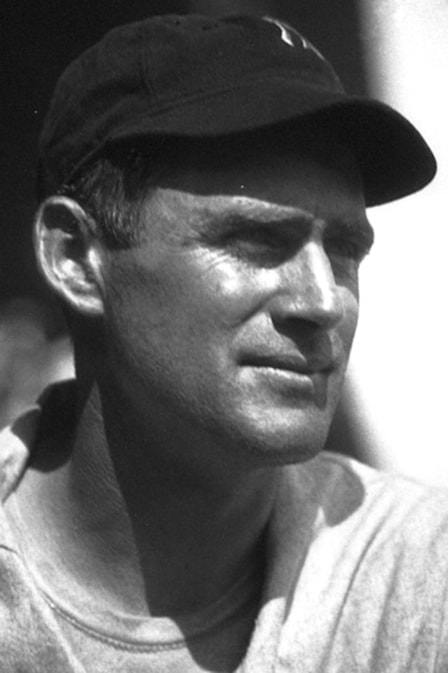
Earle Combs was an outfielder who played for the New York Yankees from 1924 to 1935. Career stats: .327 batting average, 60 home runs, 663 RBI.
They called him "The Kentucky Colonel," and he played center field for the greatest baseball team ever assembled -- the New York Yankees -- with a grace that made everything look easy. Earle Combs led off for the 1927 Yankees -- Murderers' Row -- and set the table for Babe Ruth and Lou Gehrig with a consistency that never wavered. He hit .325 over twelve seasons, collected 1,866 hits, and retired without ever making a single enemy in a clubhouse full of oversized personalities. The quiet ones don't always get remembered. They should.
Path to the Bronx
Combs grew up in Pebworth, Kentucky, a place so small it barely registered on maps. He played baseball at Eastern Kentucky State Normal School (now Eastern Kentucky University) and caught the attention of the Louisville Colonels in the American Association, where he hit .344 in 1922 and .380 in 1923. The Yankees purchased his contract before the 1924 season, and manager Miller Huggins handed him the center field job.
The transition wasn't smooth. Combs broke his ankle early in 1924 and played only 24 games. But by 1925, he was in the lineup every day, hitting .342 with 203 hits and establishing himself as the spark plug the Yankees needed at the top of the order. When Ruth and Gehrig provided the thunder, Combs provided the lightning that got things started.
Yankees Career
Combs was a leadoff hitter in an era when the term didn't carry the strategic weight it does today. He didn't walk much -- he didn't need to. He sprayed line drives to all fields, ran the bases with intelligence, and covered center field at Yankee Stadium with long, loping strides that ate up the vast acreage of the original ballpark. The dimensions in center field ran to 490 feet in the early days, and Combs patrolled every inch.
His peak years coincided with the Yankees' greatest dynasty. In 1927, the year Ruth hit 60 and the Yankees went 110-44, Combs hit .356 with 231 hits and led the American League in triples with 23. He scored 137 runs that season -- getting on base ahead of Ruth and Gehrig turned out to be a reliable way to cross home plate.
| Career Batting Average | .325 |
| Career Hits | 1,866 |
| Career Triples | 154 |
| 1927 Hits | 231 |
| World Series Titles | 3 (1927, 1928, 1932) |
| Hall of Fame | Inducted 1970 |
The 1928 team swept the Cardinals in the World Series, though Combs barely got to see the field -- a finger injury limited him to a single plate appearance, a sacrifice fly. The 1932 squad -- Ruth's "called shot" team -- won another title, and Combs contributed a .321 average during the regular season. Three rings in six years, and Combs was the constant at the top of the lineup for two of them.
His career ended abruptly and tragically. On July 24, 1934, Combs crashed into the outfield wall at Sportsman's Park in St. Louis, fracturing his skull. He lay unconscious on the field while teammates feared the worst. Combs survived but never fully recovered. He played sparingly in 1935 and retired at 36 with a lifetime .325 average.
Key Moments
Breakout Season
After a broken ankle limited his 1924 debut, Combs hits .342 with 203 hits in his first full season, claiming the everyday center field job.
Murderers' Row
Leads the AL with 231 hits and 23 triples while scoring 137 runs as the leadoff man for the greatest team in baseball history.
Back-to-Back Sweeps
The Yankees sweep the Cardinals in the World Series for the second straight year, but a finger injury limits Combs to a single plate appearance in the series -- a sacrifice fly.
The Wall
Combs crashes into the outfield wall in St. Louis and fractures his skull. He survives but the injury effectively ends his playing career.
Hall of Fame
The Veterans Committee inducts Combs into Cooperstown, recognizing a career that produced a .325 average and 1,866 hits over twelve seasons.
The Table-Setter
Combs didn't hit home runs -- he finished his career with 58. He didn't strike out crowds with flashy plays or generate headlines with off-field drama. What he did was get on base, run the bases beautifully, and play a premium defensive position at an elite level for the best team in baseball. In a lineup that featured the two most famous sluggers in the sport's history, Combs was the professional who made sure someone was always on base when the big bats came up.
His teammates adored him. In a clubhouse that included Ruth's legendary appetites, Gehrig's quiet intensity, and a cast of characters who could fill a novel, Combs was the gentleman everyone respected. He didn't drink, didn't carouse, and didn't cause problems. He just played baseball with a quiet excellence that earned him the devotion of everyone who watched him work.
Frequently Asked Questions
What was Earle Combs's career batting average?
Combs hit .325 over twelve seasons with the Yankees (1924-1935), collecting 1,866 hits. He batted over .300 in nine of his ten full seasons.
Was Earle Combs on the 1927 Yankees?
Yes. Combs was the leadoff hitter and center fielder for the 1927 Murderers' Row team, widely considered the greatest in baseball history. He led the American League with 231 hits and 23 triples that season while scoring 137 runs.
How did Earle Combs's career end?
Combs fractured his skull crashing into the outfield wall at Sportsman's Park in St. Louis on July 24, 1934. He attempted a comeback in 1935 but played only 89 games before retiring. The head injury never fully healed.
When was Earle Combs inducted into the Hall of Fame?
The Veterans Committee elected Combs to the Hall of Fame in 1970, thirty-five years after his final game. The BBWAA never gave him enough votes during the regular balloting, but the Veterans Committee recognized his sustained excellence.
Earle Combs played in the shadow of giants and never seemed to mind. He did his job -- get on base, play center field, be a professional -- and did it so well that three decades after he retired, the Hall of Fame came calling. The Kentucky Colonel didn't need the spotlight. He just needed a bat, a glove, and a lineup that appreciated what a leadoff man could do.