
Career Stats
Regular Season
| Year | G | AB | R | H | 2B | 3B | HR | RBI | BB | SO | SB | AVG | OBP | SLG | OPS |
|---|---|---|---|---|---|---|---|---|---|---|---|---|---|---|---|
| 1933 | 146 | 549 | 100 | 163 | 22 | 14 | 19 | 112 | 78 | 67 | 16 | .297 | .386 | .492 | .878 |
| 1934 | 125 | 446 | 62 | 120 | 25 | 6 | 15 | 70 | 75 | 64 | 13 | .269 | .374 | .453 | .827 |
| 1935 | 136 | 500 | 75 | 137 | 20 | 6 | 14 | 89 | 66 | 78 | 11 | .274 | .362 | .422 | .784 |
| 1936 | 151 | 542 | 82 | 156 | 29 | 6 | 14 | 110 | 97 | 66 | 8 | .288 | .397 | .441 | .838 |
| 1937 | 127 | 449 | 57 | 110 | 21 | 3 | 14 | 71 | 73 | 76 | 7 | .245 | .351 | .399 | .750 |
| Career | 1714 | 6310 | 1001 | 1864 | 341 | 120 | 180 | 1218 | 865 | 852 | 156 | .295 | .380 | .473 | .853 |
Career-best seasons highlighted in gold. Stats via Retrosheet.
Postseason
| Year | G | AB | R | H | 2B | 3B | HR | RBI | BB | SO | SB | AVG | OBP | SLG | OPS |
|---|---|---|---|---|---|---|---|---|---|---|---|---|---|---|---|
| 1926 | 7 | 26 | -- | 5 | -- | -- | 0 | 3 | -- | -- | -- | .192 | -- | -- | -- |
| 1927 | 4 | 15 | -- | 4 | -- | -- | 0 | 2 | -- | -- | -- | .267 | -- | -- | -- |
| 1928 | 4 | 12 | -- | 3 | -- | -- | 0 | 0 | -- | -- | -- | .250 | -- | -- | -- |
| 1932 | 4 | 17 | -- | 5 | -- | -- | 2 | 5 | -- | -- | -- | .294 | -- | -- | -- |
| 1936 | 6 | 20 | -- | 5 | -- | -- | 1 | 7 | -- | -- | -- | .250 | -- | -- | -- |
| 1937 | 5 | 15 | -- | 6 | -- | -- | 1 | 2 | -- | -- | -- | .400 | -- | -- | -- |
| Career | 30 | 105 | 0 | 28 | 0 | 0 | 4 | 19 | 0 | 0 | 0 | .267 | .267 | .381 | .648 |
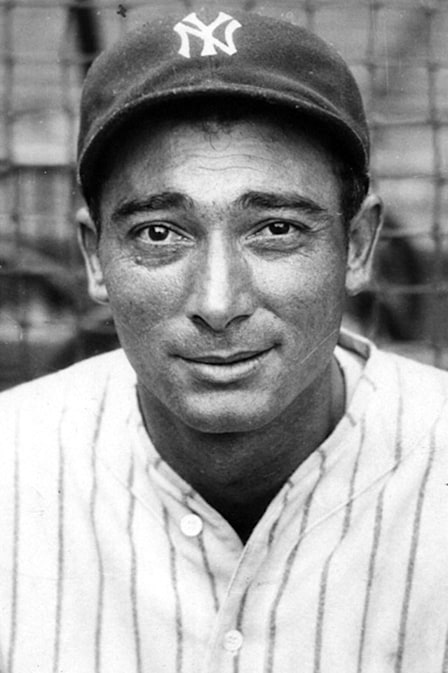
Tony Lazzeri was a second baseman who played for the New York Yankees from 1926 to 1937. Career stats: .295 batting average, 180 home runs, 1218 RBI.
Before Joe DiMaggio arrived from San Francisco, the most famous Italian-American in baseball played second base for the New York Yankees. Tony Lazzeri was quiet where DiMaggio would be magnetic, intense where DiMaggio would be cool, and he fought a private battle with epilepsy that the public barely knew about while anchoring the infield for six pennant winners and five World Series champions. He drove in 100 runs seven times, hit .354 in the 1932 World Series, and did it all in an era when the condition he carried could have ended his career before it started.
Path to the Bronx
Lazzeri grew up in San Francisco's Cow Hollow district, the son of Italian immigrants, and he made his name in the Pacific Coast League before the Yankees came calling. In 1925, playing for the Salt Lake City Bees, Lazzeri hit 60 home runs and drove in 222 runs -- numbers that were astonishing even by the inflated standards of the PCL, which played longer seasons at high altitude. The performance caught the attention of every major league team, but the Yankees won the bidding war.
The epilepsy worried some clubs. Lazzeri suffered occasional seizures, a condition that carried enormous stigma in the 1920s and could have disqualified him from professional sports in the eyes of cautious owners. The Yankees looked past it, and Lazzeri rewarded their faith immediately. He debuted in 1926 at age 22 and hit .275 with 18 home runs and 114 RBI, earning a spot in one of the most fearsome lineups in baseball history.
Yankees Career
Lazzeri was the number-five hitter behind Babe Ruth and Lou Gehrig on the 1927 Murderers' Row team, and he drove in 102 runs while playing flawless defense at second base. The lineup was so loaded that Lazzeri's contributions often got overlooked -- when Ruth is hitting 60 homers and Gehrig is driving in 175 runs, a "mere" 100-RBI season from the second baseman doesn't generate many headlines. But Lazzeri was the connective tissue that held the batting order together, the run producer in the middle of the lineup who made sure opposing pitchers couldn't breathe easy after getting past the big two.
| NYY Batting Average | .293 |
| NYY Home Runs | 169 |
| NYY RBI | 1,154 |
| 100-RBI Seasons | 7 |
| World Series Titles | 5 (1927, 1928, 1932, 1936, 1937) |
| Hall of Fame | Inducted 1991 |
His peak seasons were remarkable for a second baseman. In 1929, he hit .354 with 18 home runs and 106 RBI. In 1932, he hit .300 with 15 homers and 113 RBI during the regular season, then hammered the Cubs in the World Series with a .354 average and two home runs in a four-game sweep. On October 2, 1936, Lazzeri hit a grand slam in the World Series -- only the second in Fall Classic history, sixteen years after Elmer Smith's in 1920 -- as part of a five-RBI game against the Giants.
Lazzeri played his final season with the Yankees in 1937, hitting .244 at age 33 before being released. Joe Gordon was waiting in the wings, and the transition was handled with the unsentimental efficiency that characterized the Yankees of that era. Lazzeri played two more seasons -- 1938 with the Cubs, then 1939 split between the Dodgers and Giants -- before retiring.
Key Moments
The Rookie
Lazzeri debuts with the Yankees at 22 and drives in 114 runs, immediately establishing himself as a force in the lineup despite the stigma around his epilepsy.
Murderers' Row
Drives in 102 runs as the fifth hitter behind Ruth and Gehrig on the greatest team ever assembled. The Yankees go 110-44 and sweep the Pirates in the World Series.
Grand Slam vs. the Giants
Lazzeri hits just the second grand slam in World Series history during Game 2 against the Giants, driving in five runs in an 18-4 Yankees victory.
World Series Dominance
Hits .354 with two home runs as the Yankees sweep the Cubs in four games. Ruth's "called shot" gets the headlines, but Lazzeri's bat does just as much damage.
Hall of Fame at Last
The Veterans Committee elects Lazzeri to Cooperstown, fifty-four years after his final game in pinstripes.
The Quiet Pioneer
Lazzeri's significance extended beyond his playing statistics. As one of the first prominent Italian-Americans in major league baseball, he opened doors for the wave of Italian-American players who followed -- DiMaggio chief among them. The Italian-American community in New York adopted Lazzeri as a hero, and his success helped normalize the presence of first-generation Americans in the sport's mainstream.
He also fought his epilepsy in near-total privacy. The condition carried a social stigma that could have destroyed his career if it became public knowledge, and Lazzeri managed it with a discipline that his teammates respected even if they didn't fully understand what he was dealing with. He had seizures during his playing career, but they occurred privately, and the Yankees organization protected him from scrutiny. It was a different era -- one that didn't discuss medical conditions openly -- and Lazzeri navigated it with quiet courage.
Frequently Asked Questions
How many World Series did Tony Lazzeri win?
Lazzeri won five World Series championships with the Yankees: 1927, 1928, 1932, 1936, and 1937. He appeared in six Fall Classics total during his twelve seasons in pinstripes.
Was Tony Lazzeri the first player to hit a World Series grand slam?
No. On October 2, 1936, in Game 2 against the Giants, Lazzeri hit just the second grand slam in World Series history -- Elmer Smith of the Cleveland Indians hit the first one back in 1920. Lazzeri still drove in five runs that day as the Yankees won 18-4.
Did Tony Lazzeri have epilepsy?
Yes. Lazzeri suffered from epilepsy throughout his playing career, a condition that carried significant stigma in the 1920s and 1930s. He managed it privately, and the Yankees organization shielded him from public scrutiny about his health.
When was Tony Lazzeri inducted into the Hall of Fame?
The Veterans Committee elected Lazzeri to the Hall of Fame in 1991, more than fifty years after his final game. He had died in 1946 at age 42 and was never able to see the honor.
Tony Lazzeri played twelve seasons in the Bronx, drove in over a thousand runs, won five championships, and did it all while carrying a medical condition that most people around him didn't understand. He wasn't the loudest voice in the clubhouse or the biggest name in the lineup, but he was the professional who showed up every day and produced -- quietly, consistently, and without complaint. The Hall of Fame took fifty-four years to catch up with what his teammates had always known.