Career Stats
Regular Season
| Year | G | AB | R | H | 2B | 3B | HR | RBI | BB | SO | SB | AVG | OBP | SLG | OPS |
|---|---|---|---|---|---|---|---|---|---|---|---|---|---|---|---|
| 1931 | 132 | 494 | 106 | 151 | 22 | 1 | 6 | 68 | 62 | 8 | 1 | .306 | .393 | .391 | .784 |
| 1932 | 127 | 511 | 95 | 138 | 21 | 3 | 11 | 68 | 57 | 3 | 0 | .270 | .347 | .387 | .734 |
| 1933 | 136 | 526 | 88 | 144 | 18 | 1 | 2 | 54 | 71 | 4 | 2 | .274 | .361 | .323 | .684 |
| Career | 395 | 1531 | 289 | 433 | 61 | 5 | 19 | 190 | 190 | 15 | 3 | .283 | .362 | .366 | .728 |
Career-best seasons highlighted in gold. Stats via Retrosheet.
Postseason
| Year | G | AB | R | H | 2B | 3B | HR | RBI | BB | SO | SB | AVG | OBP | SLG | OPS |
|---|---|---|---|---|---|---|---|---|---|---|---|---|---|---|---|
| 1932 | 4 | 15 | -- | 5 | -- | -- | 0 | 3 | -- | -- | -- | .333 | -- | -- | -- |
| Career | 4 | 15 | 0 | 5 | 0 | 0 | 0 | 3 | 0 | 0 | 0 | .333 | .333 | .333 | .667 |
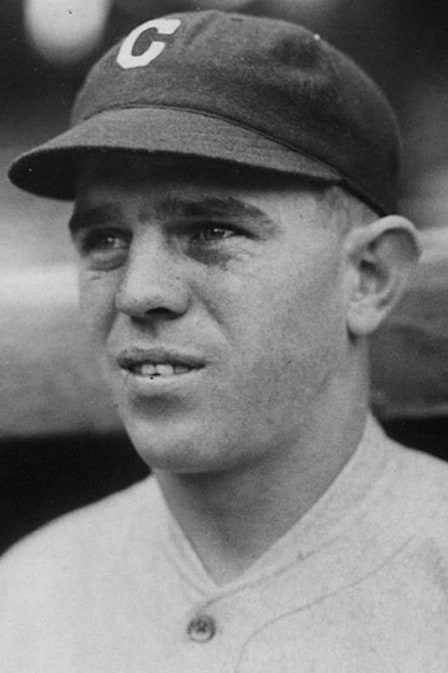
Joe Sewell was a third baseman who played for the New York Yankees from 1931 to 1933. Career stats: .283 batting average, 19 home runs, 190 RBI.
A minor leaguer with 346 professional at-bats got summoned to a pennant race because a man was struck and killed at home plate. That's how Joe Sewell's career started, and somehow it's not even the strangest part of his story. Sewell went on to play 14 major league seasons with the Cleveland Indians and the New York Yankees, and he struck out 114 times. Total. In 7,132 at-bats. No hitter in the history of the sport has ever made contact like that, and the Yankees got the last three years of it at third base.
Forged by Tragedy
Sewell was tearing up the Southern Association for the New Orleans Pelicans in the summer of 1920 when Cleveland's season -- and the sport itself -- got upended. On August 16, Indians shortstop Ray Chapman was struck in the head by a pitch from Carl Mays at the Polo Grounds. He died the next morning. He remains the only player in major league history killed by an injury sustained on the field.
Cleveland needed a shortstop in the middle of an American League pennant race, and they needed one fast. They purchased Sewell's contract on September 6. He debuted four days later, hit .329 down the stretch, and got special league permission to play in the World Series -- an almost unthinkable ask for a player with less than a season of pro experience. Cleveland beat Brooklyn, five games to two. Sewell had a championship ring before he'd played a full big-league season.
On his debut day, teammate George Burns handed him a black 40-ounce bat. Sewell named it "Black Betsy," used it for the rest of his career, and never broke it. He maintained the thing with a Coca-Cola bottle and chewing tobacco (a maintenance routine that would horrify any modern equipment manager). It's on display at the Alabama Sports Hall of Fame Museum today, still in one piece.
Eleven Years Before the Bronx
Sewell held Cleveland's shortstop job for eleven seasons and built the reputation that would follow him to New York. In 1929, he went 115 consecutive games without a strikeout -- still the record. He was 5'6", 155 pounds (small even by the standards of an era before weight rooms existed), and never going to overpower anybody. He didn't need to. Cleveland released him after the 1930 season, and the Yankees signed him that January, moving him to third base since Lyn Lary already held down shortstop (a job Lary would lose to a rookie named Frank Crosetti the following summer).
Yankees Career
Sewell arrived in the Bronx at 32, no longer the everyday shortstop he'd been in Cleveland but exactly the kind of professional a stacked lineup needs at the bottom of the order. His first season in pinstripes was his best: .302 with 146 hits, 64 RBI, and eight strikeouts in 130 games, playing third base behind Babe Ruth and Gehrig in a lineup that scored more runs than any team in the modern era.
| NYY Batting Average | .283 |
| NYY Games | 395 |
| NYY Hits | 433 |
| NYY RBI | 190 |
| NYY Strikeouts | 15 (in 1,531 at-bats) |
| World Series Titles (NYY) | 1 (1932) |
| Career Strikeouts | 114 in 7,132 at-bats -- lowest rate in MLB history |
| Hall of Fame | Inducted 1977 (Veterans Committee) |
The 1932 season is the one that gets remembered, and for good reason. Sewell struck out three times all year -- three, in 503 at-bats -- a major league single-season record that still stands. He hit .272 with a career-high 11 home runs and 68 RBI, and he did it as part of a roster that carried nine future Hall of Famers. Against Lefty Grove specifically (a pitcher who finished his career with 2,266 strikeouts and a well-earned reputation for terrifying people), Sewell faced him 96 times and never went down on strikes once. Grove reportedly called him the toughest hitter he ever faced. Given who else Grove struck out for a living, that's not a small claim.
The Society for American Baseball Research titled its biography of the man "Sewell Was a Real Fox at the Plate," and the description fits. He didn't choke up or shorten his swing to slap at the ball -- he used the same 40-ounce bat, full-handled, and simply refused to miss with it.
That October, the Yankees swept the Chicago Cubs in four games, and Sewell hit .333 in the series. Everybody remembers Ruth's called shot in Game 3. Nobody remembers that the third baseman driving in runs behind him hadn't struck out since June.
His average dipped to .273 in 1933, his final season, with four strikeouts across the year. He played his last game on September 24, 1933, and the Yankees released him that January. He was 35, and he'd spent the last three years of a 14-year career doing exactly what the job required -- put the ball in play, hold down the bottom of a loaded order, and stay out of the way of the show going on around him.
Key Moments
Forced into the Majors
Sewell debuts at shortstop for Cleveland, called up after Ray Chapman's death, and hits .329 down the stretch of a pennant race he had no business being part of.
115 Games Without a Strikeout
Sewell sets the major league record for consecutive games without striking out -- a mark nobody has come close to matching.
Signs with the Yankees
Cleveland releases Sewell after 1930. The Yankees sign him and shift him from shortstop to third base at age 32.
Three Strikeouts All Year
Sewell strikes out three times in 503 at-bats, still the MLB single-season record, while helping the Yankees to a 107-47 record.
World Series Champion
The Yankees complete a four-game sweep of the Cubs. Sewell hits .333 in the series and wins his second championship, twelve years after his first.
Cooperstown, Finally
The Veterans Committee elects Sewell to the Hall of Fame, 44 years after his final game.
Sewell's three seasons in the Bronx never made him a headline the way Lazzeri or Dickey did, and nobody confused him with the two men hitting in front of him. But a lineup with Ruth and Gehrig didn't need another slugger at the bottom. It needed someone who wouldn't waste an at-bat, and for three years that's exactly what it got.
Frequently Asked Questions
How many times did Joe Sewell strike out in his career?
Sewell struck out just 114 times in 7,132 career at-bats across 14 seasons (1920-1933) with the Cleveland Indians and the Yankees -- a rate of one strikeout every 62.5 at-bats that remains the lowest in major league history.
Was Joe Sewell on the 1932 World Series champion Yankees?
Yes. Sewell played third base for the 1932 Yankees, who swept the Chicago Cubs in four games. He hit .333 in the series and struck out only three times during the entire 1932 regular season, still an MLB record.
Why did Joe Sewell get called up to the majors in 1920?
Cleveland needed an emergency replacement at shortstop after Ray Chapman was struck by a pitch on August 16, 1920, and died the next morning. The Indians purchased Sewell's contract from the New Orleans Pelicans, and he debuted on September 10 with only 346 at-bats of professional experience.
When was Joe Sewell inducted into the Hall of Fame?
The Veterans Committee elected Sewell to the Baseball Hall of Fame in 1977, 44 years after his final major league game. He was inducted alongside Amos Rusie and Al Lopez.
What position did Joe Sewell play for the Yankees?
Sewell played third base for the Yankees from 1931 to 1933, after spending his first eleven major league seasons as Cleveland's starting shortstop. New York already had Lyn Lary at shortstop, so Sewell moved to third.
Cooperstown took 44 years to catch up with what Cleveland and New York pitchers already knew every time Sewell stepped in against them: you weren't getting a strikeout. You were getting a ball in play, and you'd better be ready for it.