
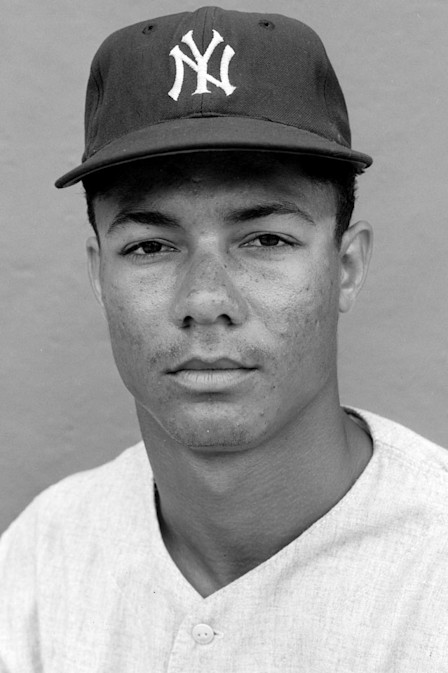
Career Stats
Regular Season
| Year | G | AB | R | H | 2B | 3B | HR | RBI | BB | SO | SB | AVG | OBP | SLG | OPS |
|---|---|---|---|---|---|---|---|---|---|---|---|---|---|---|---|
| 1975 | 149 | 560 | 83 | 162 | 32 | 5 | 12 | 59 | 74 | 50 | 16 | .289 | .373 | .429 | .802 |
| 1976 | 157 | 634 | 105 | 181 | 30 | 3 | 14 | 66 | 83 | 53 | 31 | .285 | .364 | .409 | .773 |
| 1977 | 143 | 519 | 72 | 139 | 25 | 2 | 14 | 52 | 75 | 58 | 18 | .268 | .358 | .405 | .763 |
| 1978 | 102 | 343 | 43 | 92 | 13 | 3 | 8 | 43 | 41 | 34 | 10 | .268 | .347 | .394 | .741 |
| 1979 | 81 | 205 | 24 | 44 | 6 | 0 | 3 | 27 | 23 | 21 | 2 | .215 | .290 | .288 | .578 |
| Career | 1885 | 6670 | 968 | 1807 | 301 | 51 | 160 | 760 | 934 | 710 | 233 | .271 | .360 | .403 | .764 |
Career-best seasons highlighted in gold. Stats via Retrosheet.
Postseason
| Year | G | AB | R | H | 2B | 3B | HR | RBI | BB | SO | SB | AVG | OBP | SLG | OPS |
|---|---|---|---|---|---|---|---|---|---|---|---|---|---|---|---|
| 1976 | 9 | 32 | -- | 7 | -- | -- | 0 | 3 | -- | -- | -- | .219 | -- | -- | -- |
| 1977 | 6 | 7 | -- | 2 | -- | -- | 0 | 0 | -- | -- | -- | .286 | -- | -- | -- |
| 1978 | 10 | 40 | -- | 13 | -- | -- | 2 | 5 | -- | -- | -- | .325 | -- | -- | -- |
| Career | 25 | 79 | 0 | 22 | 0 | 0 | 2 | 8 | 0 | 0 | 0 | .278 | .278 | .354 | .633 |
Roy White was an outfielder who played for the New York Yankees from 1965 to 1979. Career stats: .271 batting average, 160 home runs, 760 RBI.
September 7, 1965. First game of a doubleheader at Yankee Stadium, seventh inning, and a 21-year-old outfielder named Roy White stepped in to pinch-hit for Al Downing. He singled off Baltimore's Don Larsen and came around to score. In the nightcap he started at second base and went 2-for-4. Somewhere between the two games, Mickey Mantle -- thirty-three years old, his own knees held together mostly by tape and habit -- found the kid in the clubhouse and told him, "Hey kid, there's nothing to this game, is there?"
White would spend the next fifteen seasons finding out exactly how much there was to it. All fifteen in pinstripes. No other team ever wore his name.
The Bridge Generation
He arrived at the tail end of one Yankees era and grew into the face of the next. Mantle, Whitey Ford, Roger Maris, and Elston Howard were winding down when he broke in, and the pennants that had defined the franchise since 1949 stopped coming the same year he debuted. What followed is remembered around the Bronx as the Horace Clarke era -- a stretch from the mid-1960s through the mid-1970s with no October baseball at all, named for the steady second baseman who, like White, just kept showing up and playing well on teams that weren't going anywhere.
A move from the infield to left field in 1968 made the position his for good. He led American League left fielders in fielding percentage four straight years, 1968 through 1971, and at the plate he turned into one of the more complete hitters in the league that nobody outside New York seemed to notice. In 1969 he was hitting .320 by the middle of July and made his first All-Star team; he finished the year at .290 with 81 walks and a .392 on-base percentage. In 1970 he had the best season of his career -- .296, 22 home runs, 94 RBI, 109 runs scored, 180 hits -- and made a second straight All-Star team. After that season, Mantle wrote a piece for Sport magazine naming the American League's most underrated players. About his former clubhouse rookie, he wrote: "Roy White is as good a player as any of the old players we used to have."
| Yankees Seasons | 15 (1965-1979) |
| Career BA / OBP / SLG | .271 / .360 / .404 |
| Career Hits | 1,803 |
| Career HR / RBI | 160 / 758 |
| Stolen Bases | 233 |
| All-Star Selections | 2 (1969, 1970) |
| World Series Titles | 2 (1977, 1978) |
The Kind of Player Nobody Notices Until He's Gone
Roy White didn't carry himself like a star, even once he became one. Teammates and writers who covered those Yankees teams describe him the same way, over and over: quiet, disciplined, unfailingly professional. He bunted when a bunt was needed. He worked counts. He hit sacrifice flies -- 17 of them in 1971 alone, an American League record that still stands (Gil Hodges holds the actual major-league mark, 19, set with Brooklyn in 1954). He led the league in walks in 1972, with 99. In 1976, at thirty-two, he led the American League in runs scored with 104 and stole a career-high 31 bases as the Yankees finally broke through and won the pennant.
Reggie Jackson arrived in 1977 with all the noise a Yankees clubhouse could hold, and even he understood what White brought that couldn't be measured by volume. "Sometimes management can't accept his kind of player because they're looking for loud players, guys who do things in a big way," Jackson said. "If you really don't watch him, and you really don't figure out what he does, he can easily be overlooked. But his biggest asset to the club is that here's a guy who's going to do his job and not make mental mistakes -- a guy who will bunt, hit a grounder to the other side to advance a runner, hit a sacrifice fly, get you a quiet single and get on base." It was, from the most famous braggart of the era, as sincere a compliment as White ever received.
Two Rings Against His Hometown Team
The Yankees' pennant drought ended in 1976, and White -- one of the longest-tenured players left in the clubhouse, still playing left field every day -- was there for all three American League pennants that followed through 1978, and both championships. Both times the Yankees beat the Los Angeles Dodgers, the team from White's own hometown of Compton, California.
Game 4 of the 1978 American League Championship Series, October 7, at Yankee Stadium, put White in the middle of the biggest moment of his career. George Brett led off the game with a triple and scored on Hal McRae's single. Graig Nettles answered with a leadoff homer in the bottom of the second to tie it. The score held at 1-1 into the sixth, when White came up against Kansas City starter Dennis Leonard and homered to put the Yankees ahead, 2-1. Ron Guidry worked into the ninth before handing it to Goose Gossage, who closed out the series clincher. White's home run was the run that won the pennant.
He hit .333 with a homer and four RBI in that year's World Series against the Dodgers, a six-game Yankees win. Across three postseason runs, he batted .278 over 25 games with 22 hits and 8 RBI -- a body of October work built the same way his regular seasons were: quietly, and almost entirely for the good of the lineup around him.
The Bronx to Tokyo
The Yankees released White after the 1979 season. He was thirty-five, no longer an everyday player, and the organization had decided to move on. Rather than hang around as a bench piece somewhere else in the majors, White signed with the Yomiuri Giants of Japan's Central League that February -- the most successful franchise in Japanese baseball, sometimes called the Yankees of Japan for good reason. He arrived in Tokyo the same spring Sadaharu Oh, already sitting on 839 home runs, was playing the final season of his own career. In his first NPB game, April 5, 1980, White hit two home runs against the Yokohama Taiyo Whales.
He spent three seasons with the Giants, hitting .283 with 54 home runs in 362 games, and in his second year, 1981, the club won the Central League pennant and beat the Nippon-Ham Fighters for the Japan Series title -- Yomiuri's first championship in eight years. White retired after the 1982 season, thirty-eight years old, having played competitive baseball on two continents for the only two organizations that ever wanted him in uniform.
MLB Debut
White pinch-hits for Al Downing, singles off Don Larsen, and scores in the first game of a doubleheader against Baltimore. He starts the nightcap at second base.
Moves to Left Field Permanently
White shifts from the infield to left field, where he'll start every day for the next eleven seasons and lead AL left fielders in fielding percentage four years running.
Career-Best Year
White hits .296 with 22 home runs, 94 RBI, and 109 runs scored, earning his second straight All-Star selection. Mickey Mantle later names him one of the AL's most underrated players.
AL Record for Sacrifice Flies
White sets the American League single-season record with 17 sacrifice flies, a mark that still stands.
Pennant-Winning Home Run
White's sixth-inning homer off Dennis Leonard in Game 4 of the ALCS gives the Yankees a 2-1 lead they hold to clinch the pennant over Kansas City.
Signs with the Yomiuri Giants
Released by the Yankees after the 1979 season, White signs with Japan's most successful franchise and spends three seasons in Tokyo, winning the 1981 Japan Series.
Frequently Asked Questions
How many seasons did Roy White play for the Yankees?
Fifteen, from 1965 through 1979 -- his entire major-league career. He debuted at 21 and left as one of the senior players on a team that had won back-to-back World Series in his final two seasons. He never played for any other MLB team.
What was Roy White's best season?
- He hit .296 with career highs of 22 home runs, 94 RBI, 109 runs scored, and 180 hits, earning his second consecutive All-Star selection. Mickey Mantle singled him out afterward in Sport magazine as one of the American League's most underrated players.
Did Roy White win a World Series with the Yankees?
Yes, two -- 1977 and 1978, both against the Los Angeles Dodgers, the team from his own hometown of Compton, California. He hit .333 with a home run and four RBI in the 1978 World Series, and his sixth-inning homer in Game 4 of that year's ALCS was the decisive run in the pennant clincher against Kansas City.
What did Roy White do after his Yankees career ended?
He signed with the Yomiuri Giants of Japan's Central League in February 1980 and played three seasons there, batting .283 with 54 home runs. In 1981, his second year, the Giants won the Japan Series. He retired from professional baseball after the 1982 season and later returned to the Yankees organization as a coach.
He never became a Mantle, and nobody ever seriously expected him to. What Roy White became instead was the guy who was still there every single year the great names weren't -- fifteen seasons in the only uniform he ever wore, two rings earned the hard way, and a reputation, hard won from a clubhouse full of louder men, as someone who simply didn't beat himself.