Career Stats
Regular Season
| Year | G | GS | W | L | SV | IP | H | ER | K | BB | ERA | WHIP |
|---|---|---|---|---|---|---|---|---|---|---|---|---|
| 1963 | 40 | 37 | 24 | 7 | 1 | 279.1 | 255 | 93 | 194 | 59 | 3.00 | 1.12 |
| 1964 | 39 | 36 | 17 | 6 | 1 | 244.2 | 212 | 58 | 172 | 57 | 2.13 | 1.10 |
| 1965 | 38 | 36 | 16 | 13 | 1 | 247.1 | 247 | 94 | 163 | 53 | 3.42 | 1.21 |
| 1966 | 22 | 9 | 2 | 5 | 0 | 73.0 | 79 | 20 | 43 | 24 | 2.47 | 1.41 |
| 1967 | 7 | 7 | 2 | 4 | 0 | 44.0 | 40 | 8 | 21 | 9 | 1.64 | 1.11 |
| Career | 519 | 438 | 236 | 106 | 11 | 3285.0 | 2899 | 1034 | 2026 | 1145 | 2.83 | 1.23 |
Career-best seasons highlighted in gold. Stats via Retrosheet.
Postseason
| Year | G | GS | W | L | SV | IP | H | ER | K | BB | ERA | WHIP |
|---|---|---|---|---|---|---|---|---|---|---|---|---|
| 1950 | 1 | -- | 1 | 0 | 0 | 8.2 | -- | -- | -- | -- | 0.00 | -- |
| 1953 | 2 | -- | 0 | 1 | 0 | 8.0 | -- | -- | -- | -- | 4.50 | -- |
| 1955 | 2 | -- | 2 | 0 | 0 | 17.0 | -- | -- | -- | -- | 2.12 | -- |
| 1956 | 2 | -- | 1 | 1 | 0 | 12.0 | -- | -- | -- | -- | 5.25 | -- |
| 1957 | 2 | -- | 1 | 1 | 0 | 16.0 | -- | -- | -- | -- | 1.13 | -- |
| 1958 | 3 | -- | 0 | 1 | 0 | 15.1 | -- | -- | -- | -- | 4.11 | -- |
| 1960 | 2 | -- | 2 | 0 | 0 | 18.0 | -- | -- | -- | -- | 0.00 | -- |
| 1961 | 2 | -- | 2 | 0 | 0 | 14.0 | -- | -- | -- | -- | 0.00 | -- |
| 1962 | 3 | -- | 1 | 1 | 0 | 19.2 | -- | -- | -- | -- | 4.12 | -- |
| 1963 | 2 | -- | 0 | 2 | 0 | 12.0 | -- | -- | -- | -- | 4.50 | -- |
| 1964 | 1 | -- | 0 | 1 | 0 | 5.1 | -- | -- | -- | -- | 8.44 | -- |
| Career | 22 | 0 | 10 | 8 | 0 | 146.0 | 0 | 0 | 0 | 0 | 0.00 | 0.00 |
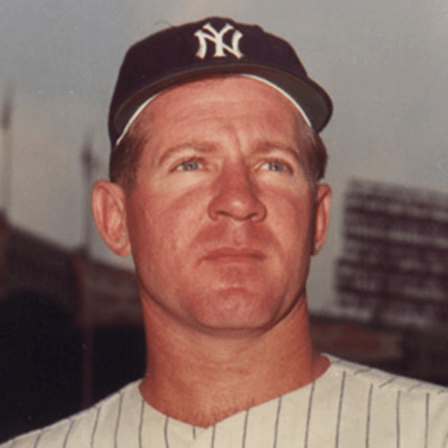
Whitey Ford was a pitcher who played for the New York Yankees in 1950, 1953-1967. Career stats: 236-106 record, 2.83 ERA, 2026 strikeouts.
Whitey Ford was the New York Yankees' ace left-hander from 1950 to 1967, a 10-time All-Star and the franchise's all-time wins leader with a 236-106 record -- a .690 winning percentage that still tops the all-time list for any pitcher with 200 or more victories. That number doesn't belong to Sandy Koufax, Pedro Martinez, or Christy Mathewson. It belongs to a 5'10" kid from Astoria, Queens, who never threw harder than 90 mph and spent half his career being held back by his own manager. He did it by making hitters look like they'd swung at a pitch that wasn't there.
The Yankees signed Ford in 1946 for $7,000, scouted by Paul Krichell -- the same man who'd signed Lou Gehrig two decades earlier. Krichell had a type, apparently. Ford was a born-and-raised New Yorker, one of the few Yankees greats who could actually claim the city as his own. Mantle came from Commerce, Oklahoma. DiMaggio from San Francisco. Berra from the Hill in St. Louis. Ford took the subway to Yankee Stadium.
The Chairman Arrives
Ford's debut on July 1, 1950, was almost absurdly smooth -- he went 9-1 with a 2.81 ERA as a 21-year-old rookie and helped the Yankees win the World Series. Then the Korean War took him away. He missed 1951 and 1952 entirely, serving in the Army while the club won two more rings without him. He came back in 1953 and went 18-6, picking up right where he'd left off as though war had been a minor scheduling inconvenience.
| Career W-L | 236-106 (.690) |
| Career ERA | 2.75 |
| Complete Games | 156 |
| Strikeouts | 1,956 |
| World Series Titles | 6 (1950, 1953, 1956, 1958, 1961, 1962) |
| Cy Young Award | 1961 |
| All-Star Selections | 10 |
| Career WAR | 57.1 |
Ford didn't overpower hitters -- he disarmed them. He threw a changeup that arrived about half a second after batters expected it, mixed in a sharp curve, and located his fastball with the precision of someone parallel parking. "I don't want to throw strikeouts," Ford once said. "I want them to hit it where I want them to hit it." That's either genius or a control freak talking. Probably both.
The Stengel Problem
Here's where the story gets complicated -- and a little infuriating. Casey Stengel managed the Yankees from 1949 to 1960, and he had the best pitcher in the American League sitting right there in his rotation. But Stengel held Ford to roughly 30 starts a season, saving him for weaker opponents instead of turning him loose every fourth day. In 1958, Ford posted a 2.01 ERA but threw only 219.2 innings because Stengel kept pulling him back.
The result? Ford's career numbers look like a Hall of Famer's. They should look like a god's.
If you had one game to win and your life depended on it, you'd want him to pitch it.
The 1960 World Series crystallized the problem. Stengel started Art Ditmar in Game 1 against the Pirates -- and Ditmar got knocked out in the first inning. Ford didn't pitch until Game 3, where he threw a complete-game shutout. He threw another shutout in Game 6. But the rotation math didn't allow him to start Game 7, and Bill Mazeroski's walk-off home run ended the series. Stengel was fired days later. The Ford usage was a factor -- everyone in the organization knew it.
1961: What He Could've Been All Along
Ralph Houk replaced Stengel and did something radical: he pitched Ford every fourth day like any normal ace. The results were staggering. Ford went 25-4 with a 3.21 ERA across 283 innings -- the Cy Young Award was almost an afterthought. In that fall's World Series, he extended his consecutive scoreless innings streak to 32 on October 8, 1961 -- surpassing Babe Ruth's mark of 29 2/3 and earning Series MVP honors. He'd push the streak to 33 2/3 innings the following October, in Game 1 of the 1962 World Series, before the Giants finally broke through.
When he had to win a big game, there was nobody better -- nobody.
The 1961 season is the reason Ford's career totals carry an asterisk in reverse. Not a steroid asterisk -- a suppression asterisk. If Stengel had simply given Ford a full workload from 1953 onward, the man might've won 280 or 300 games. That's the kind of what-if that makes you stare at the ceiling at 2 a.m.
Ford followed it with a 24-7 season in 1963, though the World Series that year belonged to someone else -- Sandy Koufax beat him 5-2 in Game 1, and the Dodgers swept. Sometimes you run into a buzzsaw and there's nothing to do but tip your cap.
The Confession
In his 1987 autobiography "Slick," Ford admitted to scuffing baseballs with a ring and using mud-ball techniques late in his career. He was refreshingly honest about the timeline: "I didn't cheat when I won 25 games in 1961. I only did it later when I needed to." It's the kind of admission that somehow makes you like the guy more -- he cheated out of desperation, not ambition, and he owned it in print.
Key Moments
Major League Debut
A 21-year-old Ford enters the rotation and goes 9-1 with a 2.81 ERA. The Yankees win the World Series.
Military Service
Ford misses two full seasons serving in the Army during the Korean War. The Yankees win both years anyway.
Two Shutouts, One Heartbreak
Ford throws complete-game shutouts in Games 3 and 6 of the World Series vs. Pittsburgh, but Stengel's rotation leaves him unavailable for Game 7. Mazeroski walks it off.
Breaking Ruth's Record
Ford extends his World Series scoreless innings streak to 32, surpassing Babe Ruth's 29 2/3-inning mark. He'd reach 33 2/3 in the 1962 WS. Wins Cy Young and WS MVP.
Retirement
Ford retires at 38 due to arm circulation issues caused by Raynaud's phenomenon. He finishes 236-106.
Hall of Fame Induction
Ford and Mantle enter Cooperstown together -- Mantle on the first ballot, Ford on his second. Ford's No. 16 is retired on August 3, 1974 -- Mantle's No. 7 had already been retired on June 8, 1969.
Walking Away
Raynaud's phenomenon -- a circulation disorder that restricted blood flow to his pitching hand -- forced Ford out on May 30, 1967. He was 38, and his arm simply couldn't do what his brain still knew how to do. He finished with 236 wins, 156 complete games, and six World Series rings.
On August 12, 1974, Ford and Mantle stood together at Cooperstown -- Mantle on the first ballot, Ford on his second. The Yankees had already retired Mantle's No. 7 on June 8, 1969, and they retired Ford's No. 16 on August 3, 1974. They'd been teammates, drinking buddies, and co-conspirators for the better part of 15 years. It was fitting they went into the Hall side by side.
Ford died on October 8, 2020 -- fifty-nine years to the day after he broke Babe Ruth's World Series record. He was 91. The kid from Queens who took the subway to the Stadium, who won at a higher rate than anyone who's ever done it, who probably should've won 80 more games if his manager had just let him pitch. The Chairman of the Board.
Frequently Asked Questions
What was Whitey Ford's career record?
Ford went 236-106 (.690) over 16 seasons with the Yankees (1950, 1953-1967), missing 1951-1952 due to Korean War military service. His .690 winning percentage is the highest among all pitchers with 200 or more career victories -- a record that still stands.
Why was Whitey Ford called 'The Chairman of the Board'?
Ford earned the nickname for his commanding presence on the mound and his ability to control games with precision rather than power. He also went by "Slick," which became the title of his 1987 autobiography where he admitted to doctoring baseballs late in his career.
How many World Series did Whitey Ford win?
Ford won six World Series championships with the Yankees -- in 1950, 1953, 1956, 1958, 1961, and 1962. He holds the World Series record for consecutive scoreless innings at 33 2/3, a streak that spanned the 1960, 1961, and 1962 World Series and broke Babe Ruth's previous mark of 29 2/3. He was named World Series MVP in 1961.
Did Casey Stengel limit Whitey Ford's career?
This is one of the great what-ifs in Yankees history. Stengel held Ford to roughly 30 starts per season and saved him for weaker opponents instead of pitching him every fourth day. When Ralph Houk took over in 1961 and gave Ford a full workload, he went 25-4 and won the Cy Young Award. Many historians believe Ford could have won 280-300 career games with consistent usage throughout his prime.