
Career Stats
Regular Season
| Year | G | AB | R | H | 2B | 3B | HR | RBI | BB | SO | SB | AVG | OBP | SLG | OPS |
|---|---|---|---|---|---|---|---|---|---|---|---|---|---|---|---|
| 1963 | 135 | 487 | 75 | 140 | 21 | 6 | 28 | 85 | 35 | 68 | 0 | .287 | .342 | .528 | .870 |
| 1964 | 157 | 576 | 68 | 179 | 27 | 3 | 16 | 91 | 51 | 76 | 1 | .311 | .369 | .451 | .820 |
| 1965 | 111 | 396 | 38 | 92 | 15 | 1 | 9 | 46 | 24 | 65 | 0 | .232 | .277 | .343 | .620 |
| 1966 | 126 | 410 | 38 | 105 | 19 | 2 | 6 | 35 | 37 | 64 | 0 | .256 | .317 | .356 | .673 |
| 1967 | 67 | 200 | 13 | 39 | 6 | 0 | 3 | 17 | 12 | 37 | 0 | .195 | .245 | .270 | .515 |
| Career | 1517 | 5139 | 600 | 1427 | 211 | 54 | 165 | 748 | 348 | 731 | 9 | .278 | .323 | .436 | .760 |
Career-best seasons highlighted in gold. Stats via Retrosheet.
Postseason
| Year | G | AB | R | H | 2B | 3B | HR | RBI | BB | SO | SB | AVG | OBP | SLG | OPS |
|---|---|---|---|---|---|---|---|---|---|---|---|---|---|---|---|
| 1955 | 7 | 26 | -- | 5 | -- | -- | 1 | 3 | -- | -- | -- | .192 | -- | -- | -- |
| 1956 | 1 | 5 | -- | 2 | -- | -- | 1 | 1 | -- | -- | -- | .400 | -- | -- | -- |
| 1957 | 6 | 11 | -- | 3 | -- | -- | 1 | 3 | -- | -- | -- | .273 | -- | -- | -- |
| 1958 | 6 | 18 | -- | 4 | -- | -- | 0 | 2 | -- | -- | -- | .222 | -- | -- | -- |
| 1960 | 5 | 13 | -- | 6 | -- | -- | 1 | 4 | -- | -- | -- | .462 | -- | -- | -- |
| 1961 | 5 | 20 | -- | 5 | -- | -- | 1 | 1 | -- | -- | -- | .250 | -- | -- | -- |
| 1962 | 6 | 21 | -- | 3 | -- | -- | 0 | 1 | -- | -- | -- | .143 | -- | -- | -- |
| 1963 | 4 | 15 | -- | 5 | -- | -- | 0 | 1 | -- | -- | -- | .333 | -- | -- | -- |
| 1964 | 7 | 24 | -- | 7 | -- | -- | 0 | 2 | -- | -- | -- | .292 | -- | -- | -- |
| Career | 47 | 153 | 0 | 40 | 0 | 0 | 5 | 18 | 0 | 0 | 0 | .261 | .261 | .359 | .621 |
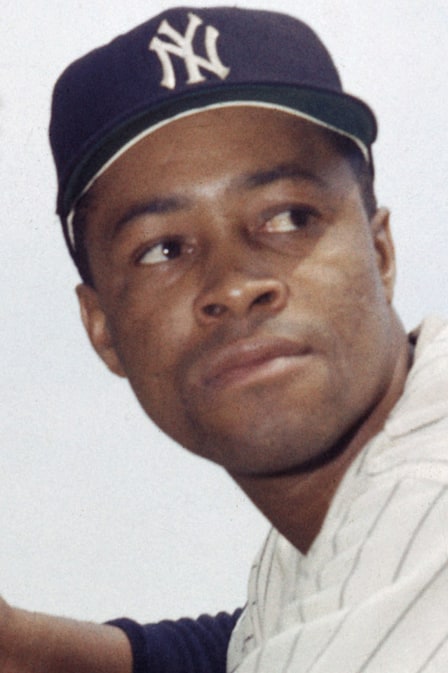
Elston Howard was a catcher who played for the New York Yankees from 1955 to 1967. Career stats: .278 batting average, 165 home runs, 748 RBI.
Jackie Robinson broke baseball's color barrier in 1947. The New York Yankees -- the most famous franchise in American professional sports, winners of sixteen World Series titles by then -- didn't get around to integrating until 1955. Eight years. The Yankees waited eight years.
His name was Elston Gene Howard, born in St. Louis on February 23, 1929. He was a catcher and outfielder who would become the best backstop in the American League, a 12-time All-Star, and the first Black player in AL history to win the MVP award. He'd be gone at 51, his body worn down well before its time. He never made the Hall of Fame.
He deserved all of it -- the MVP, the fame, the plaque in Cooperstown -- and got only two of the three.
Before the Bronx
Howard was nineteen when the Big Ten came calling. Illinois wanted him for football. Michigan wanted him. Michigan State wanted him. He turned them all down and went to the Kansas City Monarchs instead, playing alongside future Hall of Famers under Buck O'Neil's guidance in the Negro American League. He roomed with a skinny shortstop from Dallas named Ernie Banks. He hit .319 in his third season. He didn't need the majors to know he could play.
The Yankees signed him in 1950. Then he served two years in the Army. Then he was in the minors -- good enough to be there, too good to stay, but held back by a front office that had decided its upscale white fan base didn't want to see a Black man in pinstripes.
General Manager George Weiss reportedly saw no need to integrate the club. The Yankees' solution was to keep Howard in the farm system and wait.
At the Kansas City Blues in 1953, Howard played alongside Vic Power -- a Black Puerto Rican outfielder who'd hit .349 that year and was clearly ready for the majors. Power was too "controversial" for the Yankees' comfort; they shipped him to the Philadelphia A's. Howard, who carried himself with the kind of quiet dignity the organization found less threatening, fit what they wanted. He was still twenty-six years old when he finally made the roster in April 1955 (six years after he'd first been signed, and four years past when he should've arrived).
The Debut
April 14, 1955. Fenway Park, second game of the season. Howard entered in the sixth inning as a left fielder and went 1-for-1 with a single. Eight years after Robinson. The Yankees were the last major-market club in baseball to integrate, and the man who finally made it happen did so quietly and cleanly, the way he did everything.
He hit .290 with 10 home runs in 97 games that rookie year. In the World Series, he took Don Newcombe deep in his first Fall Classic at-bat -- a detail that would've made a better story if the Yankees hadn't lost that Series to the Dodgers.
The early years weren't easy. Casey Stengel called him "Eightball" -- a racist nickname from the man who managed him. During spring training in St. Petersburg, white players stayed at the Vinoy and Soreno hotels downtown. Howard had to stay in the home of Dr. Ralph Wimbish, the local NAACP president, because the hotels wouldn't take him. Other players could call ahead to reserve rooms. Howard couldn't plan his housing until he arrived each spring. He said so plainly: "I can't make plans until I get down there and see what kind of house I can rent. The other players can rent from an agent in advance, but I can't."
He said it without bitterness. That was Howard.
Behind Yogi
The other problem was that the Yankees already had Yogi Berra -- three-time AL MVP, ten-time World Series champion, the best catcher in the league. Howard spent his first several seasons as a utility player, catching when Berra rested, playing outfield when Berra didn't. He won four World Series rings while backing up a Hall of Famer. It wasn't glamorous, but he handled it with the same quiet competence he applied to everything.
| Career Batting Average | .274 |
| Home Runs | 167 |
| RBI | 762 |
| Career OPS | .748 |
| Career WAR | 27.6 (rWAR) |
| AL MVP | 1963 (first Black AL MVP) |
| Gold Gloves | 2 (1963, 1964) |
| All-Star Selections | 12 |
| World Series Rings | 4 (1956, 1958, 1961, 1962) |
The Breakout
When Berra stepped back in 1961, Howard stepped up. He hit .348 -- a career best -- with 21 home runs and 77 RBI in the 1961 championship season. The next year he had a career-best 91 RBI. The year after that, 1963, he was the best catcher in baseball and everybody knew it.
In the 1963 season, Howard hit .287 with 28 home runs and 85 RBI, finished third in the AL in slugging, and won both the Gold Glove and the MVP award -- the first Black player in American League history to claim the honor. Then 1964 was just as good defensively: he set AL records for putouts and total chances at catcher, led the league with a .998 fielding average, and won his second Gold Glove. The man played catcher so well they had to rewrite the record book to accommodate him.
The batting donut came separately. After his trade to Boston in 1967, Howard filed a patent for the weighted ring that every hitter in baseball at every level now slides onto their bat in the on-deck circle. November 27, 1967. Patent No. 3,521,883. Most people who've used one have never known the name behind it.
The End of the Dynasty
The 1964 Yankees made the World Series and lost to the Cardinals in seven games. Then the dynasty collapsed. By 1967, the club was a shell, and on August 3 of that year the Yankees dealt Howard to the Boston Red Sox -- their hated rivals, in the middle of a pennant race -- for cash and two minor league pitchers nobody remembers.
Howard hit .147 in 42 games for the Sox. He didn't need to hit. On August 27, with Chicago threatening in the ninth inning of a 4-3 game, Howard leaped for a high throw at home plate and swipe-tagged Ken Berry -- ending the game, preserving the lead, turning the pennant race's momentum. The Red Sox won the AL pennant. Howard's game-calling and presence behind the plate got the credit his bat couldn't earn that summer.
The Later Years
He returned to the Yankees as a coach in 1969 and stayed for a decade, working under Billy Martin, Bob Lemon, and the rotating cast of managers Steinbrenner cycled through (there were a lot of them). He taught young catchers the craft he'd spent a career perfecting. He pioneered a hinged catcher's mitt that changed how the position was played. He was good at passing things along.
On December 14, 1980, Howard died of myocarditis -- an inflammation of the heart muscle -- at Columbia Presbyterian Hospital. He was fifty-one years old. His widow, Arlene, later wrote that she believed the racial stress of his career had worn him down years before the disease arrived.
The Yankees retired his number 32 and dedicated a Monument Park plaque on July 21, 1984. He's never been elected to the Hall of Fame. The Veterans Committee has looked at him more than once and moved on.
Kansas City Monarchs
Howard turns down Big Ten football scholarships and joins the Kansas City Monarchs, rooming with Ernie Banks. Buck O'Neil manages the club. Howard hits .283 in his first season.
Signed by Yankees
The Yankees sign Howard but keep him in the farm system. Two years of Army service follow (1951-1952).
MLB Debut -- The Yankees Finally Integrate
Howard enters the game in the 6th inning at Fenway Park as a left fielder, goes 1-for-1. Eight years after Jackie Robinson. The Yankees were one of the last major-market franchises to integrate.
First World Series Ring
Howard wins his first championship ring as the Yankees beat the Brooklyn Dodgers in 7 games. He'd win four rings total -- 1956, 1958, 1961, 1962.
AL MVP -- First Black AL MVP
Howard is named American League Most Valuable Player, batting .287 with 28 home runs and 85 RBI. The first Black player in AL history to win the award. He also takes the Gold Glove.
Traded to the Red Sox
The declining Yankees deal Howard to their arch-rivals for cash and two minor league pitchers. He hits .147 but his veteran presence and a crucial defensive play on August 27 help Boston win the AL pennant.
Patents the Batting Donut
Howard files for a patent on the weighted bat training ring -- the batting donut used by hitters at every level of baseball. Patent No. 3,521,883 is issued in July 1970.
Death at 51
Howard dies of myocarditis at Columbia Presbyterian Hospital. He was fifty-one years old. The Yankees retire his number 32 and add a Monument Park plaque in 1984.
Frequently Asked Questions
Who was the first Black player on the New York Yankees?
Elston Howard became the first Black player in Yankees history on April 14, 1955, when he entered a game at Fenway Park against the Boston Red Sox. This was eight years after Jackie Robinson integrated Major League Baseball with the Brooklyn Dodgers in 1947. Howard hit .290 with 10 home runs in his rookie season and went on to become the Yankees' starting catcher and a 12-time All-Star.
Who invented the batting donut?
Elston Howard invented the batting donut -- the weighted ring that hitters slide onto their bat barrel while waiting in the on-deck circle. He filed the patent on November 27, 1967, and U.S. Patent No. 3,521,883 was issued on July 28, 1970. The device became standard equipment throughout baseball at every level.
How many World Series did Elston Howard win?
Howard won four World Series championships with the New York Yankees -- in 1956, 1958, 1961, and 1962. He appeared in ten World Series as a player, nine with the Yankees and one with the Boston Red Sox in 1967. He was on the losing side six times, including the 1955 loss to the Brooklyn Dodgers in his rookie year.
Is Elston Howard in the Hall of Fame?
No. Despite being the 1963 AL MVP (the first Black player to win the award in the American League), a two-time Gold Glover, 12-time All-Star, and a key figure on four championship teams, Howard hasn't been elected to the Baseball Hall of Fame. Many analysts consider him one of the most overlooked Hall of Fame candidates in history, noting that his career was shortened by years lost to racial discrimination in the Yankees' minor league system.
The batting donut is in every on-deck circle in baseball. Every hitter who's ever swung a weighted bat before stepping in is using something Elston Howard invented. He never made the Hall of Fame, and the plaque they put up for him in Monument Park came four years after he died. But that weight on the bat -- that one's everywhere.