
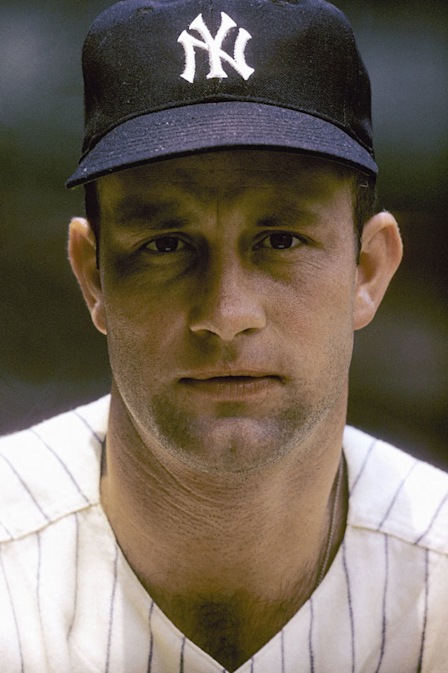
Career Stats
Regular Season
| Year | G | GS | W | L | SV | IP | H | ER | K | BB | ERA | WHIP |
|---|---|---|---|---|---|---|---|---|---|---|---|---|
| 1954 | 37 | 20 | 20 | 6 | 1 | 199.0 | 175 | 72 | 108 | 85 | 3.26 | 1.31 |
| 1955 | 26 | 11 | 7 | 5 | 4 | 92.1 | 81 | 43 | 63 | 42 | 4.19 | 1.33 |
| 1956 | 26 | 6 | 6 | 1 | 4 | 74.2 | 64 | 23 | 48 | 31 | 2.77 | 1.27 |
| 1957 | 46 | 0 | 12 | 8 | 19 | 72.0 | 60 | 21 | 52 | 36 | 2.63 | 1.33 |
| 1958 | 11 | 0 | 0 | 1 | 0 | 16.1 | 12 | 10 | 11 | 10 | 5.51 | 1.35 |
| Career | 146 | 37 | 45 | 21 | 28 | 454.1 | 392 | 169 | 282 | 204 | 3.35 | 1.31 |
Career-best seasons highlighted in gold. Stats via Retrosheet.
Postseason
| Year | G | GS | W | L | SV | IP | H | ER | K | BB | ERA | WHIP |
|---|---|---|---|---|---|---|---|---|---|---|---|---|
| 1955 | 3 | -- | 0 | 1 | 1 | 8.2 | -- | -- | -- | -- | 4.15 | -- |
| 1957 | 2 | -- | 0 | 1 | 0 | 2.1 | -- | -- | -- | -- | 7.71 | -- |
| Career | 5 | 0 | 0 | 2 | 1 | 11.0 | 0 | 0 | 0 | 0 | 0.00 | 0.00 |
Bob Grim was a pitcher who played for the New York Yankees from 1954 to 1958. Career stats: 45-21 record, 3.35 ERA, 282 strikeouts.
Nobody projected Bob Grim to make the Yankees' rotation in the spring of 1954. He'd bounced through the farm system for six years without forcing anybody's hand, and Casey Stengel had a staff that already ran deep with proven arms. Then the games started, and the 24-year-old right-hander from Yorkville just kept winning them. By October he'd gone 20-6, and the Yankees hadn't had a rookie do that since 1910. No Yankees rookie has done it since, either -- more than seventy years later, Grim is still the last one.
He got one great year. Baseball made him pay for it almost immediately.
The Kid Who Wasn't Supposed to Be There
Robert Anton Grim was born March 8, 1930, in the Yorkville section of Manhattan, and signed with the Yankees as an amateur free agent in 1948. He spent the next six seasons working his way through the organization without much fanfare -- a hard fastball, and command that came and went depending on the night. Nothing in his minor league track record screamed rotation-ready (bounced-around arms with shaky control rarely do). Casey Stengel already had a staff anchored by a rising Whitey Ford and Eddie Lopat. Grim wasn't ticketed for a prominent role.
He debuted on April 18, 1954, wearing No. 55, and Stengel used him everywhere -- 20 starts, 17 relief appearances, whatever the day called for. That flexibility turned out to be the whole story. Eight of Grim's 20 wins came out of the bullpen, a workload split that would be unthinkable for a modern rookie and was plenty unusual even in 1954.
Twenty Wins Nobody Saw Coming
Grim's rookie season ended at 20-6 with a 3.26 ERA across 37 games and 199 innings, striking out 108 and walking 85. He struck out fewer hitters than you'd expect from a 20-game winner and walked more than most (a modern front office would be reaching for the antacids over that walk rate) -- but he got outs when the Yankees needed them, and that mattered more than the shape of the line. He and Pedro Martinez, who went 20-4 for Boston in 2002, remain the only pitchers in major-league history to win 20 games in a season with fewer than 200 innings pitched.
| Yankees Years | 1954-1958 |
| Yankees Record | 45-21, 3.35 ERA |
| Yankees Innings | 454.1 IP, 282 K |
| Yankees Saves | 28 |
| 1954 Season | 20-6, 3.26 ERA (AL Rookie of the Year) |
| 1957 Season | 12-8, 2.63 ERA, 19 SV (AL All-Star) |
| Career Totals (1954-1962) | 61-41, 3.61 ERA, 443 K |
The 20-6 record made him the first Yankees rookie to win 20 games since Russ Ford did it in 1910, back when the club was still called the Highlanders. Forty-four years is a long time for a franchise this good to go without a repeat, and the writers noticed: Grim took the American League Rookie of the Year award with 15 of 24 votes that fall. It wasn't especially close. Yogi Berra won the MVP the same year, and the 1954 Yankees won 103 games total, more than any club Stengel ever managed in the Bronx. None of it was enough. The Cleveland Indians won 111 and the pennant went with them, which meant Grim's whole rookie season played out on a team that watched October from home.
The Arm Starts Talking Back
The bill came due fast. Grim developed elbow trouble in 1955, the first sign of an injury that never fully cleared up for the rest of his career. He still managed a respectable 7-5 record with a 4.19 ERA and pitched in that October's World Series against Brooklyn, a Series the Yankees lost in seven games. The Yankees had also brought in Don Larsen and Bob Turley in a massive trade with Baltimore that previous November, adding two more arms to a rotation that no longer needed Grim to be a 20-start regular. He worked a smaller, mostly relief role in 1956 and pitched well in it -- 6-1, a career-best 2.77 ERA -- but the sample size (74.2 innings) said as much about his declining role as his declining stuff did.
One Great Year Out of the Bullpen
By 1957, the elbow had settled the argument for good: Grim became a full-time reliever, and it turned out to suit him. He went 12-8 with a 2.63 ERA and finished with 19 saves, the most in the American League that year (saves weren't an official stat yet, but the number holds up under the retroactive count everyone uses now). He made the AL All-Star team and picked up a save in the American League's 6-5 win, closing it out by getting Gil Hodges to end the game. It was, in every meaningful way, his second-best season as a Yankee -- not as loud as 1954, but every bit as effective, and squeezed out of an arm that had already started breaking down.
He pitched in his second World Series that October, a seven-game loss to the Milwaukee Braves, and got roughed up in his two brief appearances. The Yankees didn't need him to be great in October that year. They needed him to keep being useful in the regular season, and for one more summer, he was.
Kansas City, and the Rest of It
The good year didn't last. Grim struggled out of the gate in 1958, going 0-1 with a 5.51 ERA in 11 appearances, and on June 15 the Yankees traded him and outfielder Harry "Suitcase" Simpson to the Kansas City Athletics for pitchers Duke Maas and Virgil Trucks. Maas turned into a legitimately useful fourth starter down the stretch of New York's 1958 pennant run (the least glamorous kind of trade return: a guy who just eats innings and doesn't complain). Grim, a sore-armed reliever by that point, was the price of getting him.
He bounced through Kansas City, Cleveland, Cincinnati, and St. Louis over the next few years -- four organizations in 1960 alone -- and spent all of 1961 pitching at Triple-A before one last big-league stint in 1962 closed out his career. The final ledger across eight major-league seasons: 61-41, a 3.61 ERA, and 443 strikeouts. None of it matched 1954, and nothing after 1957 matched that year either -- but a pitcher who wasn't supposed to make the rotation in the first place had already given the Yankees a rookie season that stood alone in franchise history for over four decades, and a second act out of the bullpen that most relievers would sign for without complaint.
Bob Grim died October 23, 1996, in Shawnee, Kansas, at age 66. He's buried at Maple Hill Cemetery in Kansas City.
Born in Yorkville, Manhattan
Robert Anton Grim is born in the Yorkville section of Manhattan. He signs with the Yankees as an amateur free agent in 1948.
Major League Debut
Grim debuts for the Yankees and spends his rookie season splitting time between the rotation and the bullpen under Casey Stengel.
20-6, AL Rookie of the Year
Grim goes 20-6 with a 3.26 ERA across 37 appearances, becoming the first Yankees rookie to win 20 games since Russ Ford in 1910. He wins AL Rookie of the Year with 15 of 24 votes.
Elbow Trouble Begins
Grim develops elbow problems that linger for the rest of his career. He still goes 7-5 and pitches in the 1955 World Series against Brooklyn.
AL All-Star, League-Leading Saves
Fully converted to relief, Grim goes 12-8 with a 2.63 ERA and a league-leading 19 saves. He's named to the AL All-Star team and pitches in his second World Series, a seven-game loss to Milwaukee.
Traded to Kansas City
The Yankees trade Grim and Harry Simpson to the Kansas City Athletics for Duke Maas and Virgil Trucks. Grim pitches four more major-league seasons before retiring in 1962.
Death
Bob Grim dies in Shawnee, Kansas, at age 66.
Frequently Asked Questions
What was Bob Grim's rookie season record with the Yankees?
Grim went 20-6 with a 3.26 ERA in 1954, working 199 innings across 37 games (20 starts, 17 relief appearances). He struck out 108 and walked 85, and he and Pedro Martinez (20-4 in 2002) remain the only pitchers ever to win 20 games in a season with fewer than 200 innings pitched.
Did Bob Grim win AL Rookie of the Year?
Yes. Grim won the 1954 American League Rookie of the Year award with 15 of 24 votes, on the strength of his 20-6 record and 3.26 ERA. He was the first Yankees rookie to win 20 games since Russ Ford in 1910.
Why did Bob Grim stop starting games for the Yankees?
Elbow trouble that began in 1955 gradually pushed him out of the rotation. By 1957 he'd become a full-time reliever, and it worked -- he went 12-8 with a league-leading 19 saves and made the AL All-Star team that year, even though his arm never let him return to a starter's workload.
Why did the Yankees trade Bob Grim?
On June 15, 1958, with Grim struggling to a 0-1 record and 5.51 ERA, the Yankees sent him and outfielder Harry Simpson to the Kansas City Athletics for pitchers Duke Maas and Virgil Trucks. Maas became a useful starter down the stretch of New York's 1958 pennant race.
What was Bob Grim's career record?
Across eight major-league seasons between 1954 and 1962 (he spent all of 1961 at Triple-A) with the Yankees, Kansas City Athletics, and other clubs, Grim finished 61-41 with a 3.61 ERA and 443 strikeouts. His Yankees-only totals were 45-21 with a 3.35 ERA and 28 saves.
Twenty wins as a rookie, a record the Yankees hadn't seen in 44 years, and a second life as one of the American League's best relievers before his arm was done arguing. Bob Grim got two good seasons out of a career that arm troubles cut short everywhere else, and both of them mattered more than a guy who wasn't supposed to make the rotation had any right to expect.