Career Stats
Regular Season
| Year | G | AB | R | H | 2B | 3B | HR | RBI | BB | SO | SB | AVG | OBP | SLG | OPS |
|---|---|---|---|---|---|---|---|---|---|---|---|---|---|---|---|
| 1965 | 144 | 535 | 51 | 133 | 19 | 3 | 18 | 63 | 43 | 59 | 4 | .247 | .306 | .396 | .702 |
| 1966 | 152 | 585 | 85 | 149 | 21 | 4 | 31 | 83 | 29 | 58 | 4 | .255 | .290 | .463 | .753 |
| 1967 | 135 | 509 | 46 | 129 | 20 | 3 | 13 | 65 | 34 | 62 | 1 | .253 | .302 | .381 | .683 |
| 1968 | 108 | 380 | 41 | 93 | 9 | 3 | 15 | 56 | 37 | 45 | 8 | .245 | .311 | .403 | .714 |
| 1969 | 135 | 513 | 49 | 124 | 16 | 3 | 27 | 70 | 30 | 42 | 8 | .242 | .284 | .442 | .726 |
| Career | 1055 | 3857 | 436 | 972 | 116 | 24 | 166 | 543 | 223 | 414 | 31 | .252 | .293 | .424 | .717 |
Career-best seasons highlighted in gold. Stats via Retrosheet.
Postseason
| Year | G | AB | R | H | 2B | 3B | HR | RBI | BB | SO | SB | AVG | OBP | SLG | OPS |
|---|---|---|---|---|---|---|---|---|---|---|---|---|---|---|---|
| 1963 | 4 | 13 | -- | 2 | -- | -- | 0 | 0 | -- | -- | -- | .154 | -- | -- | -- |
| 1964 | 7 | 26 | -- | 4 | -- | -- | 1 | 5 | -- | -- | -- | .154 | -- | -- | -- |
| Career | 11 | 39 | 0 | 6 | 0 | 0 | 1 | 5 | 0 | 0 | 0 | .154 | .154 | .231 | .385 |
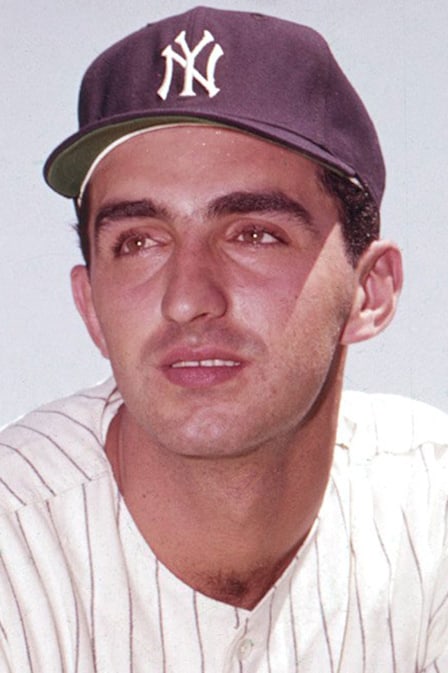
Joe Pepitone was a first baseman who played for the New York Yankees from 1962 to 1969. Career stats: .252 batting average, 166 home runs, 543 RBI.
Sometime between 1965 and 1966, while the New York Yankees finished sixth, then dead last for the first time since 1912, a hair dryer hummed in the Yankee Stadium clubhouse. It belonged to Joe Pepitone -- reportedly the first player in the major leagues to own one, let alone bring it to work.
The rest of the room was falling apart around him. Mickey Mantle's legs were going. Whitey Ford's arm was gone. CBS had just bought the ballclub and had no idea what it had bought. And in the middle of it, blow-drying two hairpieces he'd nicknamed "my gamer" and "my going-outer," stood a first baseman from Brooklyn who was, by a wide margin, the most talented and most watchable player left on the roster.
Brooklyn, a Bullet, and a Break
Joseph Anthony Pepitone was born October 9, 1940, in Brooklyn, and nearly didn't make it out of his teens. In the spring of 1958, an acquaintance approached him outside his high school and pulled a .38 revolver in a mock stickup. The gun went off. The bullet clipped a rib and exited near his lower back, missing three vital organs by inches. He spent nine hours in surgery. (He'd later describe the whole thing so matter-of-factly you'd think he was recapping a rain delay.)
He signed with the Yankees anyway, worked his way through the system, and debuted on April 10, 1962, as insurance behind Bill "Moose" Skowron at first base. That rookie year didn't go smoothly -- a run-in with manager Ralph Houk over curfew got him shipped to Triple-A Richmond for a stretch. He hit well enough to come back.
A Ring He Never Played For
The 1962 Yankees beat the Giants in seven games for the franchise's 20th championship. Pepitone got a ring. He didn't get an at-bat -- he wasn't on the postseason roster, having spent part of the season in the minors. It's a strange footnote for the player who'd go on to become the last visible piece of that dynasty still standing on the field years after everyone else had aged out or been fired.
Nobody knew it yet, but that would be the franchise's last championship until 1977 -- a fifteen-year wait.
Three Straight All-Star Summers
Pepitone became the everyday first baseman in 1963 and made it count: .271, 27 home runs, 89 RBI, his first All-Star nod. The Yankees won the pennant and got swept by the Dodgers in the World Series -- a gut punch nobody in the Bronx had felt in years. In 1964 he was even better on the counting stats, 28 homers and 100 RBI, his second straight All-Star season, and the Yankees went back to the Series and lost again, this time in seven to St. Louis.
Two pennants, zero rings, and a first baseman who was quietly becoming one of the better players in the American League. In 1965 he made his third consecutive All-Star team and won his first Gold Glove -- the first Yankees first baseman in franchise history to win one. The award should've been a coronation. Instead it arrived the same year the whole operation came apart.
The Ballclub Falls, the Player Doesn't
CBS closed its purchase of the Yankees in November 1964. The on-field collapse followed almost immediately. The 1965 team finished 77-85, sixth place -- the franchise's first finish outside the first division since 1925. New manager Johnny Keane and Pepitone clashed almost from the start; Pepitone got fined twice that year for showing up late. It didn't matter much on the field. He kept hitting.
Then came the 1966 season, and it got worse before it got better for anybody else. The Yankees went 70-89, dead last in the American League for the first time since William Howard Taft was in the White House. Pepitone had the best season of his career in the middle of it: .255, 31 home runs (a career high), 83 RBI, a .753 OPS, and 152 games played -- more than anybody else on the roster. He won his second straight Gold Glove. He led the club in homers, RBI, and games played on a team that finished dead last.
Best player on the worst Yankees team in more than half a century. That's not a compliment with much company attached to it.
The Hair Dryer and the Nightlife
Pepitone wasn't subtle about any of this. He kept two hairpieces on hand at all times -- one for games, trimmed to satisfy the club's grooming rules, and a longer one for going out afterward. He brought a hair dryer into the clubhouse before that was a thing anyone did (teammates reportedly assumed he moonlighted as a hairdresser). He ran up bar tabs and personal debt with the same enthusiasm he brought to batting practice, and in the 1964 World Series he once "limped" toward Cardinals first baseman Bill White for an autograph, playing up sympathy, then forgot the limp on the walk back to the dugout. The New York Times noticed. Everybody noticed Pepitone, eventually.
In an era when the Yankees still carried themselves like the Yankees, on paper anyway, Pepitone was something new -- a ballplayer who understood he was also a personality, years before that became the norm.
Keeping Mantle Upright
By 1967, Mantle's knees had nothing left to give at the position he'd played his whole career, so the Yankees moved him to first base and shifted Pepitone out to center field for long stretches to make room. It was a strange arrangement -- a Gold Glove infielder learning center on the fly so a legend could finish his career without further destroying his legs -- and it says something about how much the front office trusted Pepitone's glove that they'd trust it anywhere on the diamond. He talked that year about wanting to become more of a leader as the Mantle era wound down. There wasn't much left to lead.
Traded to Houston
Pepitone played out 1968 and 1969 as the Yankees kept losing relevance if not always games, and on December 4, 1969, the club traded him to the Houston Astros for outfielder-first baseman Curt Blefary -- an even swap of two teams' respective headaches, by most accounts (Blefary didn't fit any better in Houston than Pepitone had started to fit in the Bronx). It closed out an eight-year Yankees tenure that ran from the last banner of the Mantle dynasty through the darkest stretch the franchise had seen in half a century, and handed the "colorful personality trying to survive the wreckage" job to the Horace Clarke era that followed.
Pepitone bounced from Houston to the Cubs to the Braves before retiring in 1973, then kept playing overseas in Japan. He wrote a tell-all memoir in 1975, "Joe, You Coulda Made Us Proud," that didn't spare himself or anybody else. Later years brought real trouble -- a 1988 stretch at Rikers Island on drug charges among them -- the kind of ending that fits nobody's highlight reel. He died on March 13, 2023, at 82.
The hair dryer is a museum piece now, donated to the Baseball Reliquary decades after it first started humming in a Yankee Stadium clubhouse that had far bigger problems than split ends. Pepitone was the last flash of personality the Yankees had before the lights went mostly out for a decade. Somebody had to be.
| Yankees Career Batting Average | .252 |
| Yankees Career Hits | 972 |
| Yankees Career Home Runs | 166 |
| Yankees Career RBI | 543 |
| Yankees Career Games | 1,055 (1962-1969) |
| Full MLB Career (4 teams) | .258 BA, 1,315 H, 219 HR, 721 RBI |
| All-Star Selections | 3 (1963, 1964, 1965) |
| Gold Glove Awards | 3 -- 1B (1965, 1966, 1969) |
| Peak Season | 1966: .255 BA, 31 HR, 83 RBI, .753 OPS |
| Postseason (Yankees) | .154 BA, 11 G, 1 HR, 5 RBI (1963 & 1964 WS) |
Born in Brooklyn
Joseph Anthony Pepitone is born in Brooklyn, New York.
Survives an Accidental Shooting
At 17, an acquaintance play-acting a holdup with a .38 revolver outside Pepitone's high school accidentally discharges it. The bullet clips a rib and exits near his lower back, missing vital organs by inches. He undergoes nine hours of surgery.
MLB Debut
Pepitone debuts with the Yankees as backup insurance behind first baseman Bill Skowron. He spends part of the season at Triple-A Richmond before returning.
Yankees Win It All -- Without Him
The Yankees beat the Giants in seven games for their 20th World Series title. Pepitone receives a ring but isn't on the postseason roster. It's the franchise's last championship until 1977.
Three Straight All-Star Seasons
Pepitone makes the All-Star team in three consecutive years -- 1963 (.271 BA, 27 HR, 89 RBI), 1964 (28 HR, 100 RBI, career highs), and 1965. The Yankees reach the World Series in both 1963 and 1964 and lose both times.
First Gold Glove -- A Franchise First
Pepitone wins his first Gold Glove at first base, the first Yankees first baseman in club history to win the award. The Yankees finish 77-85, sixth place -- their first finish outside the first division since 1925.
Best Player on the Worst Team
The Yankees finish 70-89, dead last for the first time since 1912. Pepitone has the best season of his career -- .255 BA, 31 HR (a career high), 83 RBI, 152 games played -- and wins his second straight Gold Glove.
Moves to Center Field for Mantle
With Mickey Mantle's knees breaking down, the Yankees shift Mantle to first base and move Pepitone to center field for long stretches to make room.
Traded to Houston
The Yankees trade Pepitone to the Houston Astros for outfielder-first baseman Curt Blefary, ending his eight-year Yankees tenure.
Dies at Age 82
Pepitone passes away at 82, remembered as one of the most colorful and talented players of the Yankees' transition out of the Mantle dynasty.
Frequently Asked Questions
How many Gold Gloves did Joe Pepitone win?
Three, all at first base with the Yankees -- 1965, 1966, and 1969. His 1965 award made him the first Yankees first baseman in franchise history to win a Gold Glove.
Was Joe Pepitone an All-Star?
Yes, three times -- 1963, 1964, and 1965 -- during the stretch when he developed into one of the American League's better power-hitting first basemen.
Why was Joe Pepitone traded by the Yankees?
On December 4, 1969, the Yankees traded Pepitone to the Houston Astros for outfielder-first baseman Curt Blefary. Both clubs were looking to move on from a talented but difficult personality, and the deal closed out Pepitone's eight-year run in the Bronx.
What was Joe Pepitone's best season with the Yankees?
- On a Yankees team that finished dead last for the first time since 1912, Pepitone hit .255 with a career-high 31 home runs and 83 RBI across 152 games -- more games than anyone else on the roster -- and won his second consecutive Gold Glove.
What was Joe Pepitone known for off the field?
Hairpieces, nightlife, and being one of the first flamboyant personalities in the sport. He kept two hairpieces on hand (a game-day piece and a going-out piece), reportedly brought the first hair dryer into an MLB clubhouse, and lived a fast lifestyle that made him a tabloid regular decades before that was common for ballplayers.