
Career Stats
Regular Season
| Year | G | GS | W | L | SV | IP | H | ER | K | BB | ERA | WHIP |
|---|---|---|---|---|---|---|---|---|---|---|---|---|
| 1958 | 35 | 31 | 21 | 7 | 1 | 245.1 | 178 | 81 | 168 | 128 | 2.97 | 1.25 |
| 1959 | 34 | 22 | 8 | 11 | 1 | 154.1 | 141 | 74 | 111 | 83 | 4.32 | 1.45 |
| 1960 | 34 | 24 | 9 | 3 | 5 | 173.1 | 138 | 63 | 87 | 87 | 3.27 | 1.30 |
| 1961 | 15 | 12 | 3 | 5 | 0 | 72.0 | 74 | 46 | 48 | 51 | 5.75 | 1.74 |
| 1962 | 25 | 8 | 3 | 3 | 1 | 74.0 | 74 | 35 | 44 | 48 | 4.26 | 1.65 |
| Career | 244 | 175 | 82 | 52 | 13 | 1294.0 | 1046 | 521 | 923 | 786 | 3.62 | 1.42 |
Career-best seasons highlighted in gold. Stats via Retrosheet.
Postseason
| Year | G | GS | W | L | SV | IP | H | ER | K | BB | ERA | WHIP |
|---|---|---|---|---|---|---|---|---|---|---|---|---|
| 1955 | 3 | -- | 0 | 1 | 0 | 5.1 | -- | -- | -- | -- | 8.44 | -- |
| 1956 | 3 | -- | 0 | 1 | 0 | 11.0 | -- | -- | -- | -- | 0.82 | -- |
| 1957 | 3 | -- | 1 | 0 | 0 | 11.2 | -- | -- | -- | -- | 2.31 | -- |
| 1958 | 4 | -- | 2 | 1 | 1 | 16.1 | -- | -- | -- | -- | 2.76 | -- |
| 1960 | 2 | -- | 1 | 0 | 0 | 9.1 | -- | -- | -- | -- | 4.82 | -- |
| Career | 15 | 0 | 4 | 3 | 1 | 53.2 | 0 | 0 | 0 | 0 | 0.00 | 0.00 |
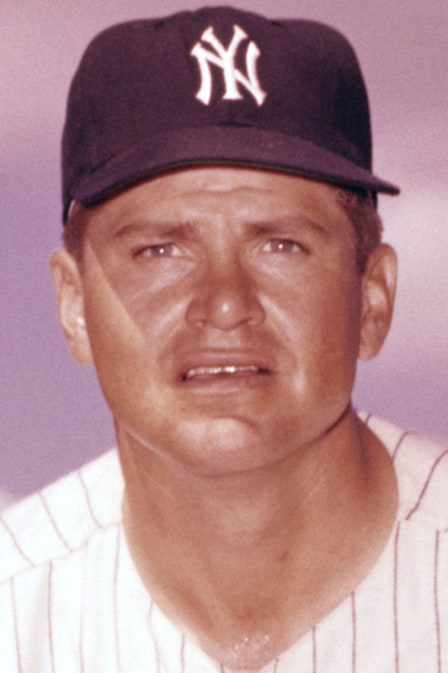
Bob Turley was a pitcher who played for the New York Yankees from 1955 to 1962. Career stats: 82-52 record, 3.64 ERA, 909 strikeouts.
October 9, 1958. County Stadium, Milwaukee. The Yankees had lost a heartbreaker on this same field a year earlier -- Eddie Mathews' 10th-inning homer in the 1957 Series -- on their way to losing that whole championship to these same Braves. Now, a year later, they'd been down 3-1 in this Series before clawing back to a Game 7. Don Larsen, the same man who'd thrown a perfect game against Brooklyn two Octobers before, ran into trouble in the third. Casey Stengel walked to the mound and called for Bob Turley.
Turley had already started Game 5, a shutout. He'd already saved Game 6, in extra innings. Now, working on almost no rest, he threw 6.2 more innings of one-run relief and closed out the championship himself. He was named World Series MVP that October, on top of the Cy Young Award he'd already won for the best regular season of his life. It remains one of the great four-day stretches any Yankees pitcher has ever put together (and somehow it's not the thing most casual fans remember him for).
The Wild Arm Baltimore Couldn't Wait to Trade
Robert Lee Turley was born September 19, 1930, in Troy, Illinois, and threw hard enough as a young pro that scouts started calling him the second coming of Bob Feller. He debuted with the St. Louis Browns in September 1951, lost his next year and a half to Army service, and came back to a franchise that had just relocated and rebranded itself the Baltimore Orioles. In 1954, his first full season, Turley went 14-15 with a 3.46 ERA and led the American League in strikeouts with 185. He also led the league in walks. That was the whole scouting report in one sentence -- electric stuff, no idea where it was going.
That November, the Yankees and Orioles pulled off the largest trade in major-league history, 17 players in all, worked out over three weeks with several to be named later. New York sent a package built around catcher Gus Triandos and outfielder Gene Woodling (plus Harry Byrd, Jim McDonald, Willy Miranda, and Hal Smith) to Baltimore. Baltimore sent back Turley, Don Larsen, and shortstop Billy Hunter.
Both pitchers ended up defining eras. Larsen got the perfect game. Turley got the decade.
| Yankees Years | 1955-1962 |
| Yankees Record | 82-52 |
| Yankees ERA | 3.64 |
| Yankees Strikeouts | 909 |
| Yankees Complete Games | 58 |
| 1958 Season (Cy Young) | 21-7, 2.97 ERA, 19 CG, 6 SHO |
| 1958 World Series | 2-1, 1 SV, 2.76 ERA, MVP |
| World Series Championships | 4 (1956, 1958, 1961, 1962) |
| Career Totals (4 teams, 1951-1963) | 101-85, 3.64 ERA, 1,265 K |
Wildness With a Purpose
Turley's first Yankees season looked like a rerun of 1954 -- 17-13, a career-high 210 strikeouts, and the league lead in walks again (177 of them, plus a league-low hit rate that got buried under all the free passes). New York won the pennant and lost the World Series to Brooklyn in seven games. In 1956, Turley's control got worse before it got better -- an 8-4 record hid a 5.06 ERA -- but he threw scoreless relief in the World Series anyway, and the Yankees beat the Dodgers for the title. His first ring. In 1957 he settled in at 13-6, then won a must-win Game 6 of that October's World Series, 3-2, scattering four hits against Milwaukee with the Yankees facing elimination. New York lost the Series in seven games regardless.
Three years in pinstripes, three different endings, one constant problem: the walks. Then somebody fixed it.
In 1958, pitching coach Jim Turner had Turley try a no-windup delivery -- teammate Larsen had already switched to stop tipping his pitches, and Turner figured it might smooth out Turley's mechanics too. It did more than that. Turley's walk rate dropped to a career-low 4.3 per nine innings, while his strikeout rate jumped to a league-best 7.8 per nine. The results: 21 wins against seven losses, 19 complete games, six shutouts, a 2.97 ERA. He led the American League in wins, winning percentage, and complete games. When the Cy Young ballots came back, Turley beat Milwaukee's Warren Spahn by a single vote, five to four (only one award was given across both leagues back then, so it wasn't even close to being the closest call in AL-only history -- it just felt that way).
Four Days in October
The 1958 World Series against the Braves nearly ended before Turley's stretch of brilliance even started. He took the ball in Game 2 at County Stadium and didn't survive the first inning -- Milwaukee touched him up for enough that Stengel had him out of the game after facing five batters, and the Braves rolled to a 13-5 win. The Yankees were suddenly down two games to none, then three games to one after Milwaukee took Game 4. Nobody had come back from a 3-1 deficit to win a World Series since 1925.
Turley started Game 5 anyway, with the season on the line. He threw a complete-game shutout, 7-0, scattering five hits and three walks while striking out 10. Two days later in Game 6, with the score tied in extra innings, Turley came out of the bullpen and picked up the save. Milwaukee had to be feeling the deficit in reverse now, one game from losing a series they'd led 3-1 four days earlier.
Game 7 belonged to Larsen first, and then it belonged to Turley. Larsen got into trouble in the third, and Turley -- who'd already thrown a complete game and closed a save inside the previous 48 hours -- came in and didn't leave. 6.2 innings, one run allowed, the win, the championship. Turley finished the Series 2-1 with a save and a 2.76 ERA over 16.1 innings across four appearances, and the Yankees became just the second team ever to win a World Series after trailing three games to one. He was the easy choice for MVP.
His 10 strikeouts in Game 5, stacked on top of 11 he'd struck out in Game 6 of the 1956 Series, tied a mark nobody had matched since Walter Johnson punched out 12 in Game 1 of the 1924 Series and 10 more the next October. Turley didn't set the record. He just joined the only other man who'd ever done it twice.
Born in Troy, Illinois
Robert Lee Turley is born; he'll debut in the majors with the St. Louis Browns just past his 21st birthday.
The 17-Player Trade
In the largest trade in major-league history, the Yankees acquire Turley, Don Larsen, and Billy Hunter from the Orioles for a package built around Gus Triandos and Gene Woodling.
Cy Young Award
Turley goes 21-7 with a 2.97 ERA, 19 complete games, and six shutouts, leading the AL in wins, winning percentage, and complete games. He edges Warren Spahn 5-4 for the sport's only Cy Young Award.
World Series MVP
Turley throws a Game 5 shutout, saves Game 6 in extra innings, and wins Game 7 in relief of Don Larsen as the Yankees complete a comeback from down 3 games to 1 against the Braves.
Elbow Surgery
Surgeons remove bone chips from Turley's throwing elbow. Arm trouble limits him to roughly 140 combined innings across 1961 and 1962, even as the Yankees win both World Series.
Death
Turley dies at age 82 in hospice care in Atlanta, Georgia, of liver cancer.
The Arm Gives Out, the Rings Keep Coming
Turley never matched 1958 again, and he didn't have much left in the tank to try. He went 8-11 in 1959 as the Yankees fell to third place, then bounced back to 9-3 with a career-high five saves in 1960 -- a season slowed by a sore back in April and a balky elbow by midsummer. That October, against Pittsburgh, he won an 8.1-inning Game 2 as the Yankees piled up 16 runs, then got Stengel's controversial call to start the decisive Game 7 (Whitey Ford, held back to pitch only Games 3 and 6, wasn't available). Turley didn't survive the second inning, and the Pirates rode the early lead to Bill Mazeroski's walk-off. Then Turley's elbow went for good. Surgeons removed bone chips in 1961, and between that season and the next, arm trouble held him to something like 140 combined innings. The Yankees won the World Series both years anyway -- over Cincinnati in 1961, over the Giants in 1962 -- and Turley collected a ring each time without throwing a single postseason pitch. Four championships across eight seasons, and he'd actually pitched meaningfully in exactly two of them.
He finished his career in 1963, splitting brief final stints between the Los Angeles Angels and Boston Red Sox. The full ledger across 12 seasons and four organizations: 101 wins, 85 losses, a 3.64 ERA, 1,265 strikeouts. He's not in Cooperstown, and he probably shouldn't be on career numbers alone -- but for one October, and the season that set it up, he was as good as anybody who ever pitched for the Yankees.
Turley died on March 30, 2013, at 82, in hospice care at a retirement community outside Atlanta. Liver cancer, according to his son. Whatever the walk totals said in any given year, the Yankees years boiled down to four rings and one October -- Game 5, Game 6, Game 7, all in the space of four days -- that nobody who was in County Stadium that week ever forgot.
Frequently Asked Questions
Did Bob Turley win the Cy Young Award?
Yes. In 1958, Turley went 21-7 with a 2.97 ERA, 19 complete games, and six shutouts, leading the American League in wins, winning percentage, and complete games. He won the sport's single Cy Young Award (only one was given across both leagues at the time) by a 5-4 vote over Milwaukee's Warren Spahn.
What did Bob Turley do in the 1958 World Series?
After taking the loss in Game 2, Turley threw a complete-game shutout in Game 5, picked up a save in extra innings in Game 6, and relieved Don Larsen to win Game 7 -- 6.2 innings of one-run ball -- as the Yankees completed a comeback from down three games to one against the Milwaukee Braves. He finished 2-1 with a save and a 2.76 ERA over four appearances and was named World Series MVP.
How did the Yankees acquire Bob Turley?
On November 17, 1954, the Yankees and Orioles completed a 17-player trade, the largest in major-league history at the time. New York sent a package headlined by catcher Gus Triandos and outfielder Gene Woodling to Baltimore in exchange for Turley, pitcher Don Larsen, and shortstop Billy Hunter.
How many World Series did Bob Turley win with the Yankees?
Four -- 1956, 1958, 1961, and 1962. He pitched meaningfully in only two of them (1956 and 1958); arm trouble, including 1961 elbow surgery to remove bone chips, kept him off the mound in the 1961 and 1962 World Series even though he remained on the championship roster both years.
When did Bob Turley die?
Turley died on March 30, 2013, at age 82, in hospice care at a retirement community near Atlanta, Georgia. The cause was liver cancer.