
Career Stats
Regular Season
| Year | G | AB | R | H | 2B | 3B | HR | RBI | BB | SO | SB | AVG | OBP | SLG | OPS |
|---|---|---|---|---|---|---|---|---|---|---|---|---|---|---|---|
| 1962 | 164 | 706 | 101 | 212 | 40 | 5 | 8 | 60 | 38 | 25 | 12 | .300 | .335 | .405 | .740 |
| 1963 | 151 | 630 | 72 | 167 | 20 | 6 | 3 | 48 | 25 | 22 | 15 | .265 | .294 | .330 | .624 |
| 1964 | 159 | 679 | 90 | 181 | 25 | 4 | 4 | 50 | 28 | 36 | 11 | .267 | .294 | .333 | .627 |
| 1965 | 160 | 664 | 76 | 164 | 28 | 2 | 6 | 47 | 37 | 39 | 7 | .247 | .287 | .322 | .609 |
| 1966 | 150 | 614 | 71 | 156 | 21 | 3 | 7 | 42 | 25 | 28 | 6 | .254 | .283 | .332 | .615 |
| Career | 1424 | 5431 | 649 | 1450 | 199 | 37 | 34 | 394 | 262 | 247 | 74 | .267 | .301 | .336 | .637 |
Career-best seasons highlighted in gold. Stats via Retrosheet.
Postseason
| Year | G | AB | R | H | 2B | 3B | HR | RBI | BB | SO | SB | AVG | OBP | SLG | OPS |
|---|---|---|---|---|---|---|---|---|---|---|---|---|---|---|---|
| 1957 | 2 | 0 | -- | 0 | -- | -- | 0 | 0 | -- | -- | -- | -- | -- | -- | -- |
| 1958 | 4 | 5 | -- | 0 | -- | -- | 0 | 0 | -- | -- | -- | .000 | -- | -- | -- |
| 1960 | 7 | 30 | -- | 11 | -- | -- | 1 | 12 | -- | -- | -- | .367 | -- | -- | -- |
| 1961 | 5 | 23 | -- | 9 | -- | -- | 0 | 0 | -- | -- | -- | .391 | -- | -- | -- |
| 1962 | 7 | 27 | -- | 4 | -- | -- | 0 | 0 | -- | -- | -- | .148 | -- | -- | -- |
| 1963 | 4 | 14 | -- | 3 | -- | -- | 0 | 0 | -- | -- | -- | .214 | -- | -- | -- |
| 1964 | 7 | 32 | -- | 13 | -- | -- | 0 | 3 | -- | -- | -- | .406 | -- | -- | -- |
| Career | 36 | 131 | 0 | 40 | 0 | 0 | 1 | 15 | 0 | 0 | 0 | .305 | .305 | .328 | .634 |
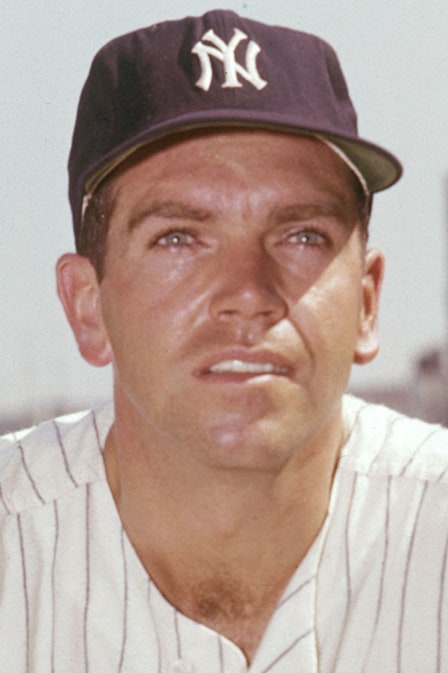
Bobby Richardson was a second baseman who played for the New York Yankees from 1955 to 1966. Career stats: .267 batting average, 34 home runs, 394 RBI.
October 16, 1962. Candlestick Park, bottom of the ninth. The New York Yankees were three outs from the World Series championship and trying not to think about how thin the margin had gotten.
Ralph Terry was working on a 1-0 shutout. Two outs, runners on second and third, Willie McCovey at the plate. The Giants were one hit from the title. The crowd was on its feet and the wind was whipping off the Bay. Terry dealt. McCovey drove it -- hard, line drive, screaming toward second base.
Bobby Richardson didn't move more than a step. The ball was already in his glove.
He said afterward, "The ball was hit so hard that by the time I reacted, it was already in my glove. Another foot either way and it's through." That was Richardson's way. The ball found him. He never seemed to be in a hurry to find the ball.
The Yankees were champions again. And Richardson -- who'd spent twelve seasons as the least-celebrated starter in one of the most celebrated dynasties in American sports history -- had just made the final out.
The Kid from Sumter
Robert Clinton Richardson was born on August 19, 1935, in Sumter, South Carolina, and grew up attending Grace Baptist Church, where he'd eventually meet the woman he'd marry. His father worked steadily and the family was churchgoing and settled, which made Richardson an odd fit for the world he was about to enter.
He played ball at Edmunds High School and was good enough that eleven of sixteen major league organizations sent scouts to look. The day after his graduation in June 1953, he signed with the Yankees. He was seventeen years old.
The minor leagues nearly ended him before they started. Class-B Norfolk in 1953: twenty-seven games, one extra-base hit, a .211 average. The Yankees demoted him to Class-D Olean. He hit .411 the rest of the season. The organization kept him. Smart move.
The Door That Billy Martin Opened
Richardson spent parts of the 1955 and 1956 seasons in the Bronx as a backup, but the second base job belonged to Billy Martin. Then, on June 15, 1957, the Yankees traded Martin to Kansas City -- a month after the Copa incident gave George Weiss the excuse he'd been waiting for. (Weiss had wanted Martin gone for years. Martin had simply been too good to trade without a reason. The Copa provided the reason.) The second base job suddenly had no incumbent.
Richardson took it and never gave it back.
He made his first All-Star team in 1957 -- the same season Martin arrived in Kansas City -- and for the next decade he was the definition of consistency. Not flashy, not a presence at the top of the batting order, not the name you'd cite first when explaining why the Yankees kept winning. But there, reliably, every single day.
The Most Unusual MVP in World Series History
October 1960 is the event that defines Bobby Richardson's baseball legacy, and it's a strange one: he won the World Series Most Valuable Player award on a team that lost the World Series.
The Yankees had hammered the Pittsburgh Pirates all series. They outscored Pittsburgh 55-27 across seven games -- and still lost, because Bill Mazeroski hit a walk-off home run in the bottom of the ninth in Game 7 and the series was decided by whoever hit it hardest in the moments that counted most. Baseball is cruel that way.
Richardson was brilliant throughout. In Game 3, the Yankees buried the Pirates 10-0, with Whitey Ford throwing a shutout. Richardson's contribution in that game: a grand slam off Clem Labine in the first inning, part of a six-run opening frame, followed by a two-run single later for six RBIs in a single game. Nobody in World Series history had ever driven in six runs in a single game before. (Hideki Matsui tied it in 2009, Albert Pujols in 2011, Addison Russell in 2016. Richardson held it alone for forty-nine years.)
When the series ended -- Yankees losing, Mazeroski dancing around the bases at Forbes Field -- the Baseball Writers were left with a genuine problem. Who was the most valuable player in a seven-game series that ended in heartbreak for its most statistically dominant team? Richardson had hit .367, collected 11 hits, scored 8 runs, and driven in 12 runs. The 12 RBIs set a World Series record that would stand for sixty-four years. (Freddie Freeman tied it in 2024, in a five-game series.)
They gave Richardson the MVP. He remains the only player in World Series history to win the award on the losing team.
Five Straight Gold Gloves
The offensive numbers are part of the story. The glove is the other part.
From 1961 through 1965, Richardson won five consecutive Gold Glove Awards at second base. In his 1961 season -- when he played all 162 games and helped the Yankees beat the Cincinnati Reds in the World Series, batting .391 in that postseason -- he was simply the best defensive second baseman in the league, and the Gold Glove voters agreed.
In 1962, he had his best offensive season. He led the American League with 209 hits, batted .302, and set a Yankee record with 692 official at-bats. He was seventh in the league in average, fourth in runs scored, fourth in doubles. The Yankees won 96 games and went to the World Series -- where Richardson, in the final out of Game 7 at Candlestick, caught McCovey's line drive and ended it.
He made eight All-Star teams across his career. He won three World Series championships: 1958, 1961, and 1962.
Bobby and Mickey
The clubhouse Richardson occupied was full of men who drank hard, stayed out late, and treated the season like a prolonged victory tour. Richardson didn't drink, didn't smoke, didn't swear. He went to church on Sundays -- even in October, even during World Series weeks. He was one of the first active major leaguers to speak publicly and consistently about his Christian faith, and he worked with the Fellowship of Christian Athletes as a national representative for years.
Mickey Mantle was the first to introduce himself. Richardson was a young player, taking extra swings at the batting cage, and Mantle appeared alongside him and said, simply, "Come on kid and take a few swings." They couldn't have been more different -- Mantle was Richardson's opposite in nearly every way that had nothing to do with baseball -- and yet the friendship was real and lasted decades.
When Mantle was dying in the summer of 1995, Richardson visited him. He was one of the people who helped Mantle find his faith in those final months. When Mantle died on August 13, Richardson spoke at the funeral -- delivering the sermon, telling the congregation that Mantle had made his peace before the end. "Mickey Mantle was ready to go," he said. "He made a change in his life." He'd quietly won a different kind of game.
Going Home at 31
After the 1965 season, Richardson wanted to retire. He was thirty years old, had three World Series rings, and had been gone every summer since 1953. He had sons who were old enough to play Little League and a wife who'd spent those twelve years largely without him. He was done.
The Yankees asked him to stay one more year. Tony Kubek -- his double-play partner for almost a decade -- had retired because of neck problems. The organization needed Richardson to hold the position one more season while they sorted out the middle infield. He said yes, played 1966, hit .251 in 149 games, and then walked away for good. He was thirty-one.
"I just felt like that I'd been there and we'd done so well, and I wanted to spend more time with my family," he said later. "I had two boys that I missed out on all the years they were playing Little League." He could have played five more years, he admitted. He called the decision the best he'd ever made.
In 1970, he became the first full-time head baseball coach at the University of South Carolina. His 1975 team went 51-6 and lost to Texas in the final game of the College World Series. He later coached at Coastal Carolina and Liberty University.
He never made the Hall of Fame. His career batting average was .266, his home run total was 34, and those numbers don't sing the way the voters want numbers to sing. But his World Series career batting average was .305, his twelve RBI in 1960 stood as the record for sixty-four years, and his glove saved a championship in the final play of the 1962 Series.
Some players' value shows up in the statistics. Richardson's showed up in October.
| Career Batting Average | .266 |
| Career Hits | 1,432 |
| Career Home Runs | 34 |
| Career RBI | 390 |
| World Series BA | .305 (36 games) |
| World Series RBI | 15 (record 12 in 1960) |
| Gold Glove Awards | 5 (1961-1965) |
| All-Star Selections | 8 (1957, 1959×2, 1962-66) |
| World Series Championships | 3 (1958, 1961, 1962) |
| 1962 Season Hits | 209 (AL leader) |
Born in Sumter, South Carolina
Robert Clinton Richardson is born in Sumter, South Carolina. He grows up attending Grace Baptist Church, where he'll later meet his wife Betsy. Baseball and faith will be the two constants of his life.
Signs with the Yankees
The day after his high school graduation, Richardson signs with the Yankees. Eleven of sixteen major league clubs had expressed interest. He starts at Class-B Norfolk, struggles (.211 BA in 27 games), gets demoted to Class-D Olean, and hits .411. The Yankees keep him.
MLB Debut
Richardson makes his major league debut with the Yankees as a backup infielder. The Yankees win the American League pennant that year but lose the World Series to the Brooklyn Dodgers. He's on the roster -- but not yet the second baseman.
Billy Martin Traded -- The Job Opens Up
One month after the Copacabana incident, the Yankees trade Martin to the Kansas City Athletics. GM George Weiss had long wanted to be rid of Martin's influence; the Copa incident gave him the justification. The second base job belongs to nobody. Richardson claims it and doesn't give it back for a decade.
First World Series Championship
The Yankees defeat the Milwaukee Braves in seven games after falling behind 3-1. Richardson contributes to the comeback. He's twenty-three years old and already a champion.
1960 World Series Game 3 -- Six RBIs
Whitey Ford shuts out the Pittsburgh Pirates 10-0. Richardson hits a grand slam off Clem Labine in the first inning and adds a two-run single -- six RBIs in the game, a new World Series record. The Yankees lose the Series in seven games anyway, but Richardson hits .367 with 12 RBIs (another record) and is named the only MVP in World Series history from a losing team.
First Gold Glove -- Five in a Row Begins
Richardson plays all 162 regular-season games and wins his first Gold Glove Award as the best defensive second baseman in the American League. Four more follow consecutively, spanning 1961 through 1965. The Yankees win the World Series against Cincinnati. Richardson bats .391 in the Fall Classic.
Career Year -- 209 Hits, AL Leader
Richardson's best offensive season: .302 batting average, 209 hits (most in the American League), 692 official at-bats (a Yankee record). The Yankees win their 20th World Series title. Richardson catches Willie McCovey's line drive in the bottom of the ninth in Game 7 to end it.
Delivers Sermon at Mickey Mantle's Funeral
Mickey Mantle dies on August 13. At the funeral two days later, Richardson delivers the sermon, telling the congregation that Mantle had made his peace before the end. In Mantle's final months, Richardson had visited him and helped him find his faith. "Mickey Mantle was ready to go," he says. "He made a change in his life."
Retires at 31
Richardson retires after the 1966 season at age 31. He'd wanted to retire after 1965 but stayed one more year when Tony Kubek's neck problems forced his retirement. In 1970, he becomes the first full-time head baseball coach at the University of South Carolina.
Frequently Asked Questions
Why isn't Bobby Richardson in the Baseball Hall of Fame?
Richardson's regular-season career numbers -- .266 batting average, 34 home runs, 390 RBIs -- aren't quite what voters have traditionally rewarded. His defense (five Gold Gloves) and postseason record (three championships, .305 World Series batting average, the all-time WS RBI record from 1960 to 2024) tell a more compelling story, but the Hall of Fame ballot has historically weighted regular-season production heavily. He's been discussed by the Veterans Committee but hasn't been selected.
What is Bobby Richardson's 1960 World Series record?
Richardson batted .367 in the 1960 World Series with 11 hits, 8 runs scored, and 12 RBIs -- the most RBIs in a single World Series in history. In Game 3 alone, he drove in six runs (including a grand slam off Clem Labine) in a 10-0 Yankees win. Despite the Yankees losing the Series in seven games, Richardson was named the Most Valuable Player -- the only time in history the award has gone to a player on the losing team. Freddie Freeman tied the 12 RBI record in 2024.
Why did Bobby Richardson retire so young?
Richardson was 31 when he retired after the 1966 season and has said it's probably the best decision he ever made. He'd initially wanted to retire after 1965 but stayed one more year when his double-play partner Tony Kubek retired due to neck problems. His stated reason: he'd missed too many years of his sons growing up while playing ball, and he wanted to be home. He acknowledged he could have played five more years.
What did Bobby Richardson do after baseball?
After retiring in 1966, Richardson worked with the Fellowship of Christian Athletes and other evangelical organizations before becoming the first full-time head baseball coach at the University of South Carolina in 1970. His 1975 team went 51-6, losing to Texas in the final game of the College World Series. He later coached at Coastal Carolina (1985-86) and Liberty University (1987-90).
What was Bobby Richardson's relationship with Mickey Mantle?
Richardson and Mantle were improbable close friends -- Richardson was a devout, clean-living Christian and Mantle was, well, Mantle. Mantle introduced himself when Richardson was a young player, and the friendship lasted decades. In Mantle's final months in 1995, Richardson visited him and helped him find his faith. When Mantle died on August 13, 1995, Richardson delivered the sermon at the funeral two days later. The friendship between the two remains one of the more quietly remarkable stories in Yankees history.