
Career Stats
Regular Season
| Year | G | GS | W | L | SV | IP | H | ER | K | BB | ERA | WHIP |
|---|---|---|---|---|---|---|---|---|---|---|---|---|
| 1982 | 30 | 26 | 10 | 10 | 0 | 186.2 | 190 | 76 | 54 | 34 | 3.66 | 1.20 |
| 1986 | 13 | 10 | 5 | 3 | 0 | 70.2 | 73 | 23 | 28 | 15 | 2.93 | 1.25 |
| 1987 | 33 | 33 | 13 | 6 | 0 | 187.2 | 212 | 84 | 63 | 47 | 4.03 | 1.38 |
| 1988 | 35 | 32 | 9 | 8 | 0 | 176.1 | 221 | 88 | 81 | 46 | 4.49 | 1.51 |
| 1989 | 10 | 10 | 2 | 7 | 0 | 63.2 | 87 | 41 | 18 | 22 | 5.80 | 1.71 |
| Career | 214 | 203 | 91 | 60 | 0 | 1367.0 | 1456 | 545 | 483 | 324 | 3.59 | 1.30 |
Career-best seasons highlighted in gold. Stats via Retrosheet.
Postseason
| Year | G | GS | W | L | SV | IP | H | ER | K | BB | ERA | WHIP |
|---|---|---|---|---|---|---|---|---|---|---|---|---|
| 1980 | 1 | -- | 0 | 0 | 0 | 6.2 | -- | -- | -- | -- | 2.70 | -- |
| 1981 | 5 | -- | 2 | 1 | 0 | 26.0 | -- | -- | -- | -- | 2.42 | -- |
| Career | 6 | 0 | 2 | 1 | 0 | 32.2 | 0 | 0 | 0 | 0 | 0.00 | 0.00 |
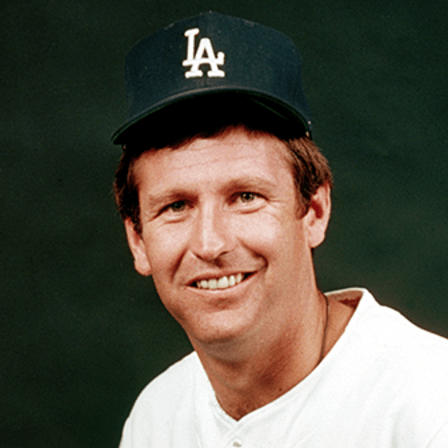
Tommy John was a pitcher who played for the New York Yankees in 1979-1982, 1986-1989. Career stats: 91-60 record, 3.59 ERA, 483 strikeouts.
Tommy John's name is on a surgery, and most people who know that don't know he ever pitched for the New York Yankees at all. That's a little backwards. He won 91 games in pinstripes across two separate stints, finished runner-up for a Cy Young Award in his first season in New York, and started a World Series game against the team that had drafted the operation-turned-verb into existence in the first place -- his old team, the Dodgers. The surgery made him famous. The Yankees years are where you actually find out who he was as a pitcher.
The Elbow That Started It All
Before any of that, John was a 31-year-old sinkerballer having a career year for the Los Angeles Dodgers -- 13-3, a 2.59 ERA -- when he tore the ulnar collateral ligament in his throwing elbow during a start in July 1974. In 1974, that injury ended careers. It didn't get fixed. It got a farewell tour.
Dr. Frank Jobe had a different idea. On September 25, 1974, he performed a surgery nobody had ever tried on a professional athlete's elbow: drilling anchor points into the bones and grafting a tendon across the joint in a figure-eight pattern. Jobe himself put the odds of it working at about one in a hundred. John missed all of 1975 rehabbing, then came back in 1976 and didn't stop pitching until 1989 -- 14 more seasons on the same reconstructed elbow.
He won 124 games before the surgery. He won 164 after it. The operation that carries his name didn't just save a career -- it built a second, longer one on top of the first.
Signing with the Team He Couldn't Beat
Here's the part that gets lost: John started World Series games against the Yankees twice as a Dodger, and both times the Dodgers still lost the championship. He took the loss himself in Game 3 of the 1977 Series (Reggie Jackson's three-homer Game 6 still gets all the ink from that one). He personally beat the Yankees 1-0 in Game 2 of the 1978 rematch -- and New York still won the whole thing in six games anyway. Two tries, two championships for the other side.
So of course, that November, John signed with the Yankees as a free agent. If you can't beat them, and George Steinbrenner is waving a contract, you join them.
It worked immediately. In 1979, at age 36, John went 21-9 with a 2.96 ERA and finished second in the AL Cy Young voting -- Baltimore's Mike Flanagan ran away with it on 26 of 27 first-place votes, but John got the other one, edging out teammate Ron Guidry for the runner-up spot. In 1980, he set a career high with 22 wins and led the league with six shutouts. That one didn't produce a repeat trophy chase -- Steve Stone won it outright for Baltimore, Oakland's Mike Norris was the actual runner-up, and John finished fourth behind teammate Goose Gossage in third. Back-to-back 20-win seasons at an age when most pitchers are already broadcasters is still back-to-back 20-win seasons.
| Yankees Games | 214 |
| Yankees Record | 91-60 |
| Yankees ERA | 3.59 |
| Yankees Strikeouts | 483 |
| Yankees Innings Pitched | 1,367.0 |
| Yankees WHIP | 1.30 |
| Career Record (26 seasons) | 288-231 |
| Career ERA | 3.34 |
The Pinch-Hit Heard Around the Bronx
The strike-shortened 1981 season cost John some of his shine on paper -- 9-8, though his 2.63 ERA said the stuff was still there -- but the postseason is where his Yankees tenure got its defining moment, and it wasn't a good one for him.
New York beat Milwaukee in the division series, swept Oakland in the ALCS, and ran into the Dodgers -- John's old team -- in the World Series. He'd already gone 2-1 with a 2.42 ERA that October. Then came Game 6. Tied game, fourth inning, John due up with runners on. Manager Bob Lemon pinch-hit for him with Bobby Murcer instead of letting his starter hit. The Yankees didn't score. Reliever George Frazier gave up three runs the next inning, New York lost 9-2, and the Dodgers -- the team John had lost two World Series to as their own pitcher -- won this one at his expense from the other side.
It's still one of the most second-guessed calls in Yankees postseason history, and John wasn't the one who made it.
The Injury
Pitching for the Dodgers at 13-3 with a 2.59 ERA, John tears the ulnar collateral ligament in his throwing elbow.
The First Tommy John Surgery
Dr. Frank Jobe performs the first-ever UCL reconstruction on a professional pitcher, giving it roughly a one-in-a-hundred shot of working.
The Comeback
After missing all of 1975, John returns to the Dodgers mound and keeps pitching through 1989 -- 14 more seasons.
Signs with the Yankees
After losing the 1977 and 1978 World Series to New York as a Dodger, John joins the team as a free agent.
Back-to-Back 20-Win Seasons
Goes 21-9 (2nd in Cy Young voting) in 1979, then a career-high 22-9 with a league-leading 6 shutouts in 1980.
Pulled in Game 6
With the score tied in the World Series against the Dodgers, Bob Lemon pinch-hits for John. The Yankees lose the game and the Series.
Traded to the Angels
After a 10-10 season, John is dealt to California for a player to be named later, eventually minor-league pitcher Dennis Rasmussen.
Returns to the Bronx
Re-signed by the Yankees at 43 to help a thin rotation, John wins his first three games back.
Career Win No. 288
At 45, John earns the final win of his career -- and his career-long 288th -- as the Yankees' Opening Day starter that season.
Traded Away, and Somehow Back
The Yankees dealt John to the California Angels on August 31, 1982, closing out a rocky final season (10-10) in his first stint. He kept pitching well into his 40s for the Angels and briefly the A's, then came back to the Bronx in May 1986 at age 43 because the rotation needed arms and John still had one.
He gave the Yankees three more full seasons after that -- 13-6 in 1987, 9-8 in 1988 (the year he became the oldest player in the major leagues after Phil Niekro's retirement) -- and made the Opening Day start in 1989 at 45 years old. He won his 288th and final career game that April, struggled through May, and was released before the month was out. He announced his retirement that September, tying Deacon McGuire's major-league record of 26 seasons pitched.
About a one in a hundred chance of it working.
Frequently Asked Questions
What is Tommy John surgery, and why is it named after him?
It's the common name for ulnar collateral ligament (UCL) reconstruction, first performed by Dr. Frank Jobe on John's torn elbow ligament in September 1974. Nobody had tried it on a pro athlete before, and Jobe himself gave it about a one-in-a-hundred chance of working. John missed all of 1975, then kept pitching all the way through 1989 -- proving it worked well enough to become standard practice for pitchers ever since.
Did Tommy John ever win a World Series?
No. He lost the 1977 and 1978 World Series as a Dodger against the very Yankees team he'd later join, then lost again with New York in 1981 against the Dodgers. Three World Series appearances, zero rings.
Why was Tommy John traded away from the Yankees in 1982?
After a 10-10 season, the Yankees sent him to the California Angels on August 31, 1982, for a player to be named later who turned out to be minor-league pitcher Dennis Rasmussen. John kept pitching well into his 40s for California and Oakland before returning to the Bronx in 1986.
What happened when Tommy John was pulled in Game 6 of the 1981 World Series?
With the score tied in the fourth inning and John due up, manager Bob Lemon pinch-hit for him with Bobby Murcer instead of letting his starter bat. The Yankees didn't score that inning, reliever George Frazier gave up three runs in relief, and New York lost 9-2 -- dropping the Series to the Dodgers. It remains one of the most debated in-game decisions in Yankees postseason history.
How many years did Tommy John pitch in the majors?
Twenty-six seasons across six teams -- the Indians, White Sox, Dodgers, Yankees, Angels, and Athletics -- from 1963 to 1989, tying Deacon McGuire's major-league record for career longevity at the position.
He never got the ring. He got something else instead -- a surgery that carries his name into every clubhouse in baseball, and a Yankees career that, on its own, would be a perfectly good story even if nobody ever called it "Tommy John surgery." Ninety-one wins, two stints twelve years apart, and a fastball he was still throwing at 45 (a fastball his own surgeon gave a one-in-a-hundred shot of existing at all). Not bad for a guy who was supposed to be done at 31.