
Career Stats
Regular Season
| Year | G | AB | R | H | 2B | 3B | HR | RBI | BB | SO | SB | AVG | OBP | SLG | OPS |
|---|---|---|---|---|---|---|---|---|---|---|---|---|---|---|---|
| 1967 | 63 | 149 | 18 | 40 | 6 | 0 | 0 | 10 | 25 | 15 | 1 | .268 | .381 | .309 | .690 |
| 1968 | 86 | 154 | 26 | 24 | 2 | 1 | 0 | 3 | 36 | 17 | 0 | .156 | .323 | .182 | .505 |
| Career | 149 | 303 | 44 | 64 | 8 | 1 | 0 | 13 | 61 | 32 | 1 | .211 | .343 | .244 | .588 |
Career-best seasons highlighted in gold. Stats via Retrosheet.
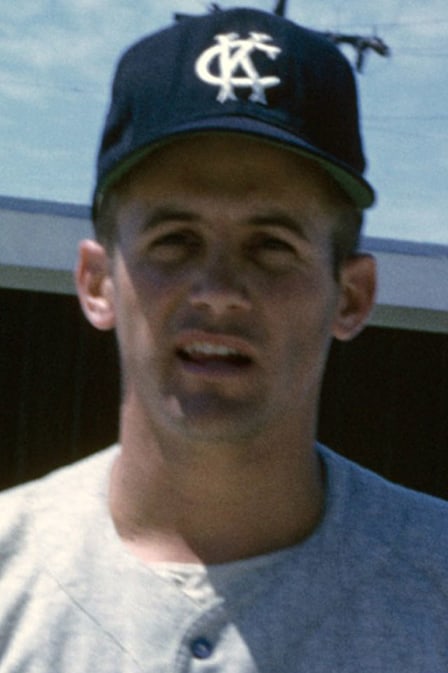
Dick Howser was a second baseman who played for the New York Yankees from 1967 to 1968. Career stats: .211 batting average, 13 RBI, 64 hits.
Dick Howser managed one full season for the New York Yankees. He won 103 games. He got fired anyway. Baseball doesn't get much more absurd than that, and Howser lived the whole thing twice over -- first as a scrappy, overachieving infielder in pinstripes, then as the most successful one-and-done manager in franchise history.
The Infielder Who Wouldn't Stop Getting On Base
Howser broke into the majors in 1961 with the Kansas City Athletics, a light-hitting shortstop out of Florida State who somehow turned a .280 average, 37 stolen bases, and 108 runs scored into an All-Star selection and a second-place finish in AL Rookie of the Year voting (Boston's Don Schwall won it -- yes, ahead of a rookie teammate named Carl Yastrzemski, which tells you how strange 1961 was). He bounced to Cleveland in 1963, and on December 20, 1966, the Indians shipped him to the Yankees for a minor leaguer and cash.
He arrived in the Bronx as a 30-year-old with a batting eye and not much power (he hit zero home runs in two Yankees seasons -- zero, in 303 at-bats), and 1967 started well enough until July 16, when he broke his arm breaking up a double play against Baltimore. The injury cut his season short and never let him fully reclaim his job. He played out 1968, his age-32 season and his last as a big leaguer, in a diminished role.
| Yankees Years | 1967-1968 |
| Position | Second Base |
| Games | 149 |
| Batting Average | .211 |
| OBP / SLG | .351 / .244 |
| Home Runs | 0 |
| RBI | 13 |
| Walks | 61 |
A .351 OBP off a .211 average tells you everything about the player: he wasn't going to hurt you with the bat, but he wasn't giving away at-bats either. That combination -- patient, unspectacular, absolutely no ego about his own numbers -- turned out to be the exact skill set that makes a good bench coach. The Yankees noticed. They kept him around.
Third Base Coach, Then One Game, Then Florida
Howser retired as a player after 1968 and immediately became the Yankees' third base coach, a job he held for the next decade -- 1969 through 1978, through some of the thinnest and then some of the loudest years the organization has ever produced. He was steady where everything else around him wasn't.
On July 24, 1978, with Billy Martin gone and the clubhouse in its usual state of controlled chaos, Howser got handed the reins for exactly one game -- a 5-2 loss in Kansas City, of all places. Bob Lemon took over the next day and rode the club to a World Series title. Howser, loyal to Martin and in no rush to referee the Bronx Zoo full-time, left after the season to become head baseball coach at his alma mater. One year at Florida State, and then George Steinbrenner called again.
The Best Season Nobody Remembers
Steinbrenner named Howser Yankees manager for 1980 on October 28, 1979, and Howser did something nobody in that clubhouse had managed in years: he made it boring. No screaming matches. No headlines. When Steinbrenner phoned the dugout mid-game, which he did constantly, Howser would say "I'm busy" and hang up. The team responded to the quiet with the best regular season in franchise history since 1963 -- 103 wins, 59 losses, an AL East title by three games over Baltimore, six All-Stars, and a stretch-run surge that buried the Orioles in September.
None of it mattered in October.
Three Games, One Relay Throw, and a Job Gone
The Randolph play in Game 2 of the 1980 ALCS decided everything that came after it. Yankees down 3-2 in Kansas City, eighth inning, Randolph tries to score from first on a Bob Watson double. The relay -- Willie Wilson to George Brett to Darrell Porter -- nails him at the plate. Royals hold on, win 3-2. Steinbrenner, watching from the box, wanted third base coach Mike Ferraro fired before the team plane landed. Howser said no.
Kansas City finished the sweep two nights later at the Stadium. George Brett turned on a Goose Gossage fastball in the seventh and drove it into the third deck, a three-run homer that erased a 2-1 Yankees lead and ended the series. Three games, zero wins, a 103-win season buried under a single relay throw and a single swing.
Steinbrenner never fired Ferraro. He didn't need to. Six weeks later, on November 21, 1980, the Yankees announced that Howser had "resigned" to pursue real estate opportunities in Tallahassee. Nobody in the building believed a word of it, and Steinbrenner made sure Howser couldn't just walk into another dugout that winter -- he had a year left on his Yankees contract, and the Boss held onto it. Howser went back to coaching at Florida State for a season before the Royals came calling.
Kansas City Believed Him
The Royals hired Howser on August 31, 1981, in the middle of the strike-splintered season, replacing Jim Frey -- the same manager who'd taken Kansas City to the 1980 World Series, then gotten fired a year later with the club sitting at 30-40. Howser ran the Royals for the next five seasons, a 404-365 record that's still the second-best winning percentage in franchise history. The results looked a lot like 1980 at first: his patched-together 1981 club won the second-half AL West title, then got swept by Oakland in the Division Series. His 1984 club won the division outright and got swept again, this time by Detroit in the ALCS. Then came 1985. The Royals fell behind Toronto three games to one in the ALCS and won three straight to punch their pennant. Then they fell behind the Cardinals three games to one in the World Series and did it again, riding a blown call at first base in Game 6 and an 11-0 rout in Game 7 to the franchise's first championship. No team had ever come back from a 3-1 deficit twice in the same postseason. Howser's team did it in the same October.
I don't consider that being second-guessed. I consider that a chance to educate the unenlightened.
The next July, at the 1986 All-Star Game in Houston -- his club's reward for the previous year's pennant -- Rangers trainer Bill Zeigler, a fellow Florida State alum, noticed Howser wasn't himself. The diagnosis that followed was a malignant brain tumor. Howser managed 88 games of that season before stepping aside for treatment, tried to make it back for spring training in 1987, and couldn't. He died on June 17, 1987, in Kansas City, at 51 years old.
Traded to the Yankees
Cleveland deals Howser to New York for a minor leaguer and cash. He arrives as a 30-year-old veteran infielder.
Third Base Coach
After his playing career ends, Howser spends a decade as the Yankees' third base coach through some of the franchise's most turbulent years.
One Game as Interim Manager
Howser manages a single Yankees game between Billy Martin and Bob Lemon, a 5-2 loss in Kansas City, before leaving for Florida State.
103 Wins, Then Gone
Howser's only full season as Yankees manager ends in a 103-59 record and an AL East title -- and, six weeks after a first-round sweep, a forced-out "resignation."
World Series Champion
Managing the Kansas City Royals, Howser wins the franchise's first championship, beating the Cardinals in seven games after trailing 3-1 twice in the same postseason.
Dies at 51
Less than a year after managing the AL All-Stars, Howser dies of a brain tumor in Kansas City.
Frequently Asked Questions
Did Dick Howser play for the Yankees?
Yes. Howser played second base for the Yankees in 1967 and 1968, hitting .211 with a .351 on-base percentage across 149 games. His 1967 season was cut short by a broken arm suffered breaking up a double play, and 1968 was his final season as a big leaguer.
Why was Dick Howser fired after winning 103 games?
Steinbrenner blamed Howser for the Yankees' 1980 ALCS sweep and wanted third base coach Mike Ferraro fired over a controversial play at the plate in Game 2. Howser refused. Six weeks later, on November 21, 1980, the Yankees announced Howser's departure as a "resignation," a cover story nobody believed.
Did Dick Howser win a World Series as a manager?
Yes, with the Kansas City Royals in 1985 -- the same team that had swept his Yankees out of the 1980 ALCS. The Royals beat the St. Louis Cardinals in seven games after trailing 3-1 in both the ALCS and the World Series that October, the first team to pull off that double comeback in the same postseason.
How did Dick Howser die?
Doctors diagnosed Howser with a malignant brain tumor shortly after he managed the 1986 All-Star Game, his final game as a big-league manager. He died on June 17, 1987, in Kansas City, at age 51. College baseball's national player-of-the-year award, the Dick Howser Trophy, honors him to this day.
Howser managed the Yankees for 163 games across two stints separated by a decade -- one game in 1978, a full 162-game season in 1980 -- and both stints ended the same way: somebody else got the job next. A 5-2 loss ended the first. A 103-win season, absurdly, ended the second. None of that is really the point. The point is what happened next: the same patience and the same trust in his players that got him pushed out of the Bronx won a championship in Kansas City five years later. Steinbrenner never got that ring. Howser did.