Career Stats
Regular Season
| Year | G | GS | W | L | SV | IP | H | ER | K | BB | ERA | WHIP |
|---|---|---|---|---|---|---|---|---|---|---|---|---|
| 1950 | 36 | 29 | 16 | 12 | 2 | 248.2 | 226 | 105 | 166 | 141 | 3.80 | 1.48 |
| 1951 | 43 | 26 | 17 | 8 | 7 | 230.0 | 173 | 75 | 132 | 106 | 2.93 | 1.21 |
| 1952 | 42 | 29 | 20 | 8 | 6 | 260.1 | 207 | 58 | 169 | 104 | 2.01 | 1.19 |
| 1953 | 44 | 15 | 13 | 7 | 13 | 152.0 | 147 | 57 | 89 | 65 | 3.38 | 1.39 |
| 1954 | 37 | 18 | 13 | 4 | 7 | 157.1 | 133 | 58 | 100 | 66 | 3.32 | 1.26 |
| Career | 318 | 209 | 131 | 60 | 41 | 1773.1 | 1566 | 650 | 1005 | 859 | 3.30 | 1.37 |
Career-best seasons highlighted in gold. Stats via Retrosheet.
Postseason
| Year | G | GS | W | L | SV | IP | H | ER | K | BB | ERA | WHIP |
|---|---|---|---|---|---|---|---|---|---|---|---|---|
| 1947 | 2 | -- | 1 | 0 | 0 | 11.1 | -- | -- | -- | -- | 4.76 | -- |
| 1949 | 2 | -- | 1 | 0 | 1 | 12.1 | -- | -- | -- | -- | 0.00 | -- |
| 1950 | 2 | -- | 1 | 0 | 1 | 10.1 | -- | -- | -- | -- | 0.87 | -- |
| 1951 | 2 | -- | 1 | 1 | 0 | 15.0 | -- | -- | -- | -- | 4.20 | -- |
| 1952 | 4 | -- | 2 | 1 | 1 | 20.1 | -- | -- | -- | -- | 1.77 | -- |
| 1953 | 3 | -- | 1 | 0 | 1 | 8.0 | -- | -- | -- | -- | 6.75 | -- |
| Career | 15 | 0 | 7 | 2 | 4 | 77.1 | 0 | 0 | 0 | 0 | 0.00 | 0.00 |
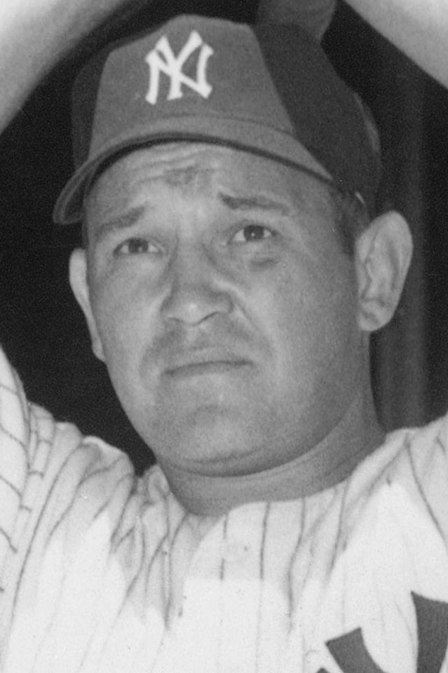
Allie Reynolds was a pitcher who played for the New York Yankees from 1947 to 1954. Career stats: 131-60 record, 3.30 ERA, 1005 strikeouts.
Oklahoma A&M's pitchers had sore arms, so the baseball coach grabbed the nearest live one. Henry Iba had been watching a track athlete throw the javelin, and he figured that arm could probably throw a baseball too. He walked the kid out to the mound, handed him a ball, and asked him to work batting practice. No warmup. Reynolds struck out the first four batters he faced. That's the whole story of how the New York Yankees eventually ended up with the best money pitcher of their greatest dynasty -- a coach who ran out of healthy arms and a javelin thrower who happened to be Allie Reynolds.
Reynolds -- "Superchief," a name that carried both his Muscogee (Creek) Nation heritage and a nod to the Santa Fe Railroad's flagship train -- pitched for the Yankees from 1947 to 1954. He went 131-60 with a 3.30 ERA, won six World Series rings, and did something no American League pitcher had ever done before him: threw two no-hitters in the same season. He was part of a three-man rotation, alongside Vic Raschi and Ed Lopat, that Casey Stengel simply called his Big Three. And when Stengel needed a reliever instead of a starter, Reynolds did that too, without complaint, which is the kind of detail that separates a good pitcher from a manager's most trusted weapon.
From Cleveland to the Bronx
Cleveland signed Reynolds for $1,000 in 1939, and he spent five up-and-down seasons there behind Bob Feller, flashing a power arm without ever stringing together the record to match it. On Joe DiMaggio's recommendation, the Yankees traded for him on October 11, 1946, sending Joe Gordon back to Cleveland in the deal. It looked, at the time, like the Yankees had given up a former MVP for an arm that hadn't proven anything yet. It wasn't close to an even trade. It just took a year to show which way it tilted.
Reynolds won 19 games in his first Yankee season and the club took the 1947 World Series. That was the appetizer. The main course started in 1949, when Casey Stengel took over a Yankees team nobody had picked to win anything and, starting with the 1949 championship, turned it into a machine that captured five straight titles. Reynolds anchored that rotation from the front, started when the Yankees needed length and relieved when they needed outs right now -- an arrangement most aces of his era would've refused on principle.
Two No-Hitters, One Summer
July 12, 1951, at Cleveland's Municipal Stadium: Reynolds outdueled Feller himself, 1-0, walking three and needing a Phil Rizzuto error to let anyone else reach base. He retired the last seventeen batters he faced. Gene Woodling's seventh-inning home run was the only run either team scored. It was the first no-hitter thrown by a Yankee since Monte Pearson's in 1938.
Then came September 28, with the pennant on the line against Boston. Reynolds carried the no-hitter into the ninth, got two outs, and watched Ted Williams lift a routine popup toward the plate. Yogi Berra camped under it and dropped it. Reynolds walked over, unbothered. "Don't worry Yogi," he told him, "we'll get him again." Williams popped up again. Berra caught it. Reynolds had his second no-hitter of the season, an 8-0 win that all but clinched the pennant, and a distinction no AL pitcher had ever held: two no-hitters, one year. Only Johnny Vander Meer, with his back-to-back gems in 1938, had done anything like it before him.
| Yankees Record | 131-60 (.686) |
| Career ERA | 3.30 |
| Innings Pitched | 1,773.1 |
| Strikeouts | 1,005 |
| Saves | 41 |
| No-Hitters | 2 (both in 1951 -- first AL pitcher to do it in one season) |
| World Series Titles | 6 (1947, 1949-1953) |
| All-Star Selections | 6 career (5 as a Yankee: 1949, 1950, 1952, 1953, 1954) |
| Postseason Record | 7-2, 2.79 ERA, 4 saves in 15 games |
The Bus, the Bullpen, and the Fifth Ring
The 1952 season was Reynolds at his absolute peak -- 20-8, an AL-leading 2.06 ERA, an AL-leading 160 strikeouts, and a runner-up finish in MVP voting that still looks like a robbery from here. He was the best pitcher in the league that year and the hardware went to someone else. That's baseball.
Then, in July 1953, the Yankees' team bus struck an overpass in Philadelphia, and Reynolds took the impact in his back. He pitched through it for the rest of his career -- Stengel simply moved him into the bullpen more often, leaning on Reynolds' ability to throw hard on no notice. He went 13-7 with 13 saves that year, more than double any previous season, and helped close out a fifth consecutive championship that no team has matched since. In 1954 he went 13-4, made his sixth All-Star team, and watched Cleveland win an AL-record 111 games to finally end the streak. Reynolds announced his retirement that February, the back injury having never fully healed.
Cooperstown's Blind Spot
Reynolds isn't in the Hall of Fame. He came within one committee vote of getting there -- eight of twelve, one short of the 75% he needed -- on a ballot that inducted Joe Gordon, the very player the Yankees had traded away to get him in the first place. The Yankees hung a plaque for him in Monument Park on August 26, 1989, with Whitey Ford and Rizzuto on hand. Cooperstown still hasn't found the room.
He went home to Oklahoma and kept working -- oil business, president of the Class AAA American Association, the driving force behind the Red Earth festival celebrating Native American culture, president of the National Hall of Fame for Famous American Indians in Anadarko. He died on December 26, 1994, in Oklahoma City, at 77. Phil Rizzuto delivered the eulogy for the organization.
Traded to the Yankees
Cleveland sends Reynolds to New York for Joe Gordon and Eddie Bockman, on Joe DiMaggio's recommendation.
First No-Hitter
Reynolds beats Bob Feller and Cleveland 1-0 at Municipal Stadium, retiring the final 17 batters he faces.
Second No-Hitter
Reynolds shuts out Boston 8-0, becoming the first AL pitcher to throw two no-hitters in one season and clinching at least a tie for the pennant.
Bus Accident
The Yankees' team bus strikes an overpass in Philadelphia, injuring Reynolds' back. He shifts into a starter-reliever hybrid role for the rest of his career.
Retirement Announced
Reynolds tells an Oklahoma City sportswriter he's done, closing out an eight-year Yankees career and six championship rings.
Frequently Asked Questions
Why was Allie Reynolds called 'Superchief'?
The nickname referenced Reynolds' Muscogee (Creek) Nation heritage and, according to teammate Bobby Brown, the Santa Fe Railroad's Super Chief train -- known for its elegance, power, and speed. Both meanings applied, and the name stuck for the rest of his career.
Did Allie Reynolds really throw two no-hitters in one season?
Yes. He no-hit Cleveland 1-0 on July 12, 1951, and no-hit Boston 8-0 on September 28, 1951, becoming the first American League pitcher to throw two no-hitters in a single season. Only Johnny Vander Meer, with his consecutive no-hitters in 1938, had done anything comparable before him.
What was Allie Reynolds' record with the Yankees?
Reynolds went 131-60 with a 3.30 ERA across eight seasons (1947-1954), winning six World Series titles. He worked as both a starter and a reliever, particularly after 1953, and posted a 7-2 record with a 2.79 ERA in postseason play.
Is Allie Reynolds in the Baseball Hall of Fame?
No. Reynolds came within one vote of election by a veterans-style committee -- eight of twelve votes, one short of the 75% threshold -- on a ballot that inducted Joe Gordon, the player the Yankees traded to acquire him in 1946. The Yankees honored him with a Monument Park plaque on August 26, 1989.
Iba never got him warmed up before that first tryout, and Reynolds never really needed it. Eight years, six rings, two no-hitters in one summer, and a Hall of Fame vote he lost by exactly one. The javelin thrower turned out fine.