
Career Stats
Regular Season
| Year | G | AB | R | H | 2B | 3B | HR | RBI | BB | SO | SB | AVG | OBP | SLG | OPS |
|---|---|---|---|---|---|---|---|---|---|---|---|---|---|---|---|
| 1955 | 141 | 499 | 101 | 140 | 20 | 6 | 21 | 54 | 59 | 66 | 8 | .281 | .364 | .471 | .835 |
| 1956 | 151 | 556 | 98 | 135 | 20 | 8 | 27 | 89 | 61 | 75 | 4 | .243 | .317 | .453 | .770 |
| 1957 | 138 | 483 | 71 | 125 | 22 | 9 | 18 | 65 | 43 | 66 | 7 | .259 | .322 | .453 | .775 |
| 1958 | 129 | 453 | 62 | 121 | 22 | 6 | 12 | 50 | 32 | 56 | 3 | .267 | .316 | .422 | .738 |
| 1959 | 117 | 351 | 45 | 84 | 21 | 0 | 9 | 40 | 36 | 55 | 4 | .239 | .311 | .376 | .687 |
| Career | 1432 | 4878 | 810 | 1353 | 218 | 60 | 162 | 673 | 509 | 609 | 51 | .277 | .346 | .446 | .792 |
Career-best seasons highlighted in gold. Stats via Retrosheet.
Postseason
| Year | G | AB | R | H | 2B | 3B | HR | RBI | BB | SO | SB | AVG | OBP | SLG | OPS |
|---|---|---|---|---|---|---|---|---|---|---|---|---|---|---|---|
| 1949 | 3 | 6 | -- | 1 | -- | -- | 0 | 0 | -- | -- | -- | .167 | -- | -- | -- |
| 1950 | 4 | 15 | -- | 2 | -- | -- | 0 | 1 | -- | -- | -- | .133 | -- | -- | -- |
| 1951 | 6 | 18 | -- | 3 | -- | -- | 0 | 3 | -- | -- | -- | .167 | -- | -- | -- |
| 1952 | 7 | 18 | -- | 1 | -- | -- | 0 | 1 | -- | -- | -- | .056 | -- | -- | -- |
| 1953 | 6 | 23 | -- | 6 | -- | -- | 0 | 1 | -- | -- | -- | .261 | -- | -- | -- |
| 1955 | 6 | 14 | -- | 6 | -- | -- | 0 | 1 | -- | -- | -- | .429 | -- | -- | -- |
| 1956 | 7 | 32 | -- | 9 | -- | -- | 1 | 3 | -- | -- | -- | .281 | -- | -- | -- |
| 1957 | 7 | 31 | -- | 8 | -- | -- | 2 | 6 | -- | -- | -- | .258 | -- | -- | -- |
| 1958 | 7 | 31 | -- | 10 | -- | -- | 4 | 8 | -- | -- | -- | .323 | -- | -- | -- |
| Career | 53 | 188 | 0 | 46 | 0 | 0 | 7 | 24 | 0 | 0 | 0 | .245 | .245 | .356 | .601 |
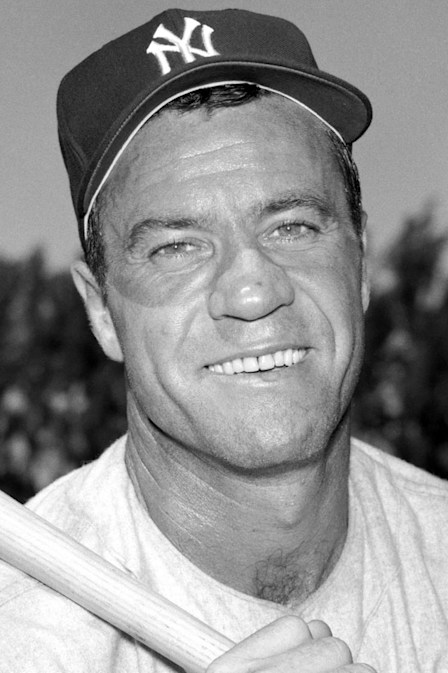
Hank Bauer was an outfielder who played for the New York Yankees from 1948 to 1959. Career stats: .277 batting average, 162 home runs, 673 RBI.
October 4, 1958. Yankee Stadium, Game 3 of the World Series. The New York Yankees were in trouble.
They'd lost the first two games in Milwaukee. Warren Spahn had shut them out in Game 2, Lew Burdette had dominated in Game 1, and the Braves had run the Series back to New York with a 2-0 lead and all the momentum. The Yankees needed somebody to stop the bleeding.
In the fifth inning, Bauer singled in two runs. He'd always done that -- just gotten on base, just made something happen. Then in the seventh he drove a two-run homer 400 feet into the left-field stands. All four of the Yankees' runs in a 4-0 win. The Series was now 2-1, and the Yankees were alive.
Bauer hit in that game. He'd been hitting in World Series games for three years straight.
The Marine in Right Field
Henry Albert Bauer was born July 31, 1922, in East St. Louis, Illinois, the youngest of nine children in an Austrian immigrant family. His father worked long shifts and the neighborhood was the kind that produced men who kept their heads down and never complained about anything -- at least not out loud. East St. Louis was a steel town, a furnace town, a place where the options were narrow and the work was hard.
Bauer played baseball and basketball at East St. Louis Central Catholic High School. In one basketball game, an opponent's elbow broke his nose. It never healed properly, giving him the lived-in face that Tommy Lasorda would later describe as able to "hold two days of rain." After graduation in 1941, he got a job repairing furnaces at a beer-bottling plant. His professional baseball career had barely started -- he'd signed with Oshkosh of the Class-D Wisconsin State League -- when Pearl Harbor happened.
He enlisted in the Marines in January 1942.
What followed was four years in the Pacific theater: Guadalcanal, Guam, and Okinawa (where an artillery shell peppered his left thigh and back with shrapnel, some of which he'd carry the rest of his life). He contracted malaria twenty-four separate times. He came home with two Bronze Stars, two Purple Hearts, and a Commendation Medal. He was twenty-three years old.
The Yankees scout Danny Menendez signed him as a free agent. Bauer hit .323 at Quincy in the Three-I League in 1946, .313 with the Kansas City Blues in 1947, and .305 with Kansas City in 1948. The Yankees called him up in September. He was twenty-six, with a face that looked older, and bits of Japanese metal still lodged in his back.
Five Straight
The Yankees of the early 1950s were one of the most dominant teams in baseball history, and Hank Bauer was their right fielder. Not their best player -- not with Mickey Mantle emerging in 1951 and Yogi Berra and Whitey Ford already at their peaks -- but their enforcer. The player who made clear, through body language and box-score competence, that this organization didn't tolerate anything less than full effort.
His catchphrase was blunt: "Don't mess with money!" He meant the World Series share. The Yankees reached the Fall Classic nine times in his twelve seasons, which meant October money was real money, and slacking your way through September was stealing from your teammates. Whitey Ford remembered Bauer pushing him against a clubhouse wall once and delivering the warning directly. Ford didn't need a second reminder.
From 1949 through 1953, the Yankees won five straight World Series. That had never been done before and hasn't been done since. Bauer played in all five -- 1949, 1950, 1951, 1952, 1953 -- against Brooklyn three times (1949, 1952, 1953), the Phillies once, and the Giants once. He wasn't the hero of any single Series. He was the baseline, the constant, the man who showed up and did his job every October the way he'd shown up and done harder jobs in the Pacific.
He made three consecutive AL All-Star teams from 1952 to 1954. His peak season came in 1952: .293, 17 home runs, 74 RBI -- good enough to finish in the AL MVP conversation. In 1956, he posted career highs in power (26 HR, 84 RBI) while his average dipped to .241 -- a combination that tells you he was aging into a different kind of player, the kind who could still hurt you but on his own timetable.
The Whodunit at the Copa
On May 15, 1957, Billy Martin turned twenty-nine. To celebrate, a group of Yankees went to the Copacabana nightclub in midtown Manhattan: Martin and his wife, Mickey Mantle and Merlyn, Whitey Ford and Joan, Yogi Berra and Carmen, Johnny Kucks and his wife, and Hank Bauer and Charlene. They were there to see Sammy Davis Jr. perform.
A group of heavily-drunk bowlers from the Bronx had also come in that evening. The bowlers got loud. They started heckling Davis, including slurs directed at him from across the room. Bauer, who'd climbed on top of the Yankees' dugout the previous season to search the stands for a fan shouting racial slurs at Elston Howard (teammates talked about that for years), wasn't the kind of man who let that pass. Words were exchanged. Then a deli owner from the Bronx ended up with a concussion and a broken jaw on the nightclub floor.
A grand jury voted "no bill." No indictment, no charges, no proof of who threw the punch. The Yankees fined each player $1,000, and Manager Casey Stengel kept his opinions to himself. The Yankees shipped Billy Martin to the Kansas City Athletics within the month (George Weiss had wanted him gone for years anyway; the Copa gave him the pretext). Bauer stayed in New York. The deli owner's jaw healed. Nobody ever said, definitively, who'd done it.
October, Again
In 1956, the Yankees won the World Series over the Brooklyn Dodgers in seven games. Bauer hit in every game -- seven for seven, a perfect run through the Fall Classic. The Dodgers weren't going to stop him.
In 1957, the Yankees played the Milwaukee Braves, and lost -- the Braves won four games to three, with Lew Burdette pitching brilliantly. Bauer hit in every one of those seven games too. Fourteen straight World Series games with a hit, the streak running through two consecutive Fall Classics, a win and a loss, against two different teams. Nobody had ever done that.
Then 1958 came around. The Yankees faced Milwaukee again. The Braves won the first two. Bauer's Game 3 performance gave the Yankees life. He hit in the first three games of that Series, extending the streak to seventeen. In Game 4, his streak ended -- but the Yankees kept winning. New York rallied from the 3-1 deficit to win the Series four games to three, completing one of the great comebacks in postseason history.
Bauer's final line for the 1958 World Series: .323 average, 4 home runs, 8 RBI, 10 hits, 6 runs scored in 7 games. Bob Turley won the Series MVP. By most measures, the award should've gone to the right fielder. His 17-game World Series hitting streak still stands as the longest in history.
Traded for His Replacement
On December 11, 1959, the Yankees made one of the most consequential trades in franchise history. They sent Bauer, Don Larsen, Norm Siebern, and Marv Throneberry to the Kansas City Athletics and received Joe DeMaestri, Kent Hadley, and Roger Maris.
Bauer was thirty-seven. He'd hit .238 in 1959, and his time had run its course. Maris was twenty-five, had slugged 28 home runs between Cleveland and Kansas City in 1958, and an appendix operation had limited him to 16 in an injury-shortened 1959 -- but the Yankees had seen enough. In his first Yankee season, Maris hit 39 home runs and won the AL MVP. In his second season, he hit 61 and broke Babe Ruth's record.
Hank Bauer was literally traded for his own replacement -- and the replacement turned out to be one of the most famous seasons in the history of the sport. Baseball works like that sometimes.
He played two more seasons in Kansas City, retired in 1961, and moved into managing. In 1966, Bauer managed the Baltimore Orioles to a World Series title -- a four-game sweep of the Los Angeles Dodgers, the same franchise he'd faced and beaten in 1956. He became one of the rare men to win a World Series as both player and manager.
Seven in October
The number on Hank Bauer's career is seven -- the number of World Series rings he earned in a Yankees uniform, spread across a twelve-year span from 1949 to 1958. He appeared in 53 World Series games, batted .245 in those games with 7 home runs and 24 RBI, and hit safely in 17 consecutive Fall Classic contests across three different Series.
There's no Hall of Fame plaque for him in Cooperstown. His career numbers (.277 batting average, 164 home runs, 703 RBI) don't make a compelling case on their own, not when you're measuring him against the legends of his era. But the October record is what it is -- a man who delivered, consistently, in the moments that mattered most. It's not nothing. It's actually quite a lot.
He died on February 9, 2007, in Lenexa, Kansas. He was eighty-four years old. He'd spent sixty-five of those years -- from the moment he first put on a baseball uniform in Oshkosh, through the Pacific and back, through twelve Yankee seasons and the 1958 comeback and the trade and the 1966 championship in Baltimore -- trying to win.
He mostly did.
| Career Batting Average | .277 |
| On-Base Percentage | .348 |
| Slugging Percentage | .446 |
| Home Runs (Career) | 164 |
| RBI (Career) | 703 |
| All-Star Selections | 3 (1952, 1953, 1954) |
| World Series Rings (as player) | 7 (1949-53, 1956, 1958) |
| World Series Games | 53 |
| World Series Hitting Streak | 17 games (1956-58) |
| 1958 World Series Line | .323 / 4 HR / 8 RBI |
Born in East St. Louis, Illinois
Henry Albert Bauer is born in East St. Louis, Illinois, the youngest of nine children. His father is an Austrian immigrant working factory jobs in a steel-mill town -- a background that shapes the work ethic Bauer will bring to baseball twenty-five years later.
Enlists in the U.S. Marine Corps
One month after the Japanese attack on Pearl Harbor, Bauer enlists in the Marines. He serves four years in the Pacific theater, fighting at Guadalcanal, Guam, and Okinawa. He's wounded twice, contracts malaria twenty-four times, and earns two Bronze Stars and two Purple Hearts.
MLB Debut with the Yankees
Called up in September from the Kansas City Blues (Triple-A), Bauer makes his major league debut at age 26. He'd hit .323 at Quincy in 1946 and .313 and .305 at Kansas City in 1947-48 -- three solid minor league seasons that earned him the shot.
First World Series Ring
The Yankees beat the Brooklyn Dodgers in five games. Bauer plays in his first Fall Classic and wins his first championship. Four more would follow in consecutive years.
The Copacabana Incident
Bauer and several teammates celebrate Billy Martin's birthday at the Copacabana nightclub. A confrontation with a group of rowdy patrons leaves a deli owner with a concussion and a broken jaw. A grand jury finds no basis for indictment. The Yankees fine each player $1,000. Martin is traded to Kansas City within the month.
The Streak Begins
Bauer hits safely in all seven games of the 1956 World Series as the Yankees defeat the Brooklyn Dodgers. The streak stands at seven. Nobody notices yet that it's the start of something.
Fourteen and Counting
The Yankees lose the 1957 World Series to the Milwaukee Braves in seven games. Bauer hits in every game of the losing effort, extending his consecutive World Series hitting streak to fourteen games. The Yankees have lost; Bauer hasn't stopped hitting.
1958 World Series MVP-Level Performance
With the Yankees down 2-0 in the Series, Bauer drives in all four runs in a Game 3 win. He finishes the series batting .323 with 4 home runs and 8 RBI -- numbers that would have won most Yankees fans' vote for MVP. His WS hitting streak reaches 17 before ending in Game 4. The Yankees come back from 3-1 to win.
Traded to Kansas City for Roger Maris
The Yankees send Bauer, Don Larsen, Norm Siebern, and Marv Throneberry to the Kansas City Athletics in a seven-player trade. Returning to the Bronx: Joe DeMaestri, Kent Hadley, and Roger Maris. Maris wins back-to-back MVP awards and breaks Babe Ruth's home run record in 1961.
World Series Champion as Manager
Managing the Baltimore Orioles, Bauer leads the team to a stunning four-game sweep of the Los Angeles Dodgers in the World Series. He becomes one of the rare figures in baseball history to win a World Series both as a player and as a manager.
Death at Age 84
Hank Bauer dies in Lenexa, Kansas, at age 84. He is one of only a handful of men in baseball history to earn seven World Series rings as a player, and one of even fewer to also add a championship as a manager.
Frequently Asked Questions
How many World Series rings did Hank Bauer win?
Bauer won seven World Series rings as a player with the New York Yankees (1949, 1950, 1951, 1952, 1953, 1956, and 1958). He also won a World Series championship as manager of the Baltimore Orioles in 1966, when the Orioles swept the Los Angeles Dodgers four games to none -- giving him eight total championships across his career in professional baseball.
What is Hank Bauer's World Series hitting streak record?
Bauer hit safely in 17 consecutive World Series games -- all seven games of the 1956 World Series, all seven games of the 1957 World Series (which the Yankees lost to Milwaukee), and the first three games of the 1958 World Series. The streak spanned three consecutive Fall Classics and stood as the longest in World Series history. His overall 1958 performance -- .323 average, 4 home runs, 8 RBI in seven games -- is considered one of the best individual postseason performances of the 1950s.
Did Hank Bauer serve in the military?
Yes. Bauer enlisted in the U.S. Marine Corps in January 1942, one month after the attack on Pearl Harbor. He served four years in the Pacific theater, fighting in battles at Guadalcanal, Guam, and Okinawa. He was wounded by artillery shrapnel during the Battle of Okinawa and carried fragments in his back for the rest of his life. He also contracted malaria twenty-four times during his service. He came home with two Bronze Stars, two Purple Hearts, and a Commendation Medal.
How did Hank Bauer leave the Yankees?
Bauer was traded on December 11, 1959, as part of a seven-player deal with the Kansas City Athletics. The Yankees sent Bauer, Don Larsen, Norm Siebern, and Marv Throneberry to Kansas City and received Joe DeMaestri, Kent Hadley, and Roger Maris. Maris won the AL MVP in his first season as a Yankee and broke Babe Ruth's single-season home run record in 1961 with 61 home runs. Bauer was, in the most literal sense, traded for his own replacement.
Is Hank Bauer in the Baseball Hall of Fame?
No. Bauer's career numbers (.277 batting average, 164 home runs, 703 RBI) aren't quite sufficient on their own to make a Hall of Fame case, particularly since he played his career alongside Mantle, Berra, and Ford -- which made it easy to overlook his contributions. His postseason record is exceptional (17-game World Series hitting streak, seven championships) but the Hall of Fame voting has historically weighted regular-season statistics heavily. He hasn't been selected by the Veterans Committee.