
Career Stats
Regular Season
| Year | G | AB | R | H | 2B | 3B | HR | RBI | BB | SO | SB | AVG | OBP | SLG | OPS |
|---|---|---|---|---|---|---|---|---|---|---|---|---|---|---|---|
| 1955 | 10 | 9 | 1 | 1 | 0 | 0 | 0 | 1 | 1 | 1 | 0 | .111 | .200 | .111 | .311 |
| 1956 | 24 | 83 | 15 | 24 | 4 | 2 | 0 | 4 | 5 | 6 | 1 | .289 | .330 | .386 | .716 |
| 1957 | 97 | 211 | 24 | 55 | 8 | 1 | 5 | 35 | 40 | 19 | 0 | .261 | .374 | .379 | .753 |
| 1958 | 77 | 138 | 21 | 42 | 4 | 1 | 4 | 19 | 21 | 16 | 2 | .304 | .396 | .435 | .831 |
| 1959 | 74 | 99 | 10 | 17 | 2 | 0 | 6 | 21 | 13 | 19 | 1 | .172 | .265 | .374 | .639 |
| Career | 352 | 666 | 90 | 170 | 22 | 6 | 16 | 99 | 108 | 70 | 4 | .255 | .359 | .378 | .738 |
Career-best seasons highlighted in gold. Stats via Retrosheet.
Postseason
| Year | G | AB | R | H | 2B | 3B | HR | RBI | BB | SO | SB | AVG | OBP | SLG | OPS |
|---|---|---|---|---|---|---|---|---|---|---|---|---|---|---|---|
| 1956 | 6 | 20 | -- | 7 | -- | -- | 1 | 4 | -- | -- | -- | .350 | -- | -- | -- |
| 1957 | 5 | 12 | -- | 3 | -- | -- | 0 | 0 | -- | -- | -- | .250 | -- | -- | -- |
| 1958 | 4 | 3 | -- | 0 | -- | -- | 0 | 0 | -- | -- | -- | .000 | -- | -- | -- |
| Career | 15 | 35 | 0 | 10 | 0 | 0 | 1 | 4 | 0 | 0 | 0 | .286 | .286 | .371 | .657 |
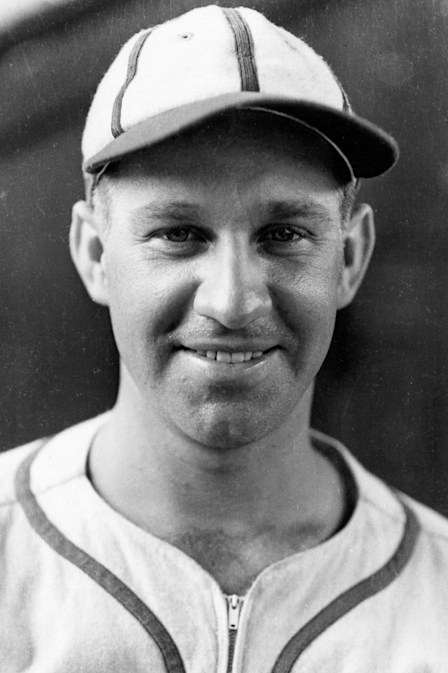
Enos Slaughter was an outfielder who played for the New York Yankees from 1954 to 1959. Career stats: .255 batting average, 16 home runs, 99 RBI.
April 11, 1954. Two days before Opening Day, in a St. Louis clubhouse, a 37-year-old Enos Slaughter cried at his locker. He'd worn a Cardinals uniform since 1938. Now the Cardinals had traded him to the New York Yankees for Bill Virdon, Mel Wright, and a minor leaguer who never made the majors (Virdon, at least, would win National League Rookie of the Year the following season, so St. Louis didn't come away with nothing), and Slaughter didn't try to hide how it felt. "This is the biggest shock of my life," he said. "I've given my life to this organization, and they let you go when they think you're getting old." He was wrong about being done. He had six more seasons left in him, two more championships, and a Hall of Fame plaque waiting at the end of it.
Path to the Bronx
Enos Bradsher Slaughter grew up on a tobacco farm outside Roxboro, North Carolina, where the nickname "Country" attached itself to him and never let go. He debuted with the Cardinals in 1938 and spent the next sixteen years building a reputation that had nothing to do with natural gifts and everything to do with refusing to jog. He ran out routine grounders like they were bases-loaded triples (nobody ever accused him of jogging to first, not once, in nineteen seasons). Teammates and opponents said the same thing about him for two decades: he came to play, every single time, whether it mattered or not.
Three of those seasons vanished into World War II. Slaughter enlisted in the Army Air Forces in 1943, taught physical education to recruits at bases in Missouri and California, and came home in 1946 to a Cardinals team that still needed him. He hit .300 with an NL-leading 130 RBI that year and helped St. Louis to the pennant -- then delivered the signature moment of his career. Game 7 of the 1946 World Series, tied 3-3 in the eighth, two outs. Harry Walker lined a single to left-center, and Slaughter -- running from first, ignoring his third-base coach's stop sign, depending on who you believe -- never slowed down. He scored standing up. Boston shortstop Johnny Pesky's relay throw got there just late enough. Cardinals win, 4-3. They still call it the Mad Dash, and it's still the best two words anyone's ever used to describe how Slaughter played baseball.
By 1954 he was 37, a Cardinal for life by every appearance, and the club decided it needed to get younger. St. Louis was clearing room for a kid named Wally Moon. The Yankees, meanwhile, were the reigning five-time World Series champions -- five straight titles from 1949 to 1953 -- and wanted outfield depth to keep the run going, not sentiment about somebody else's institution.
Six Seasons, With a Gap in the Middle
The "1954-1959" on Slaughter's Yankees record undersells what actually happened. He played 69 games in 1954, then just 10 more in 1955 before New York shipped him to Kansas City that May -- part of the years-long pipeline of talent the Yankees and Athletics ran between their organizations. Slaughter spent over a year away. Then, on August 25, 1956, with the Yankees in a pennant race, they reclaimed him off waivers for the price of admission. He'd be back in pinstripes for the stretch run, and it turned out to be perfect timing.
| Yankees Years | 1954-1959 (non-continuous) |
| Yankees Games | 350 |
| Yankees Batting Line | .255/.357/.378 |
| Yankees Home Runs | 16 |
| Yankees RBI | 99 |
| Best Yankees Season | 1958: .304 AVG in 77 games |
| World Series Titles (Yankees) | 2 (1956, 1958) |
| Career Totals (19 seasons, 4 teams) | .300/.382/.453, 2,383 H, 169 HR, 1,304 RBI |
| Hall of Fame | 1985 (Veterans Committee) |
That October, in Game 3 of the 1956 World Series against Brooklyn, the Yankees trailed 2-1 with two outs in the sixth when a 40-year-old Slaughter turned it around with one swing -- a three-run homer off Roger Craig that put New York ahead 4-2 for good in a 5-3 win. Whitey Ford got the complete-game victory, but Slaughter supplied the swing everyone remembered. He hit .350 for the 1956 World Series as New York beat the Dodgers in seven games. It was his third career championship and his first as a Yankee, a full decade after the Mad Dash.
Enos was my best pinch-hitter last year. We're not carrying him for charity. He earns his pay.
Stengel kept finding reasons to use him. The Yankees won the pennant again in 1957, and Slaughter appeared in that October's World Series too, though New York lost in seven to Milwaukee. In 1958 he had his best Yankees season at 42 years old -- 77 games, a .304 average -- and picked up a fourth career ring when the Yankees beat the Braves in a rematch, coming back from down three games to one. Bob Turley won the MVP for that Series. Slaughter's contribution was smaller by then, mostly at-bats off the bench, but he was still on the roster, still available when Stengel needed him.
He played 74 more games in 1959 before New York finally moved him along to the Milwaukee Braves that September 11. Eleven games later, at 43, he was done.
The Ledger, and What's Missing From It
Nineteen seasons, four teams, five World Series, and a .300 career average that never once translated into an actual batting title (his best finish was third in the National League in 1949, at .336 -- a fine year to be a very good hitter on a team that already had Stan Musial). Slaughter's Hall of Fame case sat unresolved for decades after his final at-bat, and it's hard to separate that wait entirely from the shadow the 1947 season left on him. That August, he spiked Jackie Robinson's foot on a play at first base, and Dodgers second baseman Eddie Stanky called it deliberate in print the next day. Slaughter denied it his whole life. Separately, and more murkily, sportswriters that spring had accused him and teammate Terry Moore of trying to organize a player revolt against Robinson's presence in the league -- a strike that never happened, and whose factual basis historians have since picked apart. None of it kept the Veterans Committee from eventually electing him, just slower than his numbers alone would suggest.
Born in Roxboro, North Carolina
Enos Bradsher Slaughter is born on a tobacco farm; the nickname "Country" follows him for life.
The Mad Dash
Scores from first on Harry Walker's eighth-inning single to win Game 7 of the World Series for the Cardinals, 4-3 over the Red Sox.
Traded to the Yankees
St. Louis sends Slaughter to New York for Bill Virdon, Mel Wright, and Emil Tellinger, ending his 16-year run as a Cardinal.
Game 3 Home Run
At 40 years old, hits a three-run homer off Roger Craig that powers a 5-3 win over Brooklyn in the 1956 World Series, which the Yankees win in seven games.
Elected to the Hall of Fame
The Veterans Committee elects Slaughter and Arky Vaughan; Slaughter is formally inducted in Cooperstown on July 28, 1985.
Death
Slaughter dies at age 86 at Duke University Medical Center following treatment for non-Hodgkin's lymphoma.
He was never the best player on either of his championship rosters, not with the Cardinals and not with a Yankees team that had Mickey Mantle patrolling center field. That was never really the point with Slaughter. He was the guy who ran out ground balls in April games that meant nothing, on the theory that you never actually know which ones matter until later. In 1946, one of them turned into the biggest sprint in World Series history. Ten years later, at an age when most outfielders are selling insurance, he was still doing it in pinstripes.
Frequently Asked Questions
When did Enos Slaughter play for the Yankees?
Slaughter played for the Yankees from 1954 to 1959, though not continuously. New York acquired him in an April 1954 trade with the Cardinals, traded him to the Kansas City Athletics in May 1955, then reacquired him off waivers in August 1956 for the rest of his Yankees tenure.
Why was Enos Slaughter traded to the Yankees?
The Cardinals traded Slaughter, then 37, to the Yankees on April 11, 1954, for outfielder Bill Virdon, pitcher Mel Wright, and minor leaguer Emil Tellinger. St. Louis wanted to get younger and clear room for prospect Wally Moon; Slaughter had been with the organization since 1938 and was reportedly devastated by the move.
What is Enos Slaughter's 'Mad Dash'?
The Mad Dash refers to Slaughter scoring from first base on a single by Harry Walker in the eighth inning of Game 7 of the 1946 World Series, breaking a 3-3 tie and giving the Cardinals a 4-3 win and the championship over the Boston Red Sox. It happened eight years before he ever played for the Yankees.
Is Enos Slaughter in the Hall of Fame?
Yes. The Veterans Committee elected Slaughter to the Baseball Hall of Fame on March 6, 1985, alongside Arky Vaughan, and he was formally inducted in Cooperstown that July 28. He finished his 19-year career with a .300 average, 2,383 hits, and 169 home runs.
What did Enos Slaughter do in the 1956 World Series?
Slaughter hit .350 in the 1956 World Series and delivered a three-run home run off Roger Craig in Game 3 that powered a 5-3 Yankees win. New York beat the Dodgers in seven games for Slaughter's first championship as a Yankee.