
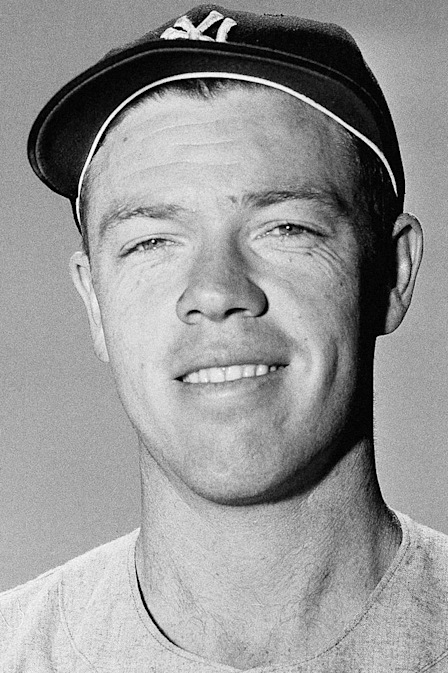
Career Stats
Regular Season
| Year | G | AB | R | H | 2B | 3B | HR | RBI | BB | SO | SB | AVG | OBP | SLG | OPS |
|---|---|---|---|---|---|---|---|---|---|---|---|---|---|---|---|
| 1956 | 124 | 452 | 81 | 140 | 15 | 3 | 13 | 58 | 72 | 63 | 3 | .310 | .406 | .442 | .848 |
| 1957 | 143 | 545 | 88 | 157 | 25 | 10 | 13 | 63 | 60 | 72 | 2 | .288 | .361 | .442 | .803 |
| 1958 | 138 | 503 | 69 | 126 | 19 | 1 | 14 | 65 | 59 | 75 | 6 | .250 | .329 | .376 | .705 |
| 1959 | 130 | 446 | 45 | 113 | 17 | 8 | 4 | 34 | 36 | 41 | 0 | .253 | .311 | .354 | .665 |
| 1960 | 120 | 338 | 54 | 87 | 16 | 4 | 8 | 34 | 39 | 45 | 2 | .257 | .338 | .399 | .737 |
| Career | 1361 | 4759 | 705 | 1311 | 192 | 52 | 112 | 585 | 571 | 637 | 46 | .275 | .353 | .408 | .761 |
Career-best seasons highlighted in gold. Stats via Retrosheet.
Postseason
| Year | G | AB | R | H | 2B | 3B | HR | RBI | BB | SO | SB | AVG | OBP | SLG | OPS |
|---|---|---|---|---|---|---|---|---|---|---|---|---|---|---|---|
| 1951 | 6 | 23 | -- | 6 | -- | -- | 1 | 7 | -- | -- | -- | .261 | -- | -- | -- |
| 1952 | 7 | 25 | -- | 5 | -- | -- | 1 | 3 | -- | -- | -- | .200 | -- | -- | -- |
| 1953 | 6 | 24 | -- | 4 | -- | -- | 2 | 4 | -- | -- | -- | .167 | -- | -- | -- |
| 1955 | 7 | 27 | -- | 7 | -- | -- | 1 | 1 | -- | -- | -- | .259 | -- | -- | -- |
| 1956 | 7 | 21 | -- | 3 | -- | -- | 0 | 1 | -- | -- | -- | .143 | -- | -- | -- |
| 1957 | 7 | 24 | -- | 6 | -- | -- | 0 | 2 | -- | -- | -- | .250 | -- | -- | -- |
| 1958 | 7 | 28 | -- | 9 | -- | -- | 2 | 4 | -- | -- | -- | .321 | -- | -- | -- |
| 1960 | 6 | 18 | -- | 5 | -- | -- | 0 | 2 | -- | -- | -- | .278 | -- | -- | -- |
| Career | 53 | 190 | 0 | 45 | 0 | 0 | 7 | 24 | 0 | 0 | 0 | .237 | .237 | .347 | .584 |
Gil McDougald was a second baseman who played for the New York Yankees from 1951 to 1960. Career stats: .276 batting average, 112 home runs, 576 RBI.
Baseball has crowned hundreds of All-Stars at second base. Hundreds more at third, and at shortstop. Exactly one player made an All-Star team at all three -- and did it while helping the Yankees win five World Series in a decade that produced eight American League pennants.
Gil McDougald never had a signature position because he never needed one. Casey Stengel simply put him wherever the roster was thinnest that year, and McDougald made it look like the position had been his all along. He arrived in 1951 as a $1,000 bonus-baby rookie and left in 1960 as a five-time champion who walked away from the game on his own terms, at 32, still productive, because he didn't want to be property of an expansion team. In between, his bat produced a grand slam that no rookie had ever hit in a World Series, and his own line drive produced one of the most agonized nights of his life.
Twin Falls to the Bronx
Gilbert James McDougald was born May 19, 1928, in San Francisco. Yankees West Coast scout Joe Devine signed him in the spring of 1948 for $200 a month and a $1,000 bonus -- modest money even by the standards of the day. McDougald hit .340 for the Class C Twin Falls Cowboys that summer and .344 the next year for Class B Victoria, earning league All-Star honors at second base both times. By 1950 he was at Double-A Beaumont under Hall of Fame manager Rogers Hornsby, and the Yankees liked what they saw enough to bring him to spring training in 1951 instead of parking him at Triple-A Kansas City.
He made the club. He debuted on April 20, 1951, in a lineup that still had Joe DiMaggio in center field and a rookie named Mickey Mantle arriving that same spring.
The Rookie Who Beat Minnie Miñoso
McDougald hit .306 with 14 homers, 63 RBI, and 72 runs in 131 games as a rookie -- good enough to place in the American League's top ten in average, on-base percentage, slugging, and stolen bases. He edged Chicago's Minnie Miñoso for the 1951 AL Rookie of the Year award by a margin of two votes, tight enough that either man could rightly complain, though neither did.
Then October arrived. In Game 5 of the World Series against the Giants at the Polo Grounds, McDougald drove a pitch from Larry Jansen into the upper deck in left field for a grand slam -- the third slam in World Series history and the first one ever hit by a rookie. The Yankees won that game 13-1 and the Series in six. Casey Stengel had a rookie third baseman who hit like a cleanup man and fielded like he'd been playing the position for a decade. He hadn't. McDougald had barely played third base at all before that spring.
Wherever Stengel Needed Him
That was the pattern for the next nine years. Stengel needed a third baseman in 1952, and McDougald played 152 games there, homering in Game 1 of a seven-game World Series win over Brooklyn. He needed a second baseman in 1953, and McDougald hit .285 with a career-best 83 RBI, then went deep in both Games 4 and 5 as the Yankees beat the Dodgers again for their fifth straight title. He needed a shortstop later on, and McDougald played that too -- and made an All-Star team from all three spots, a distinction still unmatched in the sport's history.
The defense held up wherever he stood. McDougald finished his career with a .975 fielding percentage across 599 games at second, 508 at third, and 284 at short, and he led American League infielders in double plays at three separate positions in three separate seasons. Nobody else on the roster gave Stengel that kind of flexibility, which is precisely why nobody else got platooned around quite as much. McDougald didn't complain about it publicly. He just kept showing up wherever the lineup card put him and hit .276 for his career doing it.
| Yankees Tenure | 1951-1960 (2B/3B/SS) |
| Career Line | .276/.356/.410, 112 HR, 576 RBI |
| 1951 Rookie of the Year | .306, 14 HR, 63 RBI, 72 R |
| All-Star Selections | 5 (1952, '56, '57, '58, '59) at 3 positions |
| AL Pennants | 8 (1951-53, '55-58, '60) |
| World Series Titles | 5 (1951, 1952, 1953, 1956, 1958) |
| Postseason | .237, 7 HR, 24 RBI in 53 games |
The Ball in the Ear
Not every line drive in McDougald's career went off his own bat. In mid-August 1955, before a home game, he was standing near the batting cage at second base talking to coach Frankie Crosetti when he spotted a stray ball on the grass. "I saw a ball lying on the ground nearby and reached to pick it up, my head going just beyond the screen," he said. "Just then Bob Cerv hit a ball that hit me in the ear."
Doctors diagnosed a mild concussion. McDougald missed a handful of games and came back like nothing had happened. What nobody caught at the time was a small skull fracture and damage to his left inner ear -- an injury that cost him nothing on the field but would take his hearing, gradually and then almost completely, over the following three decades.
May 7, 1957
Municipal Stadium, Cleveland. Herb Score was 23 years old and coming off two of the most dominant seasons any young pitcher had produced -- 39-20 with a 2.46 ERA, a strikeout arm that scouts compared to Bob Feller's. McDougald stepped in as Cleveland's second batter of the game and turned on a 2-2 fastball, sending a line drive right back through the middle. Score never got his glove up. The ball struck him between the nose and the right eye, fracturing bone, tearing his retina, and dropping him to the mound in a way that silenced both dugouts.
McDougald sat by himself in the Yankees clubhouse afterward, unable to eat. "I was sick to my stomach," he said. "I didn't want to play any more." He told Stengel and reporters that if Score lost the eye, he'd quit baseball. The next day, with word that Score would likely keep his sight, McDougald softened -- "What I said last night was a spur of the moment thing. Things look better today" -- but something in him never fully let go of that night.
Score spent three weeks in the hospital and did come back, in 1958. What actually ended his dominance wasn't the eye. It was a torn elbow tendon he suffered that May, an injury Score himself blamed for wrecking his mechanics. "The reason my motion changed was because I hurt my elbow," he explained years later, "and I overcompensated for it and ended up with some bad habits." History flattened two separate injuries into one clean, tragic story. McDougald carried the guilt of the version everyone remembered anyway.
Down 3-1, and Back
The Yankees and Braves met again in the 1958 World Series, a rematch of Milwaukee's championship win the year before. New York fell behind three games to one, one loss from a second straight defeat to the same team. McDougald hit a bases-empty home run in Game 5 to help force a 7-0 win, then led off the tenth inning of Game 6 with a solo shot off Hall of Famer Warren Spahn to break a 2-2 tie in a game the Yankees eventually won 4-3. New York took Game 7 the next day, becoming only the second team in World Series history to rally from down 3-1. McDougald's bat had kept the season alive twice in three days.
The Last Season
By 1959, McDougald was 30 and the Yankees had a shortstop named Tony Kubek and a third baseman named Clete Boyer pushing for playing time. He still made his fifth All-Star team that year, but the everyday job was slipping. Then came the 1960 World Series against Pittsburgh -- seven of the strangest games ever played, the Yankees outscoring the Pirates 55-27 across the Series and somehow losing it. McDougald's final major league moment came in the top of the ninth inning of Game 7 at Forbes Field, pinch-running for Dale Long. When Mickey Mantle avoided a tag at first base on a Yogi Berra groundout, McDougald raced home to tie the game at 9-9. Minutes later, Bill Mazeroski hit the walk-off home run that ended the Series, and McDougald's career, at once.
He'd already made up his mind. Sensing the Yankees would leave him exposed in that winter's expansion draft rather than protect a 32-year-old utility infielder, McDougald announced his retirement on December 9, 1960, before the Los Angeles Angels or Washington Senators could draft him. He said the timing wasn't about the draft. Almost nobody believed him, and it didn't especially matter -- he was gone either way, on his own schedule, with five rings already in hand.
After Baseball
McDougald coached at Fordham University for parts of two decades, stepping away in 1976 as his hearing loss from the 1955 Cerv incident made communicating with players increasingly difficult. By the 1980s he was nearly deaf in both ears. He went public about the condition in a 1994 interview and received a cochlear implant that same year at NYU Medical Center, restoring a measure of sound he'd been missing for almost forty years.
Gil McDougald died of prostate cancer on November 28, 2010, at his home in Wall Township, New Jersey. He was 82, survived by his wife Lucille, seven children, fourteen grandchildren, and seven great-grandchildren -- a quiet ending for a player who'd spent a decade being whatever the Yankees needed him to be.
Signed by the Yankees
West Coast scout Joe Devine signs the 19-year-old McDougald for a $1,000 bonus. He hits .340 for Class C Twin Falls that summer, the start of a three-year climb through the minors.
Major League Debut
McDougald debuts for a Yankees club anchored by Joe DiMaggio in his final season and a rookie named Mickey Mantle. He'll go on to hit .306 and win AL Rookie of the Year.
World Series Grand Slam
In Game 5 against the Giants at the Polo Grounds, McDougald hits the third grand slam in World Series history -- and the first ever by a rookie -- in a 13-1 rout that all but seals New York's title.
Hit in the Ear by Bob Cerv's Line Drive
A batting-practice line drive off teammate Bob Cerv's bat strikes McDougald near the batting cage. The diagnosed concussion heals in days, but an undetected skull fracture and inner-ear damage will cost him his hearing over the following decades.
Line Drive Injures Herb Score
McDougald's line drive strikes Cleveland pitcher Herb Score in the eye at Municipal Stadium, fracturing bone and ending his dominant early run. McDougald considers quitting baseball that night.
Game 6 Home Run Off Warren Spahn
Down three games to one in the World Series, McDougald leads off the tenth inning with a home run off Warren Spahn to break a 2-2 tie. The Yankees win 4-3, force Game 7, and complete a comeback from a 3-1 deficit.
Retirement Announcement
Sensing the Yankees will leave him unprotected in the upcoming expansion draft, McDougald retires at 32 rather than play for the Los Angeles Angels or Washington Senators. He finishes with five World Series rings.
Frequently Asked Questions
What position did Gil McDougald play for the Yankees?
All three infield spots except first base. McDougald played 599 career games at second base, 508 at third base, and 284 at shortstop, and he remains the only player in All-Star Game history selected at three different positions -- second, third, and short.
Did Gil McDougald really hit the ball that injured Herb Score?
Yes. On May 7, 1957, at Municipal Stadium in Cleveland, McDougald hit a line drive that struck Indians pitcher Herb Score in the right eye, fracturing bone and ending his three-week hospital stay's worth of dominance. McDougald was so shaken he told reporters he'd quit baseball if Score lost the eye. Score kept his sight and pitched again in 1958, though a separate elbow tendon injury that year -- which Score himself blamed for changing his mechanics -- did more lasting damage to his career than the eye injury did.
Was Gil McDougald the 1951 AL Rookie of the Year?
Yes. McDougald hit .306 with 14 home runs and 63 RBI for the Yankees in 1951, edging Chicago's Minnie Miñoso by two votes. That October he became the first rookie to hit a grand slam in World Series history, going deep off Larry Jansen in a Game 5 rout of the Giants.
How many World Series did Gil McDougald win with the Yankees?
Five -- 1951, 1952, 1953, 1956, and 1958 -- across eight American League pennants during his ten years in the Bronx (1951-1960). He appeared in 53 career postseason games, batting .237 with 7 home runs and 24 RBI.
Why did Gil McDougald retire in 1960?
He retired at 32, right after the Yankees lost the 1960 World Series to Pittsburgh on Bill Mazeroski's Game 7 walk-off homer, rather than risk being taken by the Los Angeles Angels or Washington Senators in that winter's expansion draft. He always maintained the draft had nothing to do with his decision. Few people who knew him believed that, but it hardly mattered -- he left the game with five championship rings and no regrets he ever voiced publicly.
Exactly one player in All-Star Game history made it at second base, third base, and shortstop. Gil McDougald never asked for a signature position. He just made sure whichever one he was handed belonged to him by October.