
Career Stats
Regular Season
| Year | G | AB | R | H | 2B | 3B | HR | RBI | BB | SO | SB | AVG | OBP | SLG | OPS |
|---|---|---|---|---|---|---|---|---|---|---|---|---|---|---|---|
| 1953 | 8 | 10 | 1 | 2 | 0 | 0 | 0 | 0 | 0 | 2 | 0 | .200 | .200 | .200 | .400 |
| 1954 | 113 | 315 | 43 | 67 | 7 | 1 | 3 | 23 | 29 | 32 | 3 | .213 | .278 | .270 | .548 |
| 1955 | 43 | 96 | 12 | 22 | 5 | 0 | 0 | 8 | 11 | 11 | 0 | .229 | .321 | .281 | .602 |
| 1956 | 81 | 186 | 15 | 48 | 5 | 1 | 0 | 18 | 12 | 34 | 1 | .258 | .305 | .296 | .601 |
| 1957 | 73 | 158 | 23 | 42 | 7 | 2 | 2 | 12 | 20 | 22 | 1 | .266 | .352 | .373 | .725 |
| Career | 736 | 2152 | 273 | 565 | 77 | 19 | 16 | 220 | 241 | 226 | 22 | .263 | .337 | .338 | .675 |
Career-best seasons highlighted in gold. Stats via Retrosheet.
Postseason
| Year | G | AB | R | H | 2B | 3B | HR | RBI | BB | SO | SB | AVG | OBP | SLG | OPS |
|---|---|---|---|---|---|---|---|---|---|---|---|---|---|---|---|
| 1949 | 5 | 20 | -- | 5 | -- | -- | 0 | 4 | -- | -- | -- | .250 | -- | -- | -- |
| 1950 | 4 | 14 | -- | 4 | -- | -- | 0 | 3 | -- | -- | -- | .286 | -- | -- | -- |
| 1951 | 5 | 8 | -- | 2 | -- | -- | 0 | 0 | -- | -- | -- | .250 | -- | -- | -- |
| 1955 | 3 | 3 | -- | 0 | -- | -- | 0 | 0 | -- | -- | -- | .000 | -- | -- | -- |
| 1956 | 2 | 2 | -- | 0 | -- | -- | 0 | 0 | -- | -- | -- | .000 | -- | -- | -- |
| 1957 | 7 | 22 | -- | 8 | -- | -- | 0 | 2 | -- | -- | -- | .364 | -- | -- | -- |
| Career | 26 | 69 | 0 | 19 | 0 | 0 | 0 | 9 | 0 | 0 | 0 | .275 | .275 | .275 | .551 |
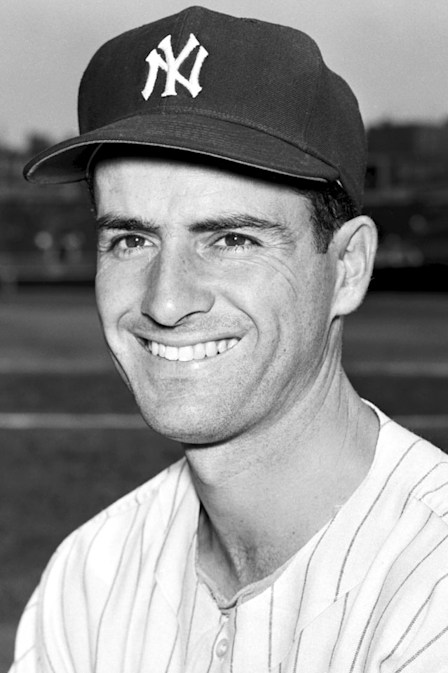
Jerry Coleman was a second baseman who played for the New York Yankees from 1949 to 1957. Career stats: .263 batting average, 16 home runs, 217 RBI.
Early 1953. Jerry Coleman is strapped into a Corsair over Korea, flying close-support runs for Marines fighting below. Flak comes up black and ugly. Two years earlier, he'd been standing on second base at Yankee Stadium, the toast of the Bronx, months removed from being named Most Valuable Player of the World Series. Now the only scoreboard that mattered was whether he came back.
He always came back. Gerald "Jerry" Coleman played second base for the New York Yankees from 1949 to 1957 under Casey Stengel, won four World Series rings, and is, by every account anyone's ever managed to check, the only major leaguer to see combat in both World War II and Korea. Ted Williams flew fighters in both wars too, but he never saw combat in the first one -- the shooting stopped while he was still stateside training pilots. Bob Feller and Warren Spahn fought in World War II and stayed home for Korea. Coleman is the one name that clears both bars.
Stirnweiss Gets Spiked, a Rookie Gets His Shot
Coleman made the Yankees out of spring training in 1949 as George "Snuffy" Stirnweiss's backup. On Opening Day, Stirnweiss got spiked. Coleman took over second base and never really gave it back -- 128 games, a .275 average, and a fielding reputation that had Stengel raving before the season even ended.
Best man I ever saw on a double play. Once I seen him make a throw while standing on his head. He must have a mirror hanging down his neck.
The Sporting News named him the American League's Rookie of the Year that fall. He'd actually finished third in the BBWAA's inaugural balloting, behind Roy Sievers and Alex Kellner (the first year the award ever split into separate AL and NL votes -- bad timing to finish third in a brand-new category nobody remembers arguing about). Coleman spent the next several Octobers making the distinction irrelevant anyway.
The MVP Series, Then the Recall Notice
By 1950, Coleman had made his only All-Star team and helped the Yankees sweep the Philadelphia "Whiz Kids" in the World Series. Game 3, October 6, bottom of the ninth: his two-out single to left-center scored Gene Woodling for a 3-2 walk-off win. The New York chapter of the BBWAA handed him the Babe Ruth Award as the Series' best player -- five years before an official World Series MVP award even existed.
In May 1952, the Marine Corps called him back to active duty. He'd already flown 57 dive-bomber missions in the Pacific during World War II. Now, assigned to Marine Attack Squadron 323 -- the "Death Rattlers" -- he trained on the Corsair and flew 63 more combat missions over Korea in early 1953: 120 missions across two wars, and a combined two Distinguished Flying Crosses, thirteen Air Medals, three Navy Citations. He missed most of the 1952 season (just 11 games before the recall) and most of 1953. The Yankees won the World Series both years. He doesn't have the rings.
The Colonel Behind the Microphone
Coleman returned in September 1953, then played out his career as a part-time infielder through 1957, picking up one more ring along the way. He retired from the Marine Corps Reserve a lieutenant colonel, and the nickname followed him into his second career. He called Yankees games in the 1960s before landing in San Diego, where he spent 42 seasons -- 33 of them consecutive -- as the voice of the Padres. "Oh, Doctor!" became as recognizable in San Diego as anything he'd ever done with a glove (so did "He slid into second with a stand-up double" -- the malaprops, San Diego decided, were half the charm). In 2005, the Hall of Fame gave him the Ford C. Frick Award for broadcasting excellence.
Nobody else can say they did both wars. Nobody else needs to.
| Yankees Career (1949-1957) | 723 games, .263/.340/.339 |
| Career Hits | 558 |
| Career RBI | 217 |
| World Series Championships | 4 (1949, 1950, 1951, 1956) |
| 1950 Babe Ruth Award | World Series top performer |
| 1949 AL Rookie of the Year | The Sporting News (3rd in BBWAA vote) |
| Postseason Stats | .275 AVG, 9 RBI in 26 games |
| Combat Missions | 120 (57 WWII, 63 Korea) |
| Ford C. Frick Award | 2005 |
Born in San Jose, California
Gerald Francis Coleman is born in San Jose. He signs with the Yankees out of high school and works his way up through Binghamton, Kansas City, and Newark before World War II interrupts his rise.
Marine Corps Dive-Bomber Pilot, WWII
Coleman earns his wings in April 1944 and flies 57 combat missions in an SBD Dauntless dive bomber over the Solomons and the Philippines, returning home in July 1945 with a Distinguished Flying Cross -- before baseball ever gets its first crack at him.
Takes Over at Second Base
Backup Snuffy Stirnweiss gets spiked on Opening Day. Coleman starts and doesn't stop, hitting .275 in 128 games and winning The Sporting News' AL Rookie of the Year (third in the official BBWAA vote).
Walk-Off Single, Babe Ruth Award
Coleman's ninth-inning single beats the Phillies in Game 3 of a Yankees sweep. He wins the Babe Ruth Award as the Series' top performer, as the Yankees win their second straight title.
Recalled for Korea
The Marine Corps recalls Coleman to active duty after just 11 games that season. After refresher training on the Corsair, he flies 63 combat missions with Marine Attack Squadron 323 over Korea in early 1953, missing most of 1952 and most of 1953 -- both Yankees championship years. He returns to the Yankees that September.
Final Season
Coleman plays his last year as a part-time infielder, closing a nine-year career with four World Series rings and a legacy no other major leaguer shares: combat duty in two wars.
Ford C. Frick Award
The Hall of Fame honors Coleman's broadcasting career -- 42 seasons calling Padres games, "Oh, Doctor!" included -- with its award for excellence in baseball broadcasting.
Dies in San Diego at 89
Coleman passes away in San Diego, where he'd spent more than four decades as the voice of the Padres.
Frequently Asked Questions
Was Jerry Coleman really the only MLB player to see combat in both World War II and the Korean War?
By every documented account, yes. Coleman flew 57 combat missions as a Marine dive-bomber pilot in World War II and 63 more in Korea. Ted Williams also served as a Marine pilot in both wars but never saw combat in World War II -- the fighting ended while he was still a stateside flight instructor. Bob Feller and Warren Spahn both saw WWII combat but didn't serve in Korea. No other major leaguer is documented as having combat service in both wars.
Did Jerry Coleman win the 1949 AL Rookie of the Year award?
It depends which award. The Sporting News named him the American League's outstanding rookie for 1949. In the official BBWAA vote -- the first year the award split into separate AL and NL ballots -- Coleman finished third, behind winner Roy Sievers and Alex Kellner.
How many World Series rings did Jerry Coleman win?
Four -- 1949, 1950, 1951, and 1956. He appeared in six World Series across his nine-year career but missed the 1952 and 1953 Fall Classics while serving in Korea -- he didn't return to the Yankees until September 1953, too late for that year's Series. The Yankees won both of those titles too, but Coleman wasn't on the roster for either.
What did Jerry Coleman do after his playing career?
He broadcast Yankees games in the 1960s, then became the longtime voice of the San Diego Padres for 42 seasons, the final 33 consecutive, briefly managing the club to a 73-89 record in 1980 before returning to the booth. His signature call, "Oh, Doctor!", became a San Diego institution. He won the Ford C. Frick Award in 2005.