
Career Stats
Regular Season
| Year | G | AB | R | H | 2B | 3B | HR | RBI | BB | SO | SB | AVG | OBP | SLG | OPS |
|---|---|---|---|---|---|---|---|---|---|---|---|---|---|---|---|
| 1961 | 154 | 621 | 86 | 173 | 38 | 6 | 8 | 46 | 26 | 60 | 1 | .279 | .307 | .398 | .705 |
| 1962 | 46 | 173 | 28 | 53 | 6 | 1 | 4 | 17 | 12 | 16 | 2 | .306 | .349 | .422 | .771 |
| 1963 | 136 | 562 | 73 | 144 | 21 | 3 | 8 | 45 | 28 | 68 | 4 | .256 | .293 | .347 | .640 |
| 1964 | 107 | 416 | 46 | 95 | 16 | 3 | 8 | 31 | 26 | 56 | 5 | .228 | .275 | .339 | .614 |
| 1965 | 110 | 344 | 28 | 75 | 6 | 3 | 5 | 36 | 20 | 50 | 1 | .218 | .257 | .297 | .554 |
| Career | 1100 | 4195 | 528 | 1116 | 179 | 30 | 58 | 379 | 216 | 446 | 30 | .266 | .302 | .364 | .666 |
Career-best seasons highlighted in gold. Stats via Retrosheet.
Postseason
| Year | G | AB | R | H | 2B | 3B | HR | RBI | BB | SO | SB | AVG | OBP | SLG | OPS |
|---|---|---|---|---|---|---|---|---|---|---|---|---|---|---|---|
| 1957 | 7 | 28 | -- | 8 | -- | -- | 2 | 4 | -- | -- | -- | .286 | -- | -- | -- |
| 1958 | 7 | 21 | -- | 1 | -- | -- | 0 | 1 | -- | -- | -- | .048 | -- | -- | -- |
| 1960 | 7 | 30 | -- | 10 | -- | -- | 0 | 3 | -- | -- | -- | .333 | -- | -- | -- |
| 1961 | 5 | 22 | -- | 5 | -- | -- | 0 | 1 | -- | -- | -- | .227 | -- | -- | -- |
| 1962 | 7 | 29 | -- | 8 | -- | -- | 0 | 1 | -- | -- | -- | .276 | -- | -- | -- |
| 1963 | 4 | 16 | -- | 3 | -- | -- | 0 | 0 | -- | -- | -- | .188 | -- | -- | -- |
| Career | 37 | 146 | 0 | 35 | 0 | 0 | 2 | 10 | 0 | 0 | 0 | .240 | .240 | .281 | .521 |
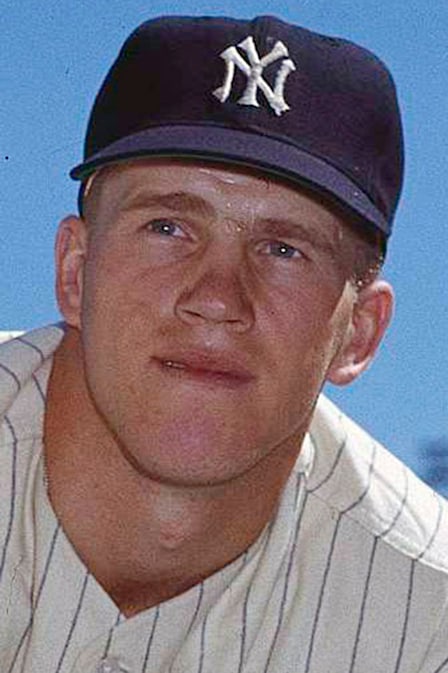
Tony Kubek was a shortstop who played for the New York Yankees from 1957 to 1965. Career stats: .266 batting average, 58 home runs, 379 RBI.
October 5, 1957. County Stadium, Milwaukee. A 21-year-old rookie shortstop stepped up in Game 3 of the World Series, in the city where he'd grown up, in front of the neighbors who'd watched him play sandlot ball a few summers earlier. Tony Kubek hit two home runs that afternoon and drove in four runs in a 12-3 Yankees win. He remains one of only four players in history to homer twice in a World Series game as a rookie (Charlie Keller did it in 1939, Willie McGee in 1982, Andruw Jones in 1996 -- Kubek is the only one of the four who did it in his own hometown).
Kubek played shortstop -- and third base, and left field, and center field, whatever Casey Stengel needed -- for the New York Yankees from 1957 to 1965. He won the American League Rookie of the Year award in his first season, three World Series rings, and then retired at 30 because of a neck injury nobody diagnosed until it nearly ended more than his career. He spent the next three decades as one of the most recognized voices in American sports television.
A Milwaukee Kid Who Could Play Anywhere
Anthony Christopher Kubek was born October 12, 1935, in Milwaukee, Wisconsin. He starred in local amateur tournaments good enough to draw scouts from around the league, and after graduating Bay View High School in 1954, he signed with the Yankees for a modest bonus. He started at Owensboro in the Class D Kitty League -- about as far from Yankee Stadium as a signing gets.
By 1957 he was in the Bronx, and Stengel didn't quite know what position to call him, so he called him everywhere. Kubek started games at shortstop, third, left field, and center field that season (he'd eventually play seven of the nine positions on a baseball diamond across his career), and he hit .297 while doing it.
The Kubek situation is such I play him every day for nine innings, not three or four. I can see him at bat, how he runs the bases which he does fast, how much he executes the plays and how he'll play left field if I open him there.
The versatility won him the everyday shortstop job soon enough, and it won him Rookie of the Year honors that fall -- unanimous, or close to it, on the strength of 128 hits, 21 doubles, and a rookie postseason for the ages against the Braves. The Yankees still lost that World Series in seven games. Whitey Ford and the rest of the pitching staff couldn't solve Lew Burdette, who beat New York three times. Kubek's two home runs in Milwaukee weren't enough. They were still the loudest thing he did all October.
Nine Years, Three Rings, One Bad Hop
The Yankees avenged that loss the following October, beating the Braves in seven games for Kubek's first championship. Two more followed -- 1961 against the Reds and 1962 against the Giants -- while Kubek anchored shortstop for a lineup that had Mickey Mantle and Roger Maris hitting behind him and Bobby Richardson turning double plays beside him.
His best full season came in 1961: 170 hits, 84 runs, and 38 doubles -- second in the American League and a Yankees shortstop record that stood until 2004. He played in 153 games, a career high. The Yankees beat Cincinnati that October, and Kubek had his second ring.
Not every October went that cleanly. In Game 7 of the 1960 World Series against Pittsburgh, a Bill Virdon ground ball hit a pebble in the Forbes Field infield, took a vicious bad hop, and caught Kubek square in the throat. He had to leave the game. The Pirates turned that eighth-inning rally into a 9-7 lead, the Yankees tied it in the ninth, and Bill Mazeroski won it with the most famous walk-off home run in World Series history. The Yankees had outscored Pittsburgh 55-27 across the series and still lost. Kubek's bad hop got blamed for decades, fairly or not.
The Injury Nobody Saw Coming
Kubek's numbers slid after 1962 -- .257 in 1963, .229 in 1964 -- and by 1965 the pain in his neck had become impossible to ignore. Doctors finally found the cause: an old fracture, likely dating back to that touch-football game at Fort Lewis, that had gone undiagnosed for years. They told him plainly that another hard hit could paralyze him.
He announced his retirement in January 1966. He was 30, and he'd played nine seasons, all of them in pinstripes. Richardson, his double-play partner for nearly a decade, had planned to retire himself that winter. The Yankees talked him into one more season instead, because Kubek's exit had left the middle infield with a hole nobody else could fill.
The Voice of a Generation
Kubek didn't stay away from the game. Within months of retiring he was in the broadcast booth, and by the mid-1970s he'd become the primary color commentator on NBC's "Game of the Week" -- paired for years with Curt Gowdy and later Joe Garagiola, calling the sport for a national Saturday audience that, for long stretches of the '70s and '80s, had no other baseball on television at all. He also spent thirteen seasons in the booth for the expansion Toronto Blue Jays, teaching Canadian audiences the sport from its first pitch as a franchise.
What set Kubek apart wasn't just longevity. It was candor. He criticized front offices, managers, and ownership on the air when he thought they'd earned it (a habit that made him popular with viewers and occasionally uncomfortable to employ). He walked away from the booth for good in 1994, disillusioned by the labor strike that wiped out that October. In 2009, the National Baseball Hall of Fame gave him the Ford C. Frick Award -- the first time it had gone to a broadcaster who'd worked exclusively in television. Nobody who watched him call a Saturday afternoon game was surprised.
| Career Batting Average | .266 |
| Career Hits | 1,109 |
| Career Doubles | 178 |
| Career Home Runs | 57 |
| Career RBI | 373 |
| 1957 AL Rookie of the Year | Yes -- .297 BA, 128 H |
| World Series Championships | 3 (1958, 1961, 1962) |
| World Series Games Played | 37 (six Fall Classics) |
| 1961 Season (career year) | 170 H, 38 2B, 84 R, .276 BA |
| Ford C. Frick Award | 2009 |
Born in Milwaukee, Wisconsin
Anthony Christopher Kubek is born in Milwaukee. He signs with the Yankees out of Bay View High School in 1954 and starts his professional career at Class D Owensboro.
Rookie of the Year
Kubek plays four positions as a 21-year-old rookie under Casey Stengel, hits .297, and wins the AL Rookie of the Year award. In Game 3 of the World Series, in his hometown of Milwaukee, he hits two home runs and drives in four runs -- the Yankees still lose the Series to the Braves in seven games.
The Bad Hop in Game 7
A Bill Virdon ground ball hits a pebble at Forbes Field and strikes Kubek in the throat, forcing him from the game. The Pirates rally in that inning, and Bill Mazeroski's walk-off homer later that day gives Pittsburgh the championship despite New York outscoring them 55-27 across the series.
Recalled to Military Duty
The Army Reserve calls Kubek to active duty during the Berlin Crisis, and he reports to Fort Lewis, Washington. The Yankees fear they'll lose him for the entire 1962 season. He also suffers the neck injury there -- playing touch football -- that will eventually end his career.
Returns and Homers Immediately
Kubek comes back from military duty and homers in his first at-bat, a 14-1 win over the Twins. The Yankees go on to beat the Giants in the World Series that October for his third championship ring.
Retires at 30
Doctors discover an old neck fracture and warn that another hard hit could cause paralysis. Kubek retires after the 1965 season, ending a nine-year career spent entirely with the Yankees. Within months, he's calling games on national television.
Ford C. Frick Award
The National Baseball Hall of Fame honors Kubek with the Ford C. Frick Award, recognizing his decades on NBC's "Game of the Week" and with the Toronto Blue Jays. He's the first broadcaster honored who worked exclusively in television.
Frequently Asked Questions
Why did Tony Kubek retire so young?
Kubek retired in January 1966 at 30 years old after doctors discovered an old neck fracture, likely dating to a touch-football injury he suffered while on Army Reserve duty at Fort Lewis, Washington, in 1961-62. Doctors warned that another hard hit could cause paralysis, and he walked away after nine seasons, all with the Yankees.
How many World Series rings did Tony Kubek win?
Kubek won three World Series championships with the Yankees -- 1958, 1961, and 1962. He also played in the World Series in 1957, 1960, and 1963, all Yankees losses, for six Fall Classic appearances total across his nine-year career.
What is Tony Kubek's connection to the 1960 World Series and Bill Mazeroski's home run?
In Game 7 at Forbes Field, a Bill Virdon ground ball took a bad hop off a pebble and struck Kubek in the throat, forcing him out of the game. The Pirates rallied in that inning, and Mazeroski's walk-off homer later that day gave Pittsburgh the title despite the Yankees outscoring them 55-27 across the series.
What did Tony Kubek do after he retired from baseball?
Kubek moved almost immediately into broadcasting. He spent decades as the primary color commentator on NBC's "Game of the Week," paired for years with Curt Gowdy and Joe Garagiola, and also called thirteen seasons of Toronto Blue Jays games. He won the Ford C. Frick Award in 2009 -- the first exclusively television broadcaster to receive it.
Was Tony Kubek the 1957 AL Rookie of the Year?
Yes. Kubek won the American League Rookie of the Year award in 1957 after hitting .297 with 128 hits while playing four different positions -- shortstop, third base, left field, and center field -- for Casey Stengel's Yankees.