
Career Stats
Regular Season
| Year | G | GS | W | L | SV | IP | H | ER | K | BB | ERA | WHIP |
|---|---|---|---|---|---|---|---|---|---|---|---|---|
| 1951 | 7 | 4 | 2 | 1 | 1 | 37.0 | 41 | 17 | 21 | 8 | 4.14 | 1.32 |
| 1952 | 47 | 16 | 11 | 6 | 7 | 148.1 | 149 | 57 | 57 | 38 | 3.46 | 1.26 |
| 1953 | 41 | 19 | 14 | 7 | 9 | 192.2 | 192 | 64 | 86 | 45 | 2.99 | 1.23 |
| 1954 | 45 | 0 | 6 | 6 | 22 | 82.1 | 72 | 29 | 34 | 15 | 3.16 | 1.06 |
| 1955 | 3 | 0 | 0 | 0 | 0 | 5.1 | 6 | 4 | 5 | 1 | 6.75 | 1.31 |
| Career | 143 | 39 | 33 | 20 | 39 | 465.2 | 460 | 171 | 203 | 107 | 3.30 | 1.22 |
Career-best seasons highlighted in gold. Stats via Retrosheet.
Postseason
| Year | G | GS | W | L | SV | IP | H | ER | K | BB | ERA | WHIP |
|---|---|---|---|---|---|---|---|---|---|---|---|---|
| 1951 | 1 | -- | 0 | 0 | 0 | 2.0 | -- | -- | -- | -- | 9.00 | -- |
| 1952 | 2 | -- | 0 | 1 | 0 | 6.0 | -- | -- | -- | -- | 3.00 | -- |
| 1953 | 2 | -- | 1 | 0 | 0 | 5.2 | -- | -- | -- | -- | 4.76 | -- |
| Career | 5 | 0 | 1 | 1 | 0 | 13.2 | 0 | 0 | 0 | 0 | 0.00 | 0.00 |
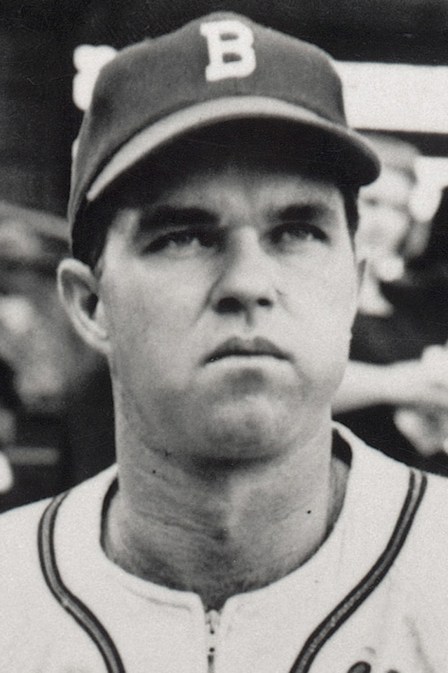
Johnny Sain was a pitcher who played for the New York Yankees from 1951 to 1955. Career stats: 33-20 record, 3.30 ERA, 203 strikeouts.
Boston sold him for $50,000 and a kid pitcher nobody outside the organization had heard of yet. Three World Series rings later, that looked like one of the worst trades the Braves ever made -- and one of the best the Yankees ever pulled off. Johnny Sain pitched for the New York Yankees from 1951 to 1955, working as both a spot starter and a reliever for a dynasty that never seemed to lose in October, and by the time he was done playing, he'd already started building a second legacy that would end up outlasting the first -- as the most respected pitching coach of his generation.
Half of "Spahn and Sain"
Sain broke in with the Boston Braves in 1942, then lost three full seasons to the Navy, training as a fighter pilot who never saw combat. He came back in 1946 and just started winning -- 20-14, then 21-12, then 24-15, three straight 20-win seasons that put him in the same company as Kid Nichols' legendary run for the same franchise back in the 1890s. He was the best pitcher in the National League for that stretch and hardly anybody outside New England noticed (the Braves kept finishing behind Brooklyn and St. Louis, which has a way of keeping a pitcher out of the headlines no matter how good his ERA is).
Then, in September 1948, with the Braves clinging to a pennant race, Boston Post writer Gerald Hern put Sain's name in a poem that outlived his career: "First we'll use Spahn / then we'll use Sain / Then an off day / followed by rain." Warren Spahn got top billing forever after. Sain, if he minded, never said so publicly -- he just kept out-pitching most of the league, including Bob Feller himself in a 1-0 Game 1 win in that year's World Series.
A Trade the Braves Would Regret
By August 1951, the Braves were sliding toward a fourth-place finish and Sain, four weeks shy of his 34th birthday, looked like a fading arm on a fading team. New York needed pitching depth for a stretch run, and on August 29, George Weiss sent Lew Burdette and $50,000 to Boston for him. It looked, at the time, like the Yankees paying full price for that fading arm. It didn't look that way for long -- Sain went 2-1 in seven games down the stretch, and the Yankees won the 1951 World Series without needing much from him at all.
Burdette, meanwhile, spent the next several years turning into a genuine ace for Milwaukee. He'd beat the Yankees three times in the 1957 World Series. Sain never had to watch that happen -- he was gone from New York by then -- but the trade remains one of those deals where both sides can claim they won, which is rarer than it sounds.
The Swingman Years
Casey Stengel didn't have a fixed role for Sain so much as a standing question: starter or reliever, whichever the day demanded. In 1952, Sain made 47 appearances, 16 of them starts, and went 11-6 with 7 saves. In 1953 he was even better -- 14-7, a 2.99 ERA, 9 saves, dividing his time and thriving at both jobs. Most pitchers of that era would've balked at the arrangement. Sain just pitched.
He was part of all three of the Yankees' championship runs he played for, and he did more than take up a roster spot. In Game 5 of the 1952 World Series, he relieved Ewell Blackwell in the sixth with New York up 5-4, watched Brooklyn tie it in the seventh, and took the 6-5 loss in 11 innings -- the one blemish on an otherwise glowing October resume. He made up for it the following fall.
Johnny Sain don't say much, but that don't matter much, because when you're out there on the mound, you got nobody to talk to.
Game 1 of the 1953 World Series against Brooklyn: Allie Reynolds went five and a third, and Sain came on in relief with the game tight. He didn't just hold the lead -- he padded it, doubling home two runs in the eighth off Clem Labine before Joe Collins added another with a single. Final score: Yankees 9, Dodgers 5. Sain got the win, and a career .267 hitter in pinstripes had just delivered the biggest at-bat of his New York tenure with his bat instead of his arm.
| Yankees Record | 33-20, 3.30 ERA |
| Innings Pitched | 465.2 |
| Saves | 39 (led AL with 22 in 1954) |
| Strikeouts | 203 |
| World Series Titles | 3 (1951, 1952, 1953) |
| Postseason Record | 1-1, 4.61 ERA in 5 games |
| Batting Average (Yankees) | .267, 1 HR, 27 RBI |
The Bullpen, Full Time
By 1954, Sain was 36 and Stengel had a decision to make. He made it simple: every one of Sain's 45 appearances that year came out of the bullpen. Sain answered by leading the American League with 22 saves, going 6-6 with a 3.16 ERA, and becoming just the second pitcher in history -- after Ellis Kinder -- to win 20 games in one season and save 20 in another. He'd done the winning part with Boston six years earlier. Nobody else in the sport had ever bookended a career quite like that.
It was also, functionally, the end. He pitched just three games for New York in 1955 before the Yankees traded him and Enos Slaughter to the Kansas City Athletics on May 11 for pitcher Sonny Dixon and cash -- a trade made mostly to clear a roster spot, not to punish anybody. Sain finished that season in Kansas City and retired at 37 with 139 career wins, 3 World Series rings, and a reputation as a pitcher smart enough to survive on guile once his stuff started fading.
'Spahn and Sain and Pray for Rain'
Boston Post writer Gerald Hern's poem turns Sain and Warren Spahn's Braves rotation into baseball folklore during the pennant race.
Traded to New York
The Braves sell Sain to the Yankees for pitcher Lew Burdette and $50,000, a deal that fills out New York's staff for a stretch run.
Wins Game 1 of the World Series
Sain relieves Allie Reynolds and gets the win over Brooklyn, doubling home two runs himself in a 9-5 Yankees victory.
Leads the AL in Saves
Pitching exclusively in relief, Sain saves a league-best 22 games -- becoming just the second pitcher ever to win 20 in one season and save 20 in another.
Traded to Kansas City
New York sends Sain and Enos Slaughter to the Athletics for pitcher Sonny Dixon and cash, closing out his playing career in pinstripes.
The Coach Who Outlasted the Pitcher
Sain's real influence on the Yankees came after he stopped pitching for them. Hired back as pitching coach in 1961 under Ralph Houk, he worked on Whitey Ford's delivery and slider that spring -- Houk was the one who moved Ford into a four-man rotation instead of Stengel's five-man setup, and Ford himself credited both the extra starts and Sain's coaching for the results. Ford went 25-4 and won the Cy Young.
That wasn't a one-time trick. Sain went on to coach five different American League pennant-winning pitching staffs through the 1960s -- three with the Yankees, then Minnesota in 1965 and Detroit in 1968 -- built on a philosophy that ran against the grain of most coaching then and now. "I don't give pitchers answers," he liked to say. "I try to stimulate their thinking, to present alternatives and let them choose." He believed an arm needed work more than rest ("it'll rust out before it wears out," he'd tell anyone who'd listen), and pitchers who worked under him tended to defend him for decades afterward, long after he'd moved on to another clubhouse.
He died on November 7, 2006, in Downers Grove, Illinois, at 89. He's buried back home in Havana, Arkansas, where his father, an auto mechanic, first taught him to throw a curveball.
Frequently Asked Questions
Why did the Yankees trade for Johnny Sain in 1951?
New York needed pitching depth for a pennant race and sent Lew Burdette and $50,000 to the Boston Braves for Sain on August 29, 1951. Burdette went on to star for Milwaukee, but Sain delivered exactly what the Yankees wanted -- three World Series rings in three seasons.
What does 'Spahn and Sain and pray for rain' mean?
It's a line from a poem Boston Post writer Gerald Hern published on September 14, 1948, about the Braves leaning on aces Warren Spahn and Johnny Sain during a pennant race, hoping rain would buy extra rest between their starts. It became one of baseball's most enduring phrases.
How many World Series did Johnny Sain win with the Yankees?
Three -- 1951, 1952, and 1953. He went 33-20 with a 3.30 ERA and 39 saves across five Yankee seasons (1951-1955), working as both a starter and a reliever.
Is Johnny Sain in the Baseball Hall of Fame?
No. His playing career peaked at 34.0% of the writers' vote in 1975, well short of induction. He's more often discussed as a Hall of Fame candidate for his second career as a pitching coach, where he's credited with helping five different American League staffs reach the postseason through the 1960s.
What was Johnny Sain's role in Whitey Ford's 1961 Cy Young season?
As the Yankees' pitching coach, Sain worked with Ford on his delivery and slider that spring. Manager Ralph Houk made the call to move Ford into a four-man rotation, and Ford credited both the extra starts and Sain's coaching for his 25-4, Cy Young-winning season.
The kid pitcher Boston got back in that 1951 trade beat the Yankees in a World Series six years later. Sain never got the chance to answer for it on the mound. He didn't need to -- he already had three rings, and a second act in the dugout that was just getting started.